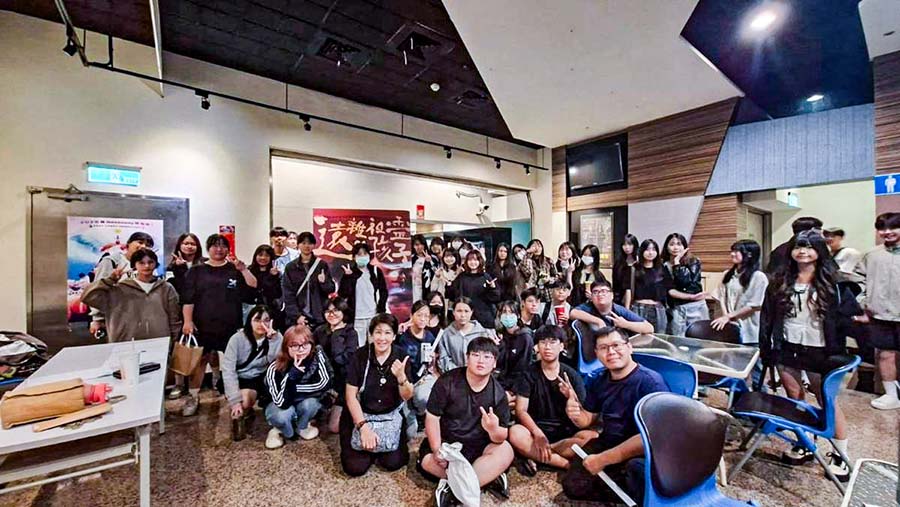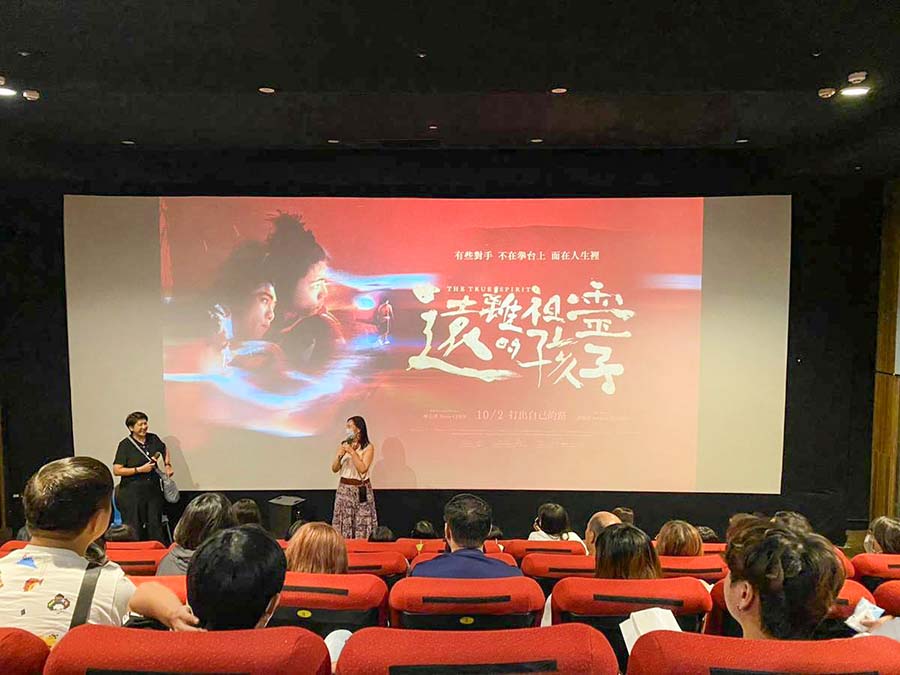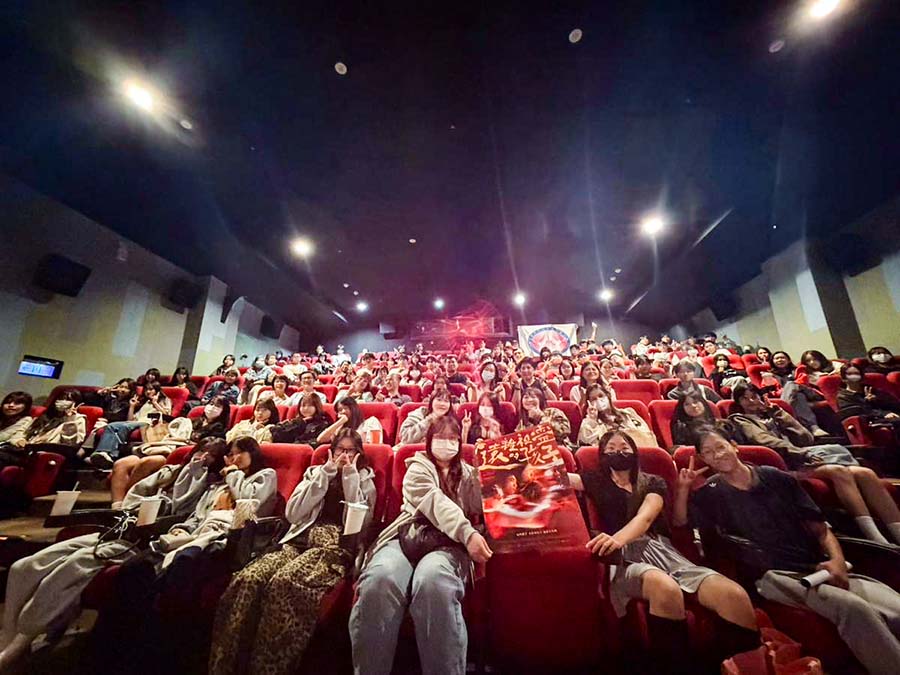
The Department of Social Work at the National Pingtung University of Science and Technology (NPUST) recently hosted a campus screening of the documentary The True Spirit at the Vieshow Cinemas in Pingtung. The event drew enthusiastic participation from faculty, students, and advocates of social work issues. Filmed over six years, the documentary chronicles how urban Indigenous teenagers leverage boxing to navigate life’s challenges and pursue their cultural identity with the steadfast support of social workers. Director Andrie Huang was specially invited to host a post-screening discussion, where she shared her observations on professional social work practices and diverse forms of helping out with causes—such as using the power of film to draw public attention to marginalized groups.
The True Spirit is a Taiwanese documentary six years in the making. Through authentic life stories, it opened up faculty and students to the deep-seated factors behind the developmental dilemmas faced by Indigenous youth, including social structures, resource allocation, and cultural contexts. Assistant Professor Sawmah Lasong from the Department of Social Work noted that while social work can be a heavy burden, it is a profession that enables one life to deeply touch and shape another. The struggles faced by Indigenous youth are not merely personal or family issues; they are inextricably linked to social class, resource distribution, and cultural situations. The film portrays the genuine realities of urban Indigenous youth striving to survive on the margins of society while seeking their identity. By taking a look into the various trials, the film also gives the public an opportunity to rediscover the true value of the social work profession. Lasong emphasized that contemporary social workers must contend with complex service demands while occasionally enduring societal misunderstandings. Precisely because of this, it is vital to bring the strengths of these professions into public view.
The Department’s Student Association actively promoted the campus event, mobilizing students across various disciplines to collectively engage with Indigenous youth issues. During the post-screening dialogue, the director shared her observations and moving experiences from the filming process. The session featured lively interactions which deeply touched many students and prompted them to reflect on their initial motivations for entering a profession focused on helping others. Students said that the film helped them understand that social work goes beyond merely providing resources; it requires learning to see the strengths and potentials of those they are serving so that they accompanying them as they regain their footing amidst adversity. Hung-Nian Yen, president of the Student Association, also shared that on the path to becoming professionals in social work, students need to witness a diverse range of role models to continuously accumulate passion and momentum. The NPUST Department of Social Work worked to embody the core spirit of “Universal Indigenous Education” through this event, leading faculty and students from an understanding of cultural differences toward mutual respect and appreciation, thereby reducing social labeling and prejudice against marginalized groups. Looking ahead, the Department remains committed to leveraging visual education and social engagement to take social work beyond the classroom and into communities. Its mission is to walk alongside vulnerable individuals in their search for self-empowerment—because helping others is not just about lifting someone out of hardship, but about accompanying them in finding their own inner strength.