To help manufacturers tackle labor shortages, soaring energy costs, and net-zero targets, an NPUST research team is championing an advanced welding technique that turns everyday process improvements into major energy savings and productivity gains. Professor Kuang-Hung Tseng and his team at the Department of Materials Engineering, National Pingtung University of Science and Technology (NPUST), have long focused on welding technology R&D. They are actively promoting Active Tungsten Inert Gas (A-TIG) welding to help metal manufacturers improve production efficiency and advance toward sustainability.
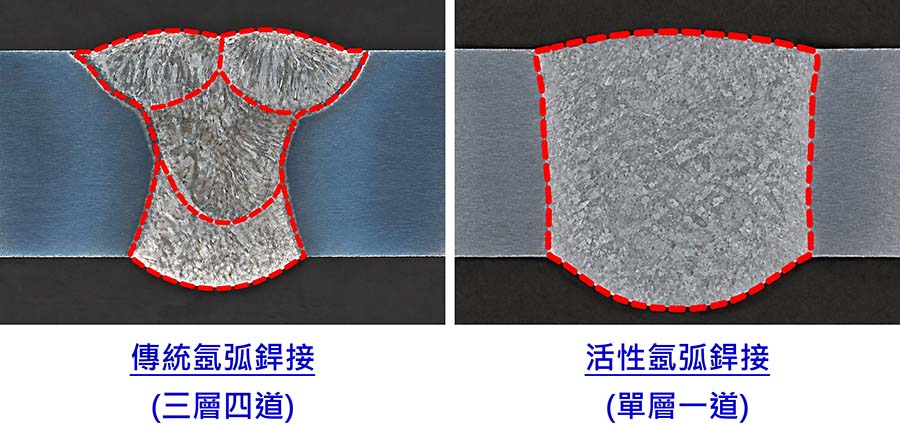
A-TIG welding involves applying a thin layer of active flux onto the workpiece joint before TIG welding. By altering the behavior of the electric arc and molten pool, it significantly increases weld penetration. Integrating flux formulations with optimized parameters allows workpieces that traditionally require joint grooving and multi-pass filler welding to be completed in fewer passes, shortening process times and reducing energy and consumable use.
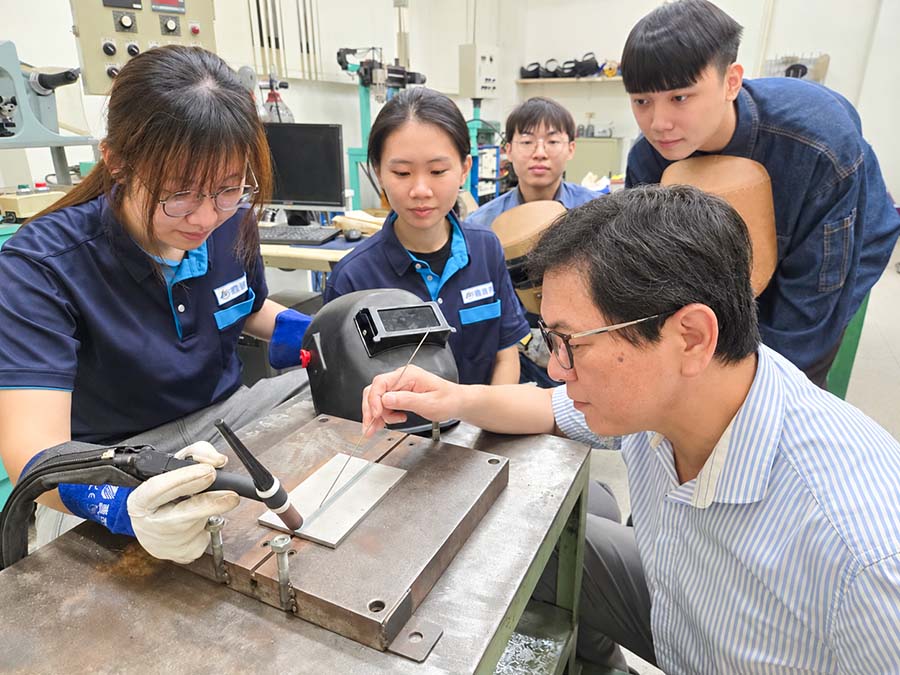
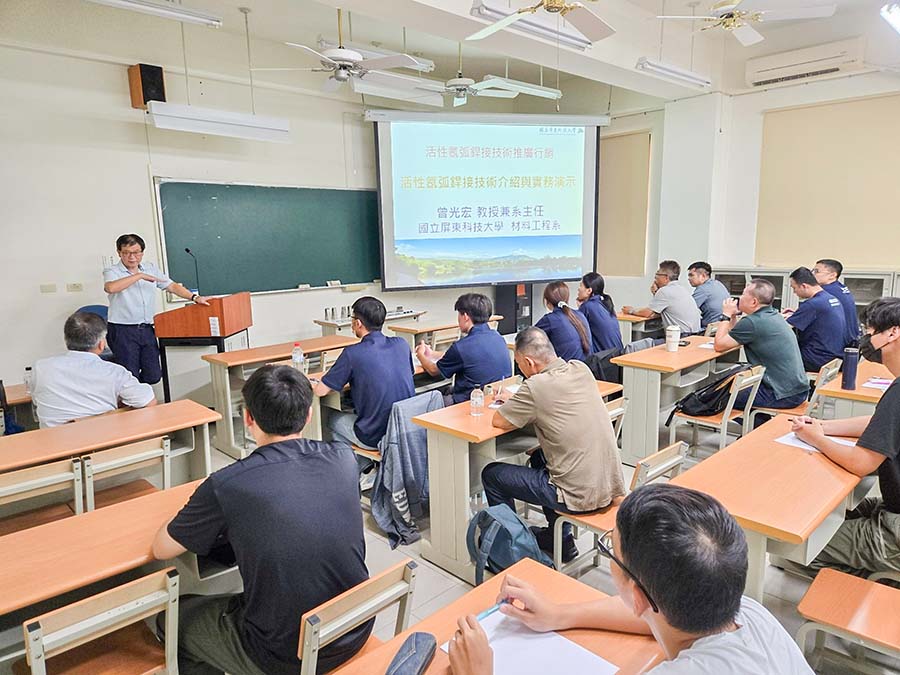
The research team noted that for an 8mm-thick stainless-steel component traditionally requiring three filler passes, A-TIG technology allows completion in a single un-filled pass, vastly simplifying the procedure. In actual manufacturing cases, overall project timelines dropped from about 3 months to roughly 1.2 months. To align technology with industry needs, Professor Tseng’s team hosted technical demonstrations. Through live welding and weld comparisons, they helped enterprises evaluate feasibility based on actual production requirements.
While traditional TIG welding offers high quality and broad material applicability, its shallow weld penetration on medium-to-thick plates usually necessitates groove preparation and multi-pass welding, raising costs. Professor Tseng remarked, “Driving energy conservation and carbon reduction does not always require replacing large equipment.” Eliminating even one redundant processing or welding step can yield cumulative energy and cost advantages. Bridging academic research with industry application requires researchers to step onto factory floors, understand production workflows, and convert findings into practical manufacturing techniques.
“Industrial upgrading does not always start with the most complex technology; sometimes, doing an everyday process just a bit better is the true beginning of an upgrade.” Moving forward, Professor Tseng’s team will build on their core welding expertise—integrating material selection, process refinement, and smart manufacturing—to effectively translate academic research into real-world industrial solutions, empowering enterprises to boost efficiency and accelerate their sustainability goals.