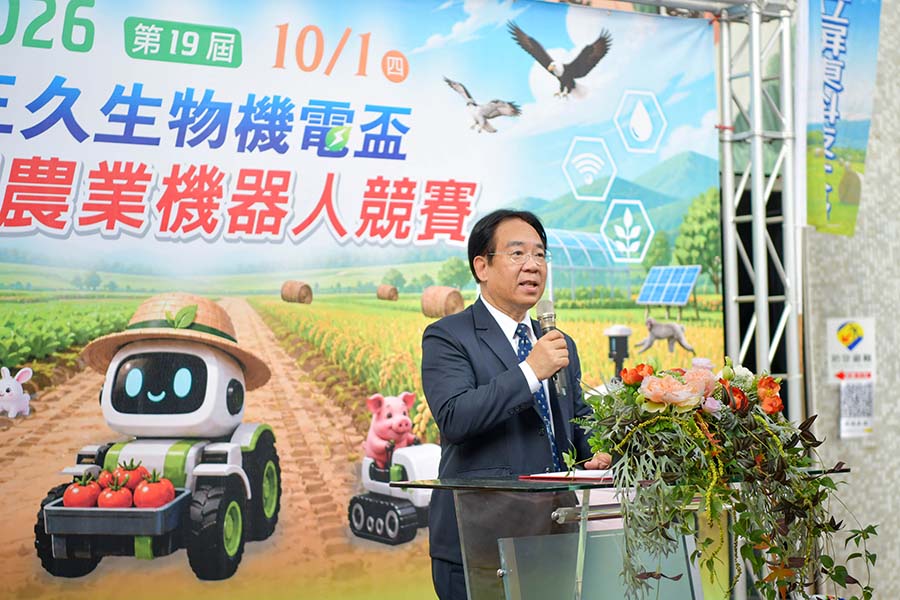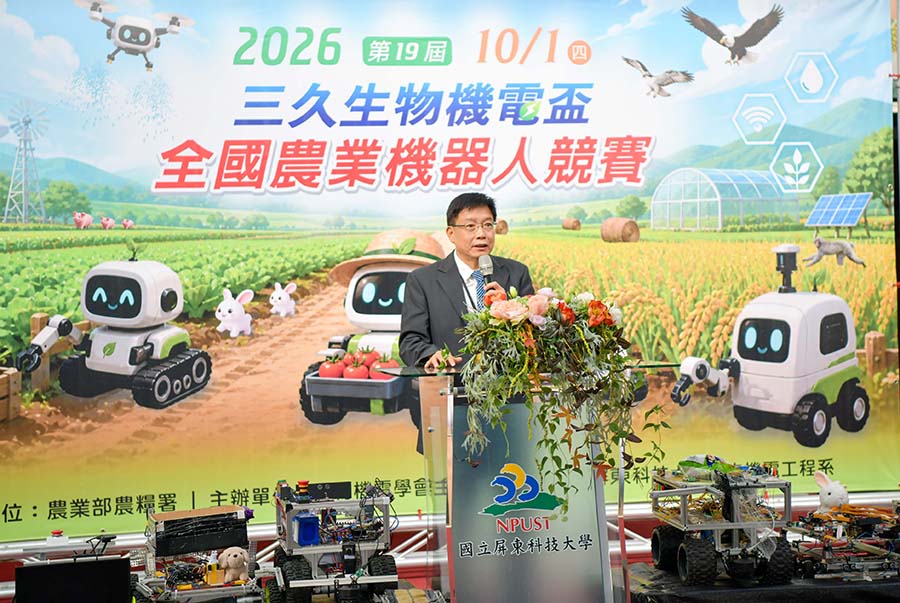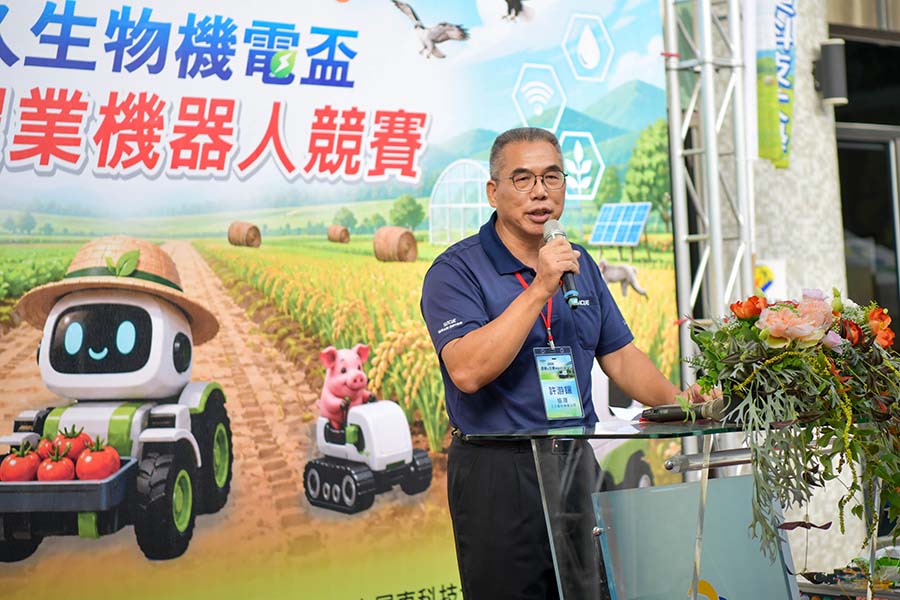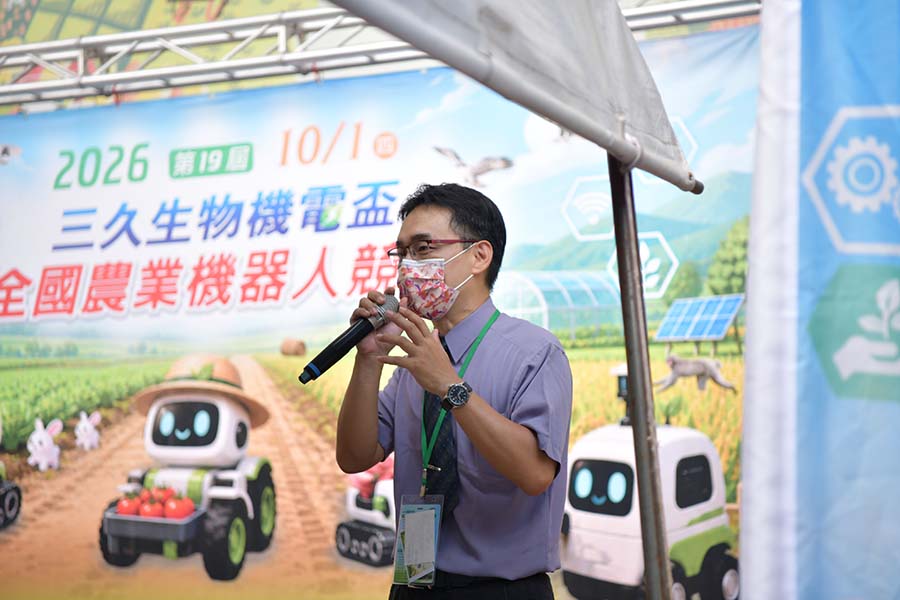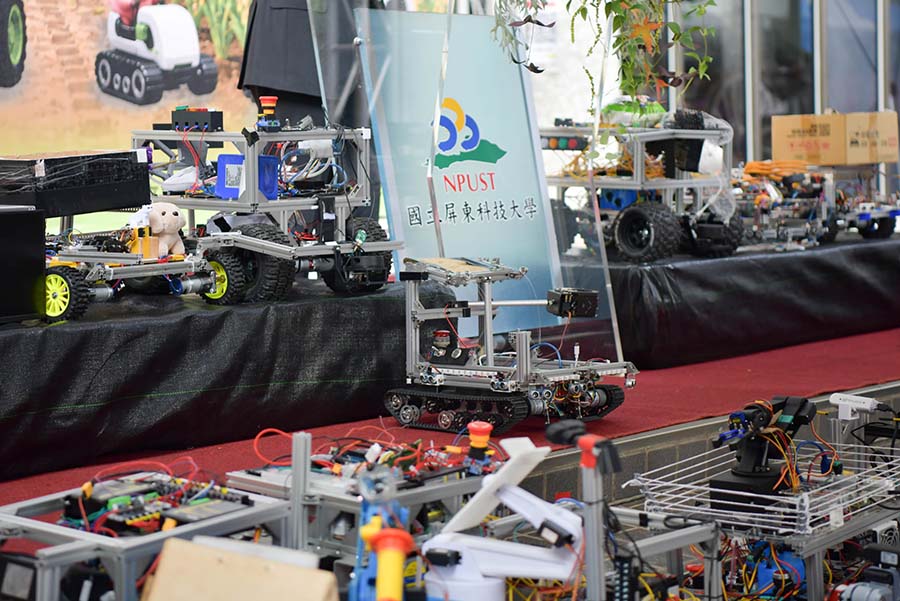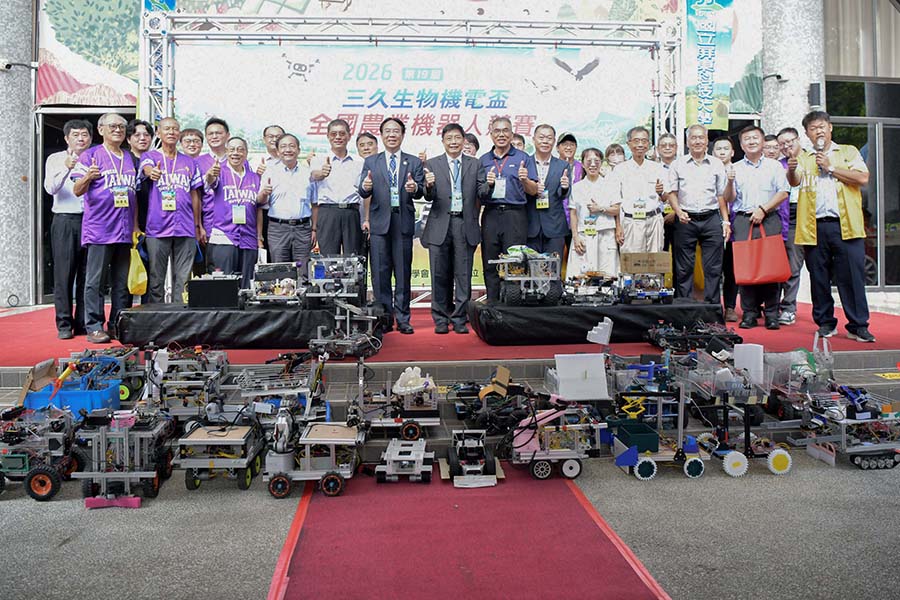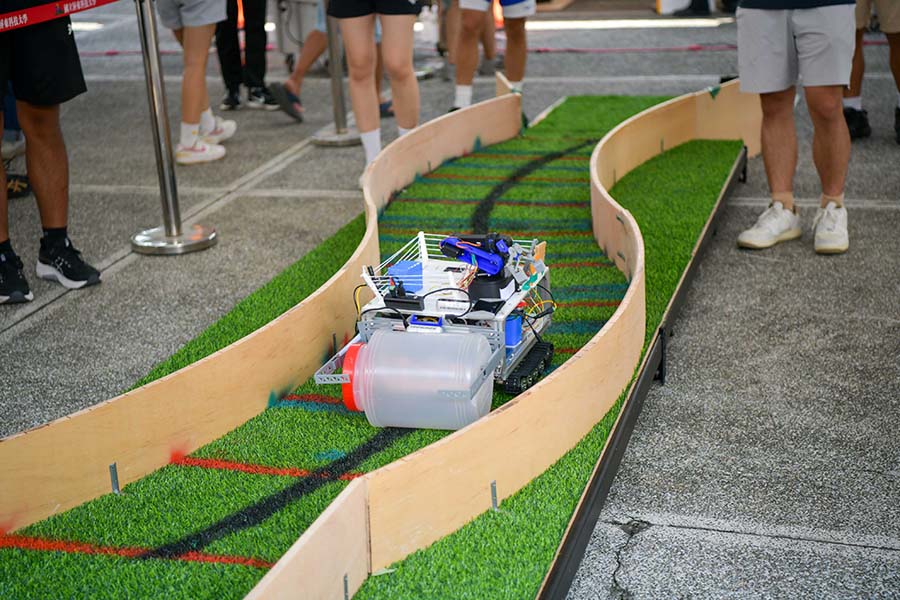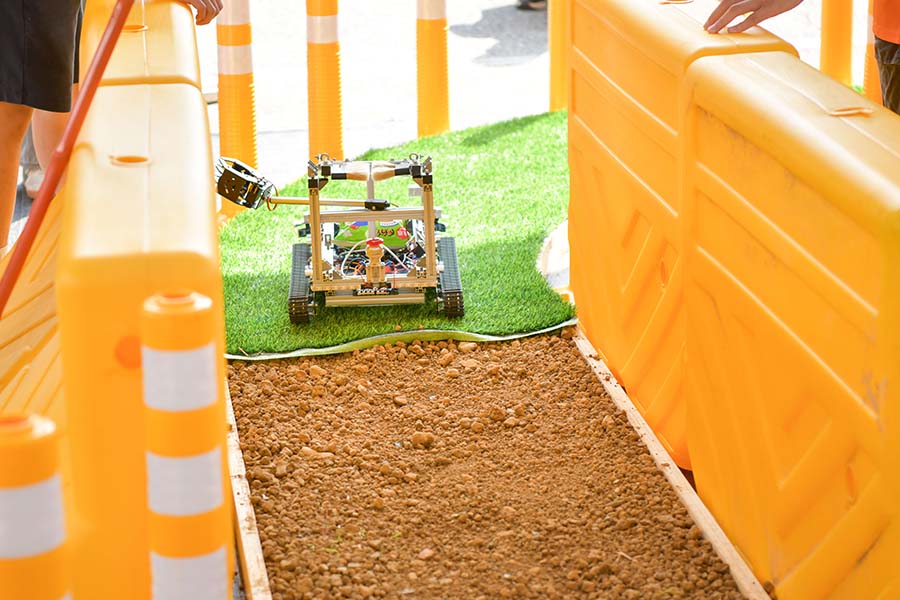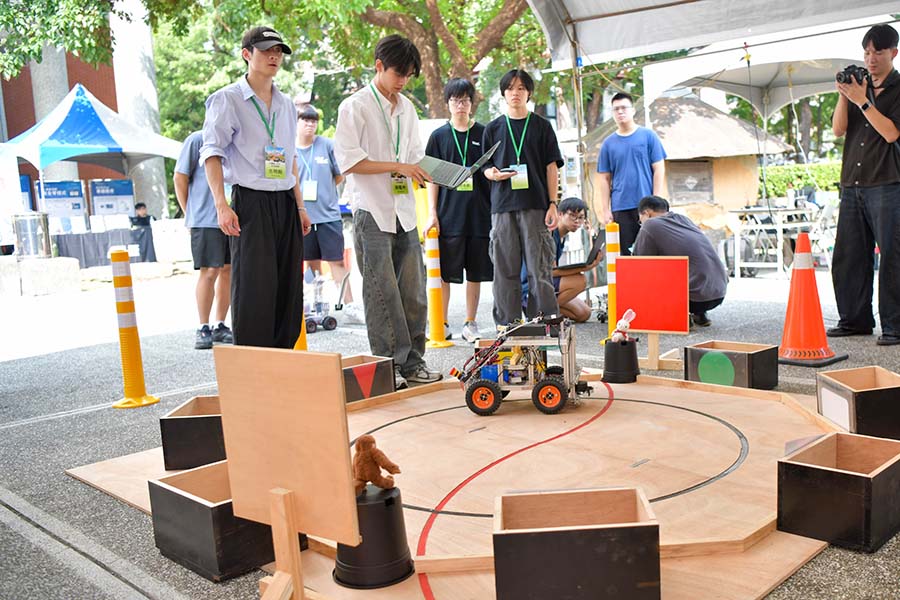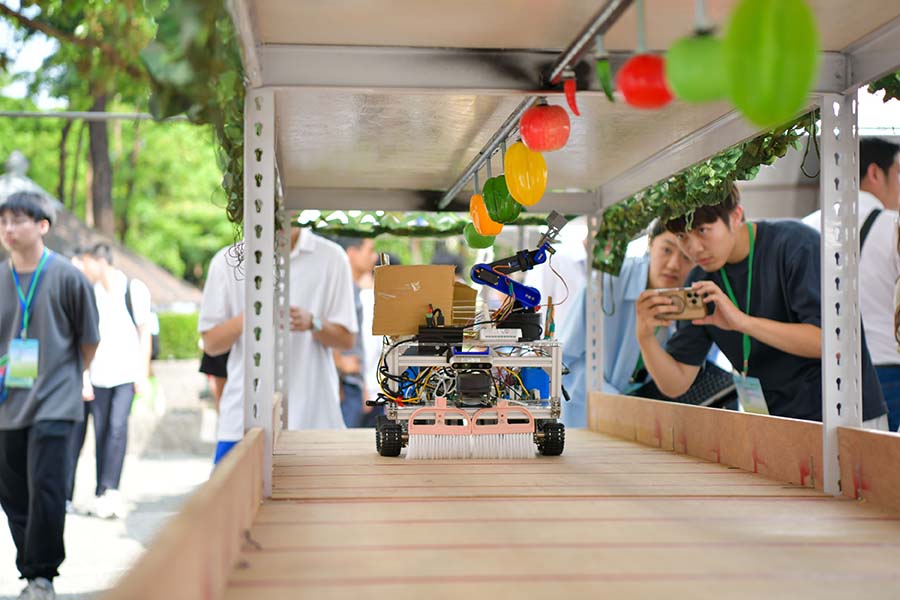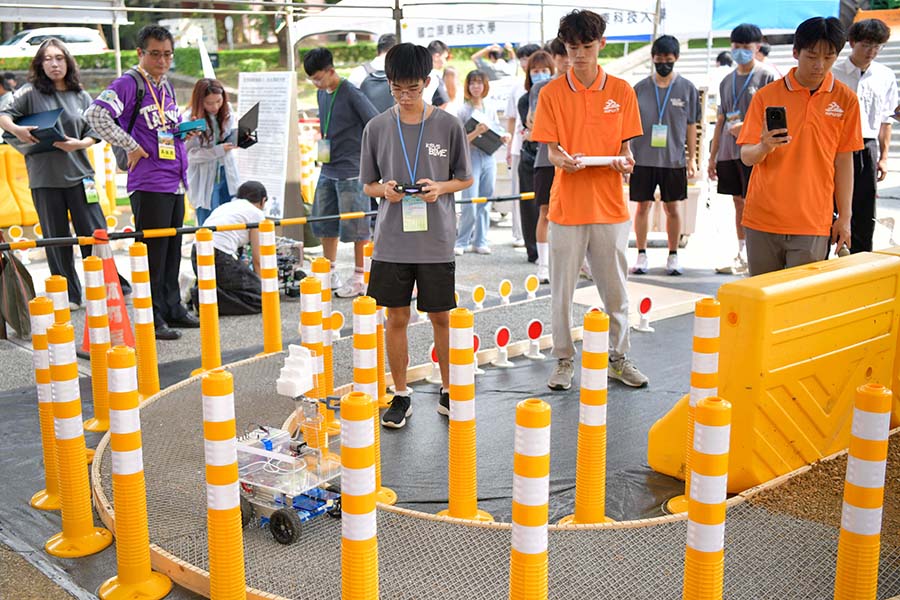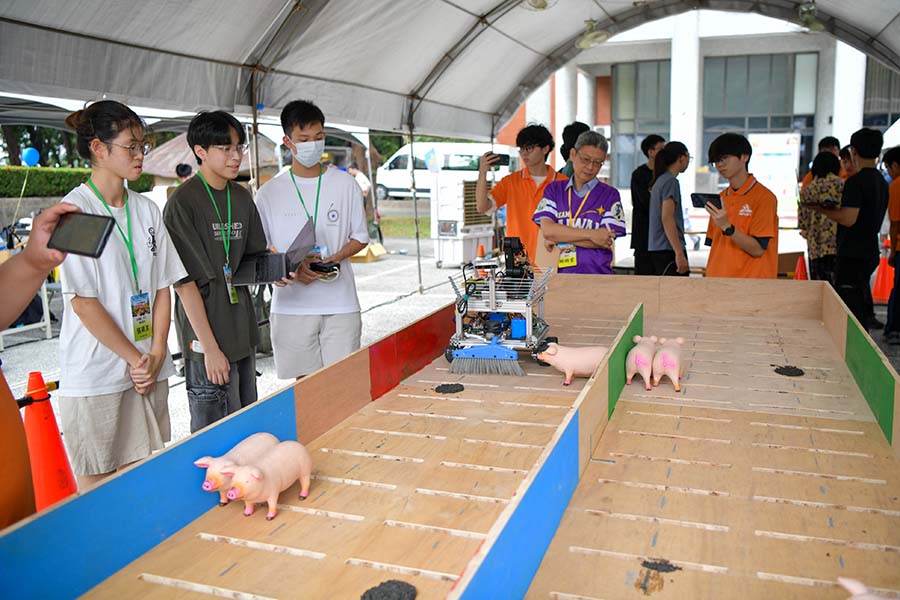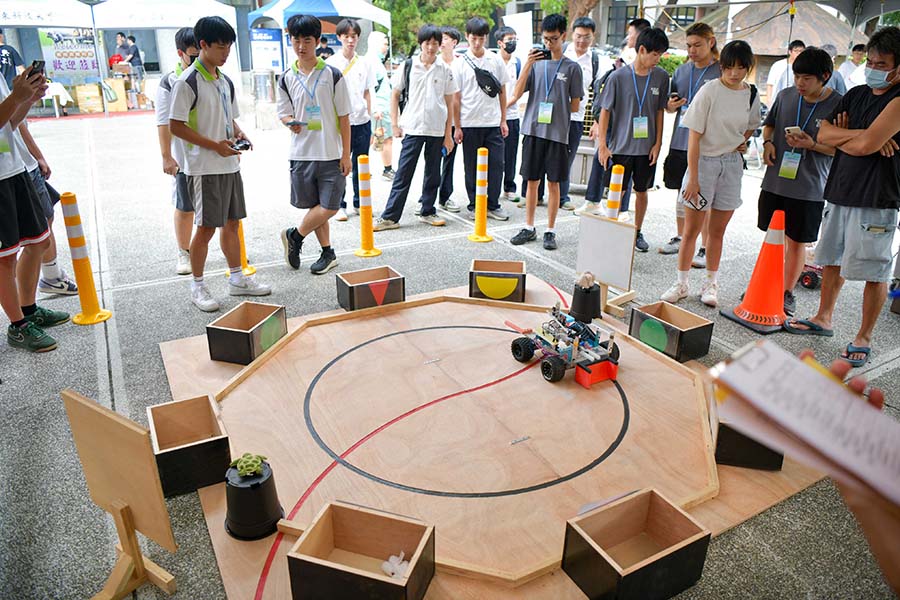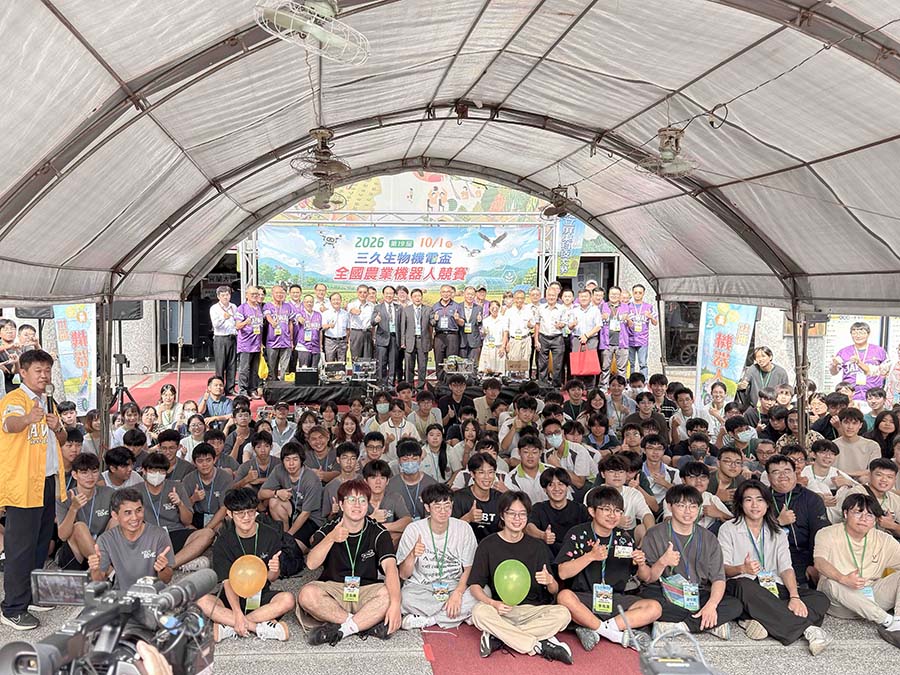
The “2026 Suncue Bio-Industrial Mechatronics Cup— National Agricultural Robot Competition” kicked off on October 1, 2026, at NPUST’s Shuey-Yun Hall plaza. Held alongside the “Academic Seminar on Agricultural and Bio-Industrial Machines” and the society’s annual meeting, the event drew enthusiastic participation from colleges and technical high schools across Taiwan. The competition was hosted by the Department of Biomechatronics Engineering at National Pingtung University of Science and Technology (NPUST) with support from Suncue Company Ltd, and guidance from the Taiwan the Agriculture and Food Agency.
NPUST President Chin-Lung Chang stated that amidst agricultural labor shortages and industrial transformation, smart agriculture practices will be critically important in the future. This year’s competition uniquely incorporated operational facilities at NPUST—such as forage fields, demonstration orchards, smart pigsties, and the Wildlife Rescue Center—challenging students to apply sensing, AI image recognition, and robotics to real-world farming needs like field cruising, fruit harvesting, and animal transfer. Chang emphasized that the event helps cultivate practical problem-solving skills and turn classroom theory into real-world execution.
Dr. Yi-Chih Chiu, President of the Taiwan Society of Bio-Industrial Mechatronics, noted that the competition—renamed from “Field Robot” to “Agricultural Robot” last year—now spans agriculture, forestry, fishery, and livestock sectors. Demonstrating cross-disciplinary expertise in mechatronics, IoT, and sensing technology, all the robot entries were independently designed by the students. He thanked Suncue for sponsoring the event for the second consecutive year and praised NPUST for its long-term dedication to cultivating agricultural technology talent.
As a core pillar of NPUST’s development, the competition encouraged students to use a “common carrier platform” to design modified machinery tailored to diverse agricultural scenarios. College students competed using fully autonomous self-driving modes, while vocational high school students utilized programmable remote controls, effectively putting human-machine collaboration into practice and validating innovative agricultural solutions.