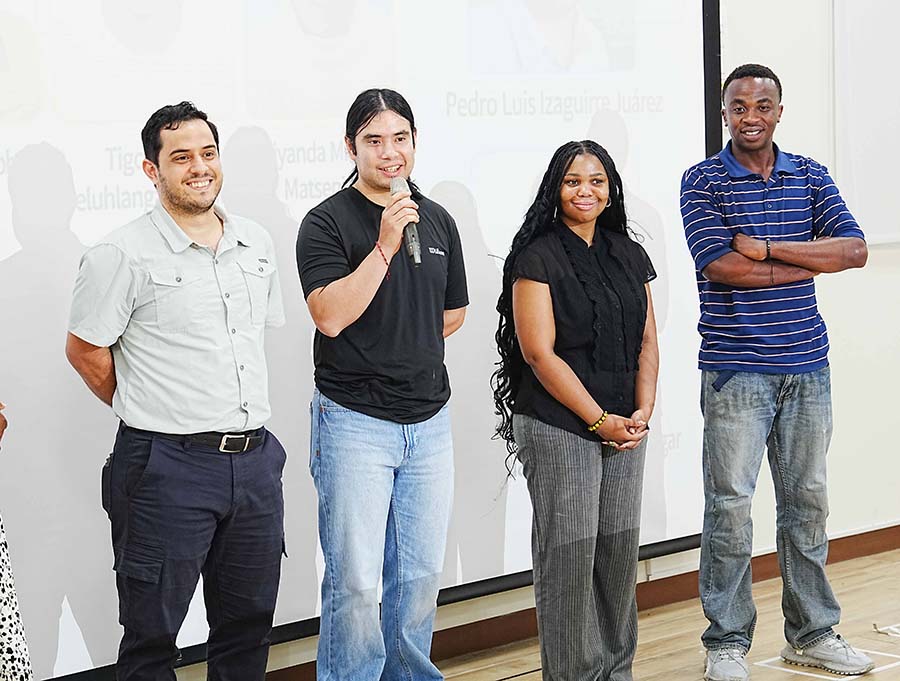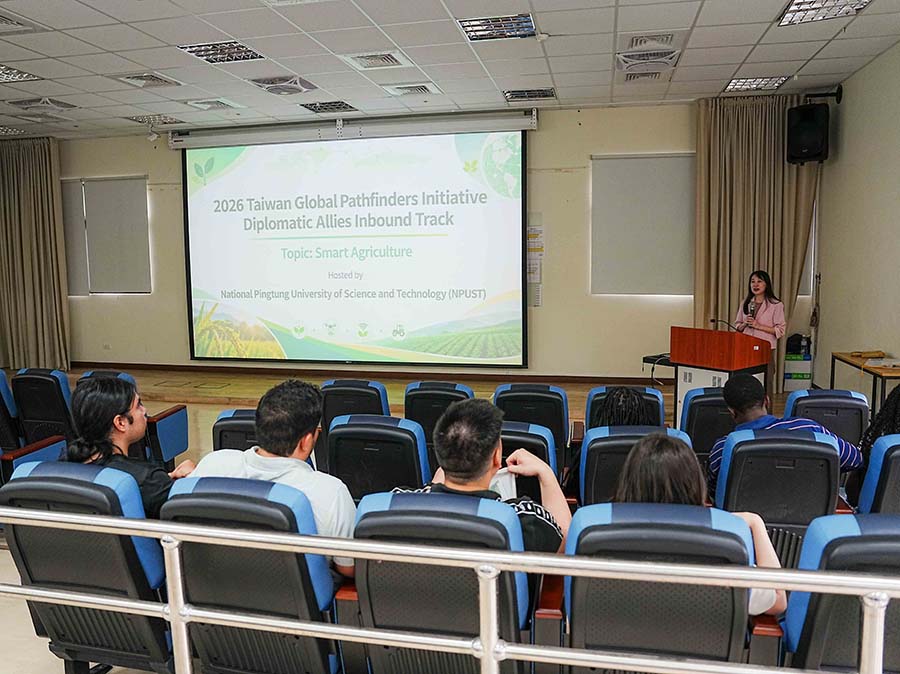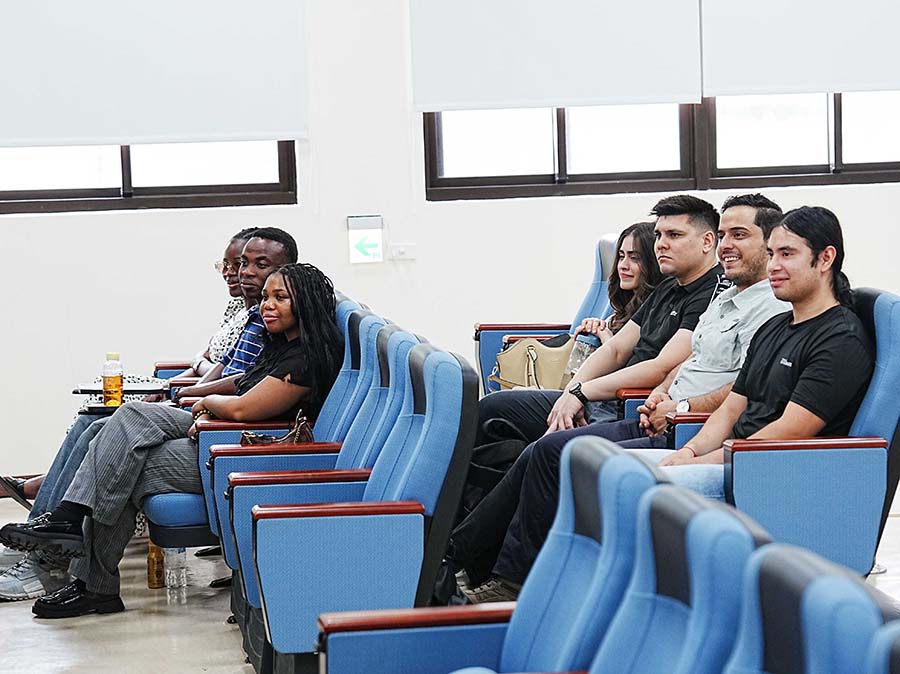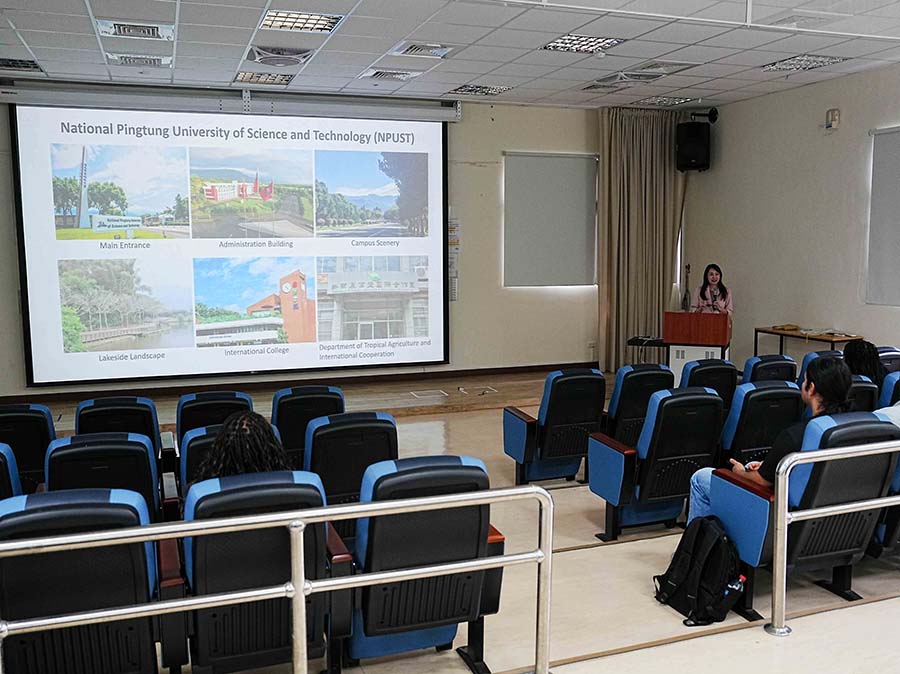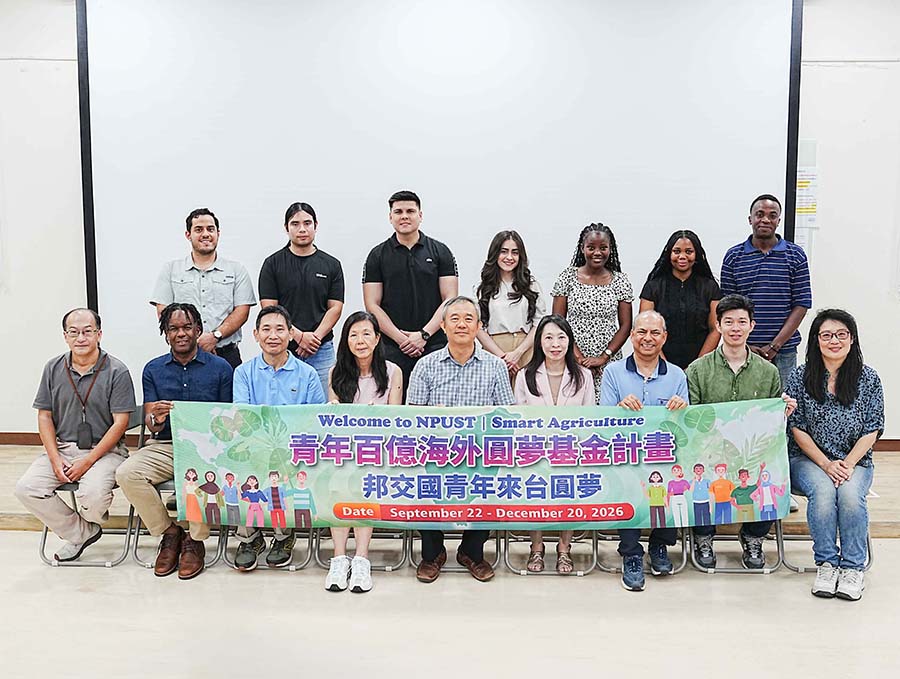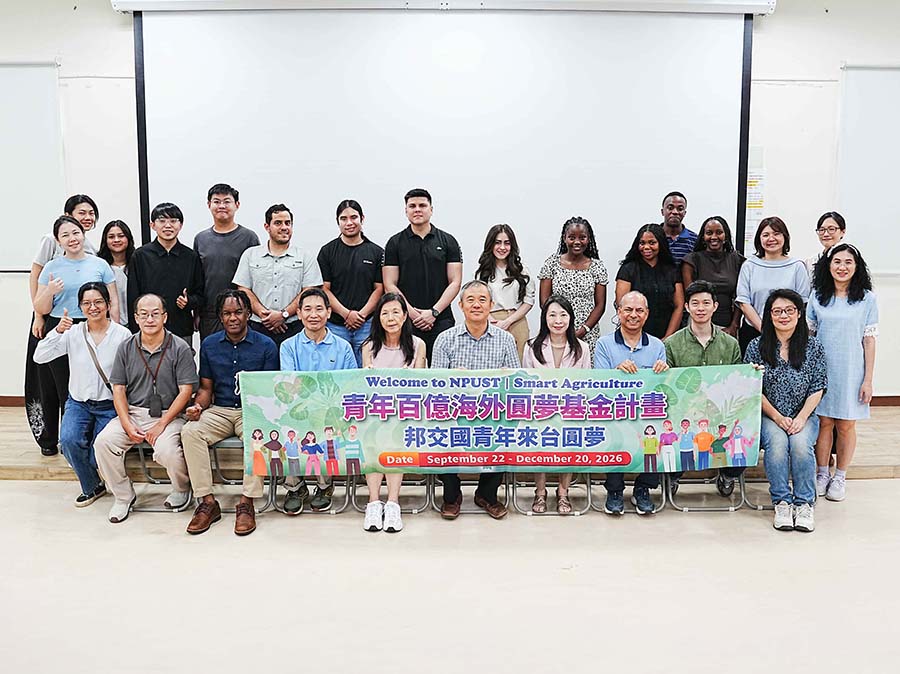
National Pingtung University of Science and Technology (NPUST) welcomed seven young professionals from Guatemala, Eswatini, and Paraguay on September 22 (2026) for the launch of a new professional training program in smart agriculture.
The program is part of the 2026 Youth Overseas Dream Fund Program – Youth from Diplomatic Allies, jointly promoted by Taiwan’s Ministry of Education and Ministry of Foreign Affairs and administered by the International Cooperation and Development Fund (TaiwanICDF). The initiative gives young people from Taiwan’s diplomatic allies the opportunity to pursue professional learning and exchange in Taiwan based on their own interests and expertise.
At NPUST, the program is organized by the Department of Tropical Agriculture and International Cooperation, which will provide the participants with one to three months of training focused on smart agriculture. Drawing on the university’s extensive agricultural teaching and research resources, the program combines shared training with individualized study tailored to each participant’s professional background and goals.
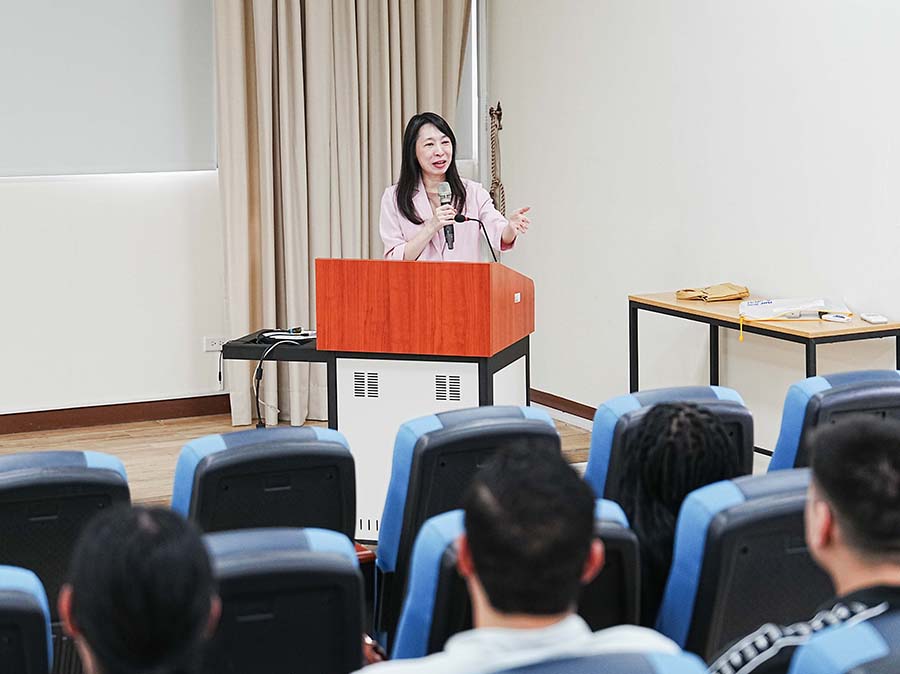
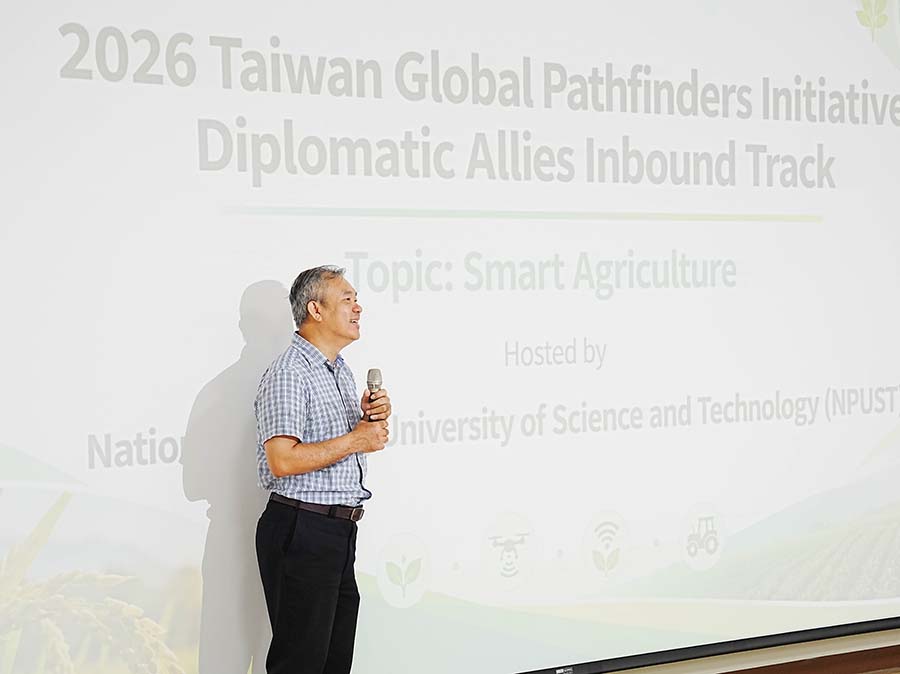
At the opening ceremony, Professor Jik-Chang Leong, Dean of NPUST’s International College, highlighted the university’s deep agricultural roots and its long-standing emphasis on hands-on education. As agriculture enters the AI era, he encouraged the participants to combine AI tools with scientific thinking and, most importantly, test their ideas through hands-on experimentation and field experience.
Professor Leong also emphasized the value of interdisciplinary collaboration. By bringing agriculture together with engineering, management, and the humanities and social sciences, he noted, new technologies can improve efficiency, management can strengthen logistics, and storytelling can add value to agricultural products. He warmly welcomed the participants to NPUST and encouraged them to make the most of their time on campus.
The training will cover a broad range of smart agriculture technologies, including sensing technologies, the Internet of Things (IoT), agricultural data analytics, unmanned aerial vehicles (UAVs), and remote sensing. Participants will also visit agricultural enterprises, research institutions, and demonstration sites to see how smart technologies are being applied to crop production, livestock and aquaculture, and water and irrigation management.
Following the shared training, participants will join laboratories aligned with their individual interests and professional backgrounds for more specialized study and practical experience. The program also includes Mandarin classes and cultural activities, giving participants opportunities to strengthen their Chinese communication skills while learning more about Taiwan’s culture and society.
By combining professional training, hands-on learning, and cultural exchange, NPUST is equipping international young professionals with the practical expertise needed to drive smarter, more sustainable agriculture in their home countries. At the same time, the program is deepening Taiwan’s agricultural technology and talent-development partnerships with diplomatic allies, reinforcing NPUST’s position as a global leader in agricultural education and cooperation.