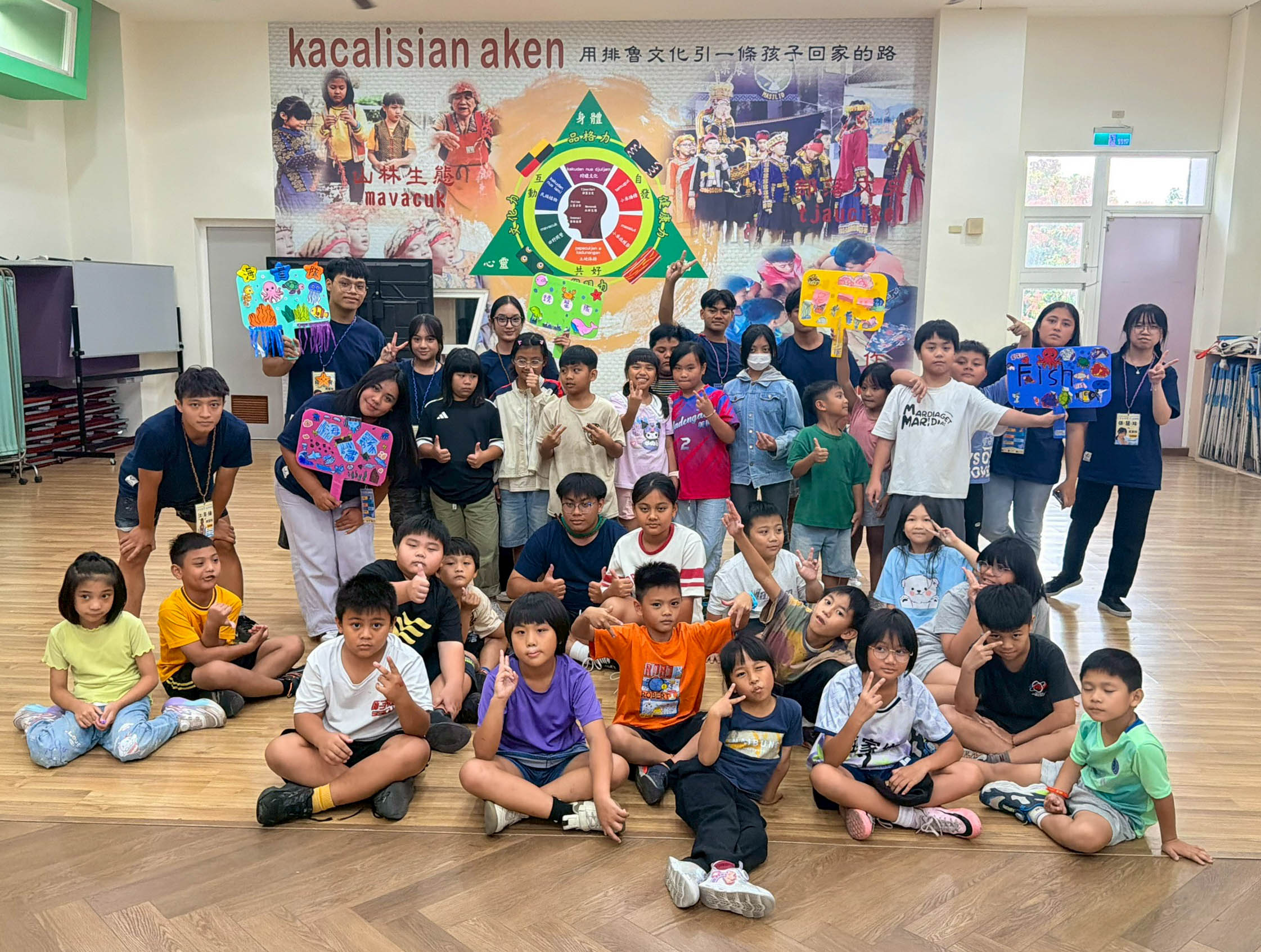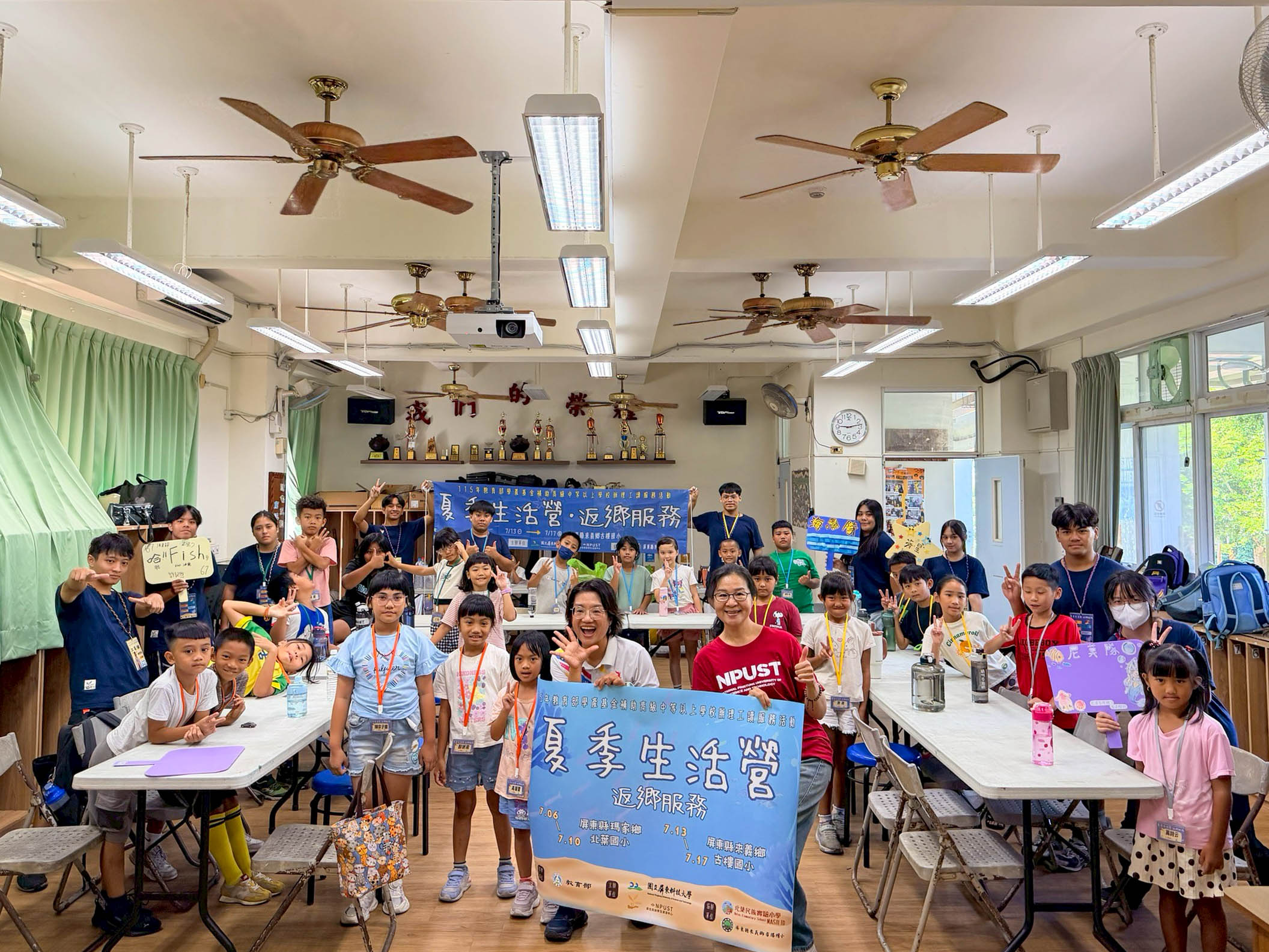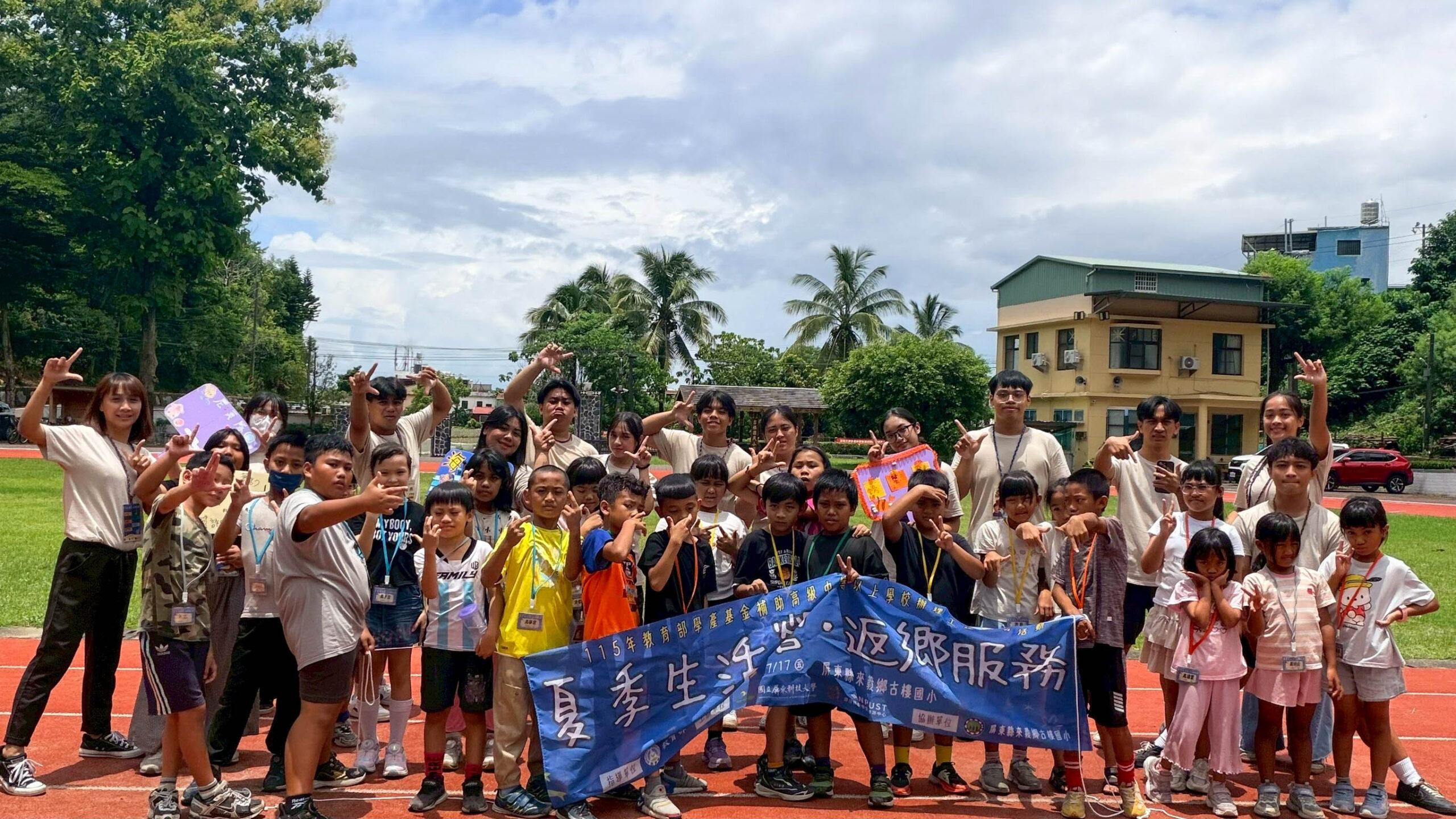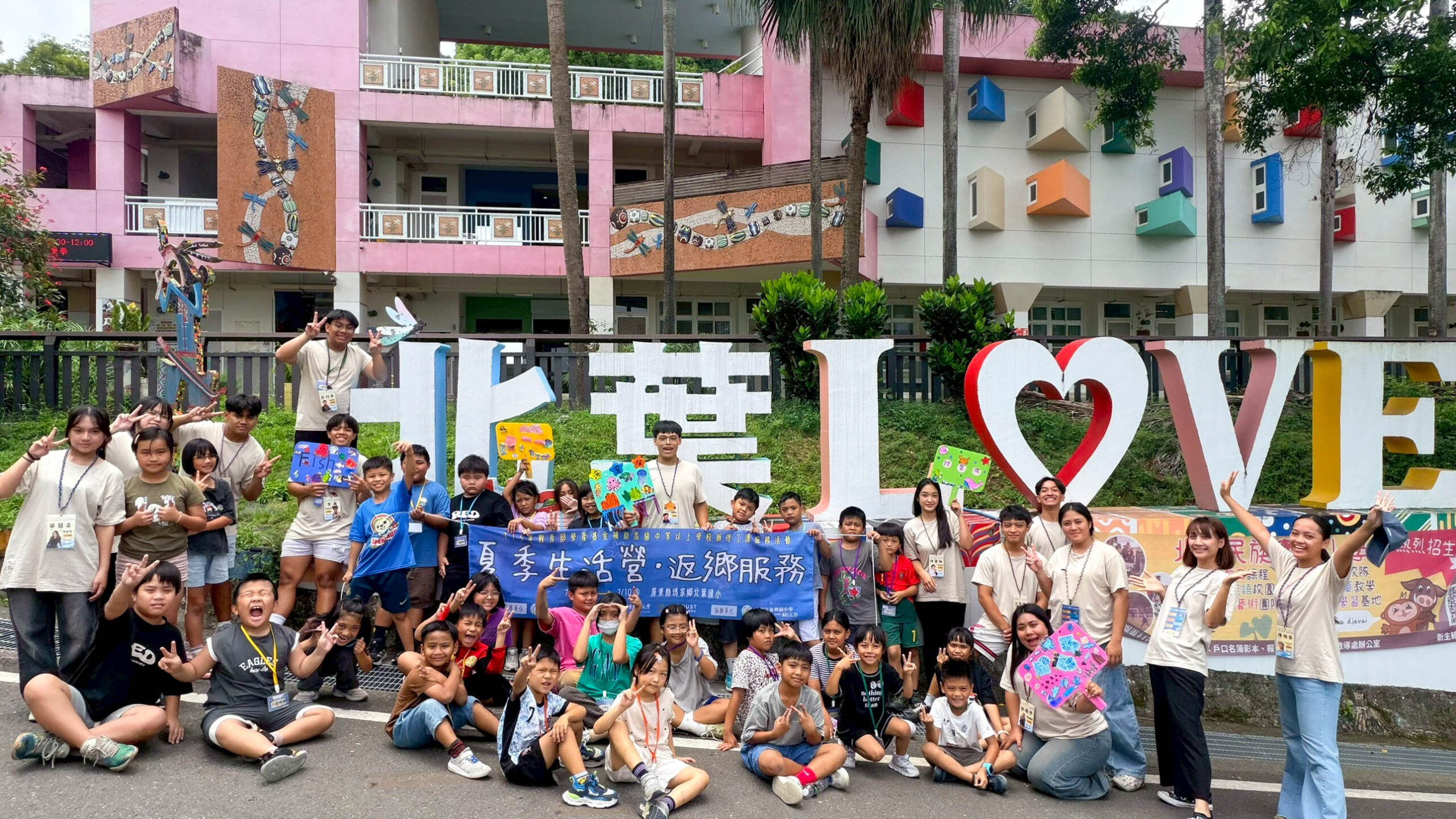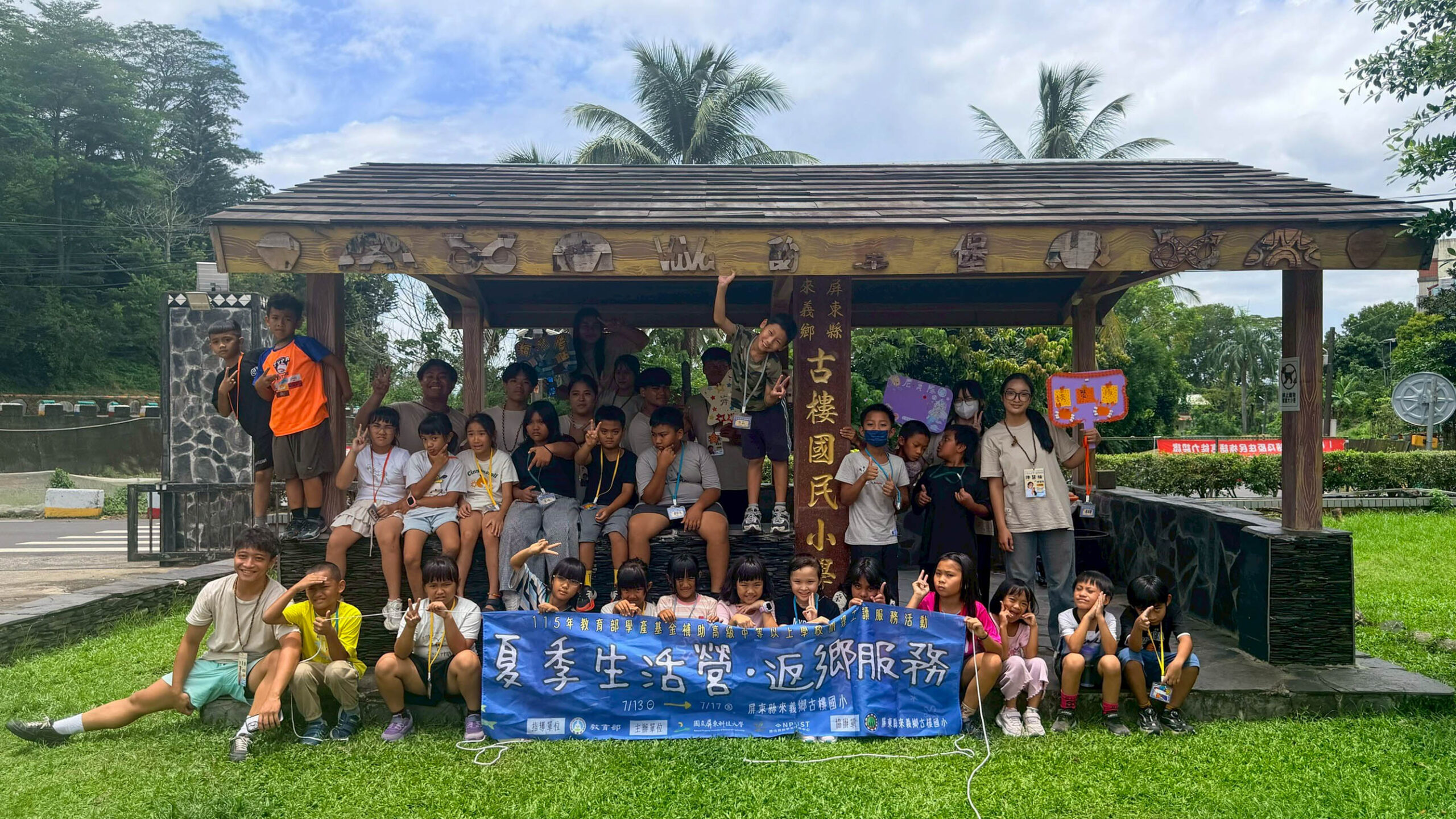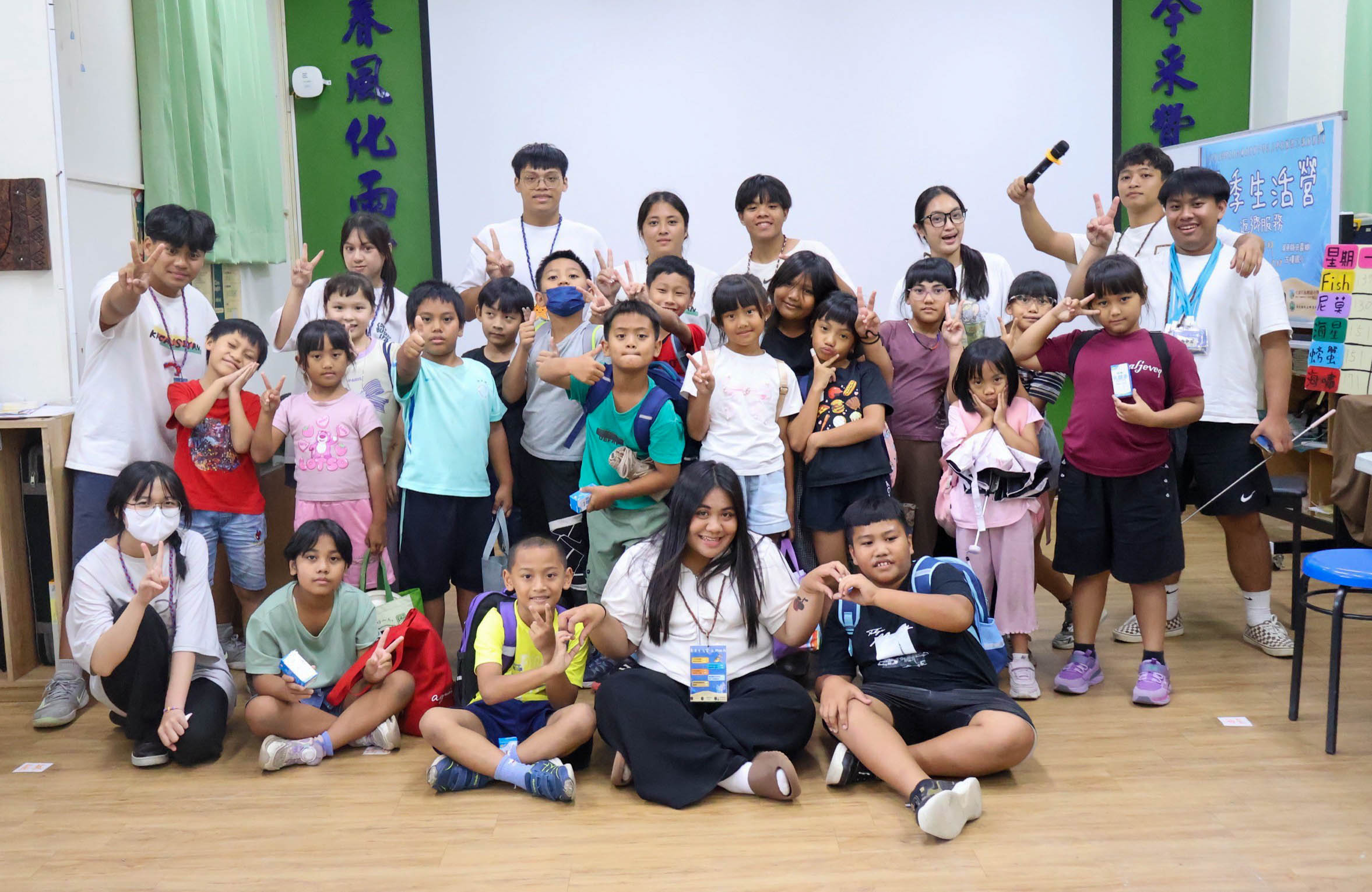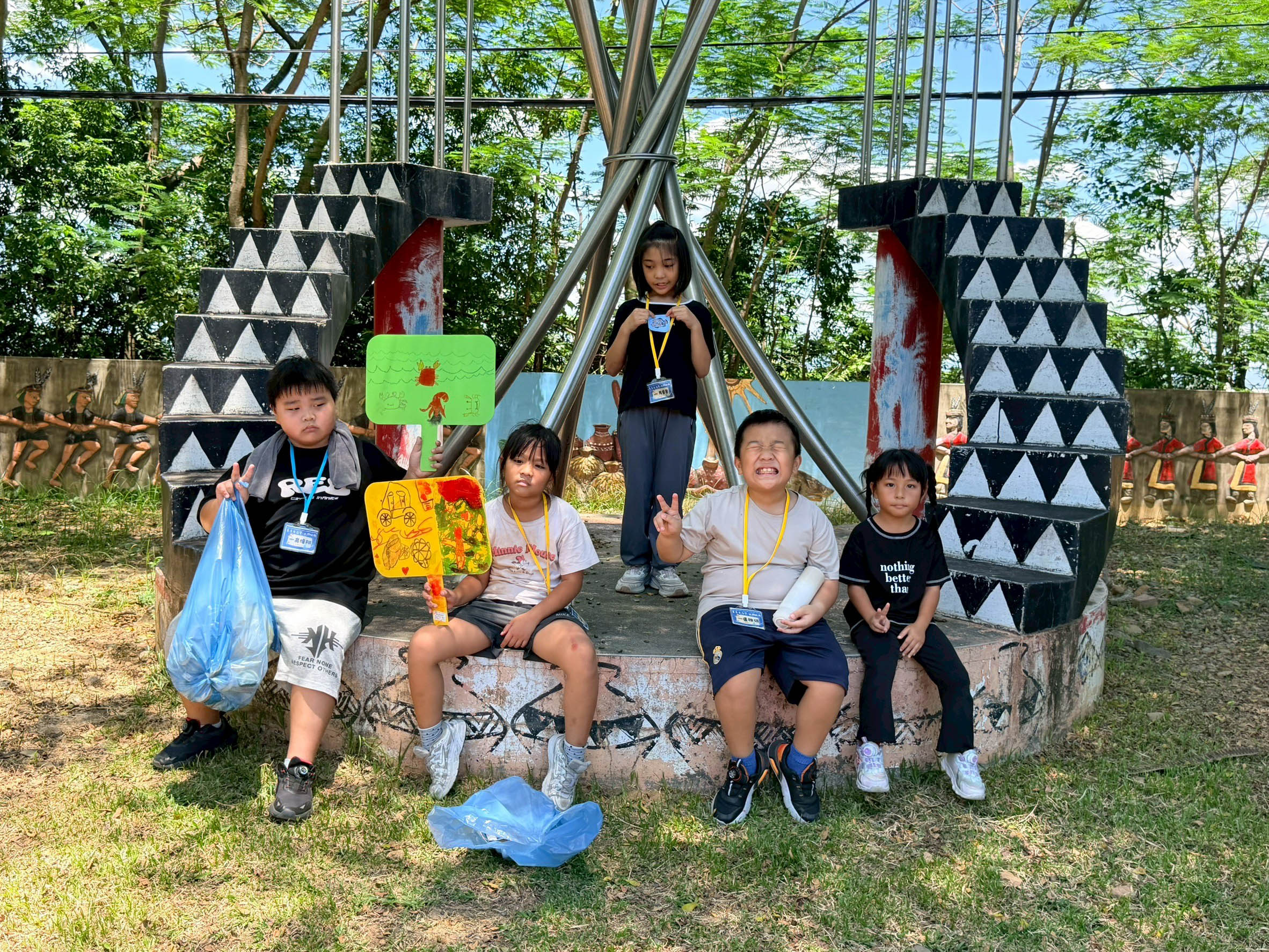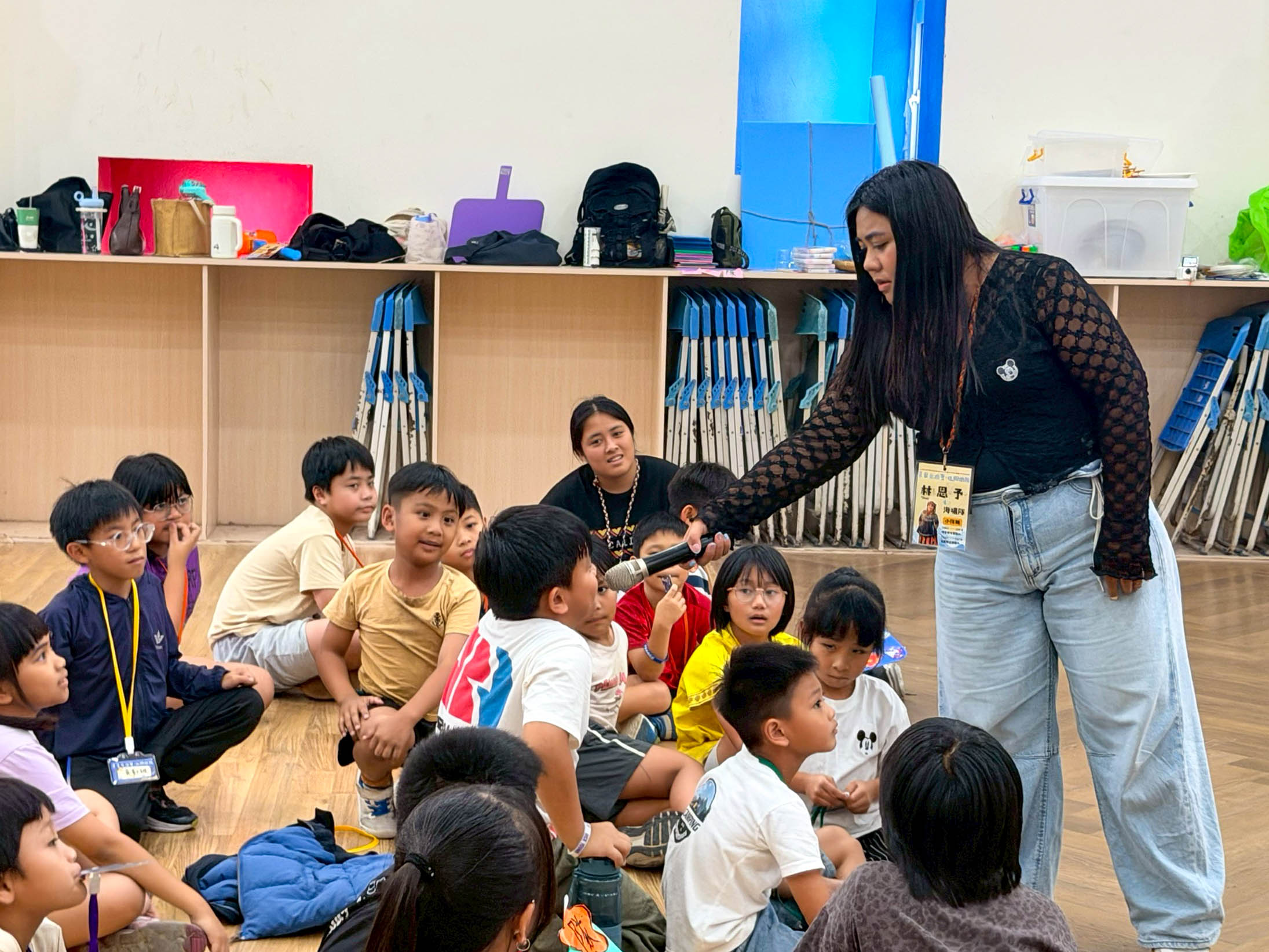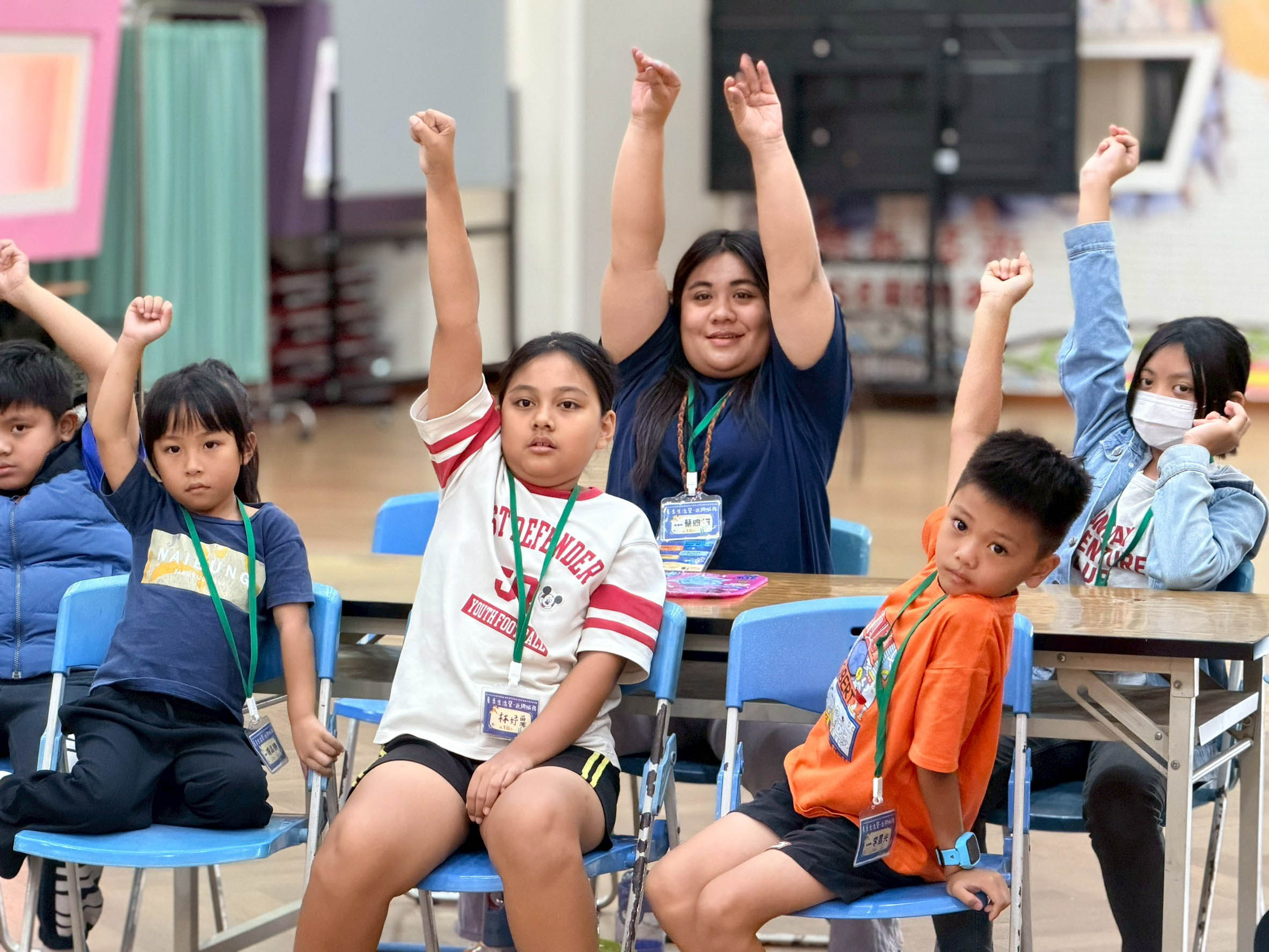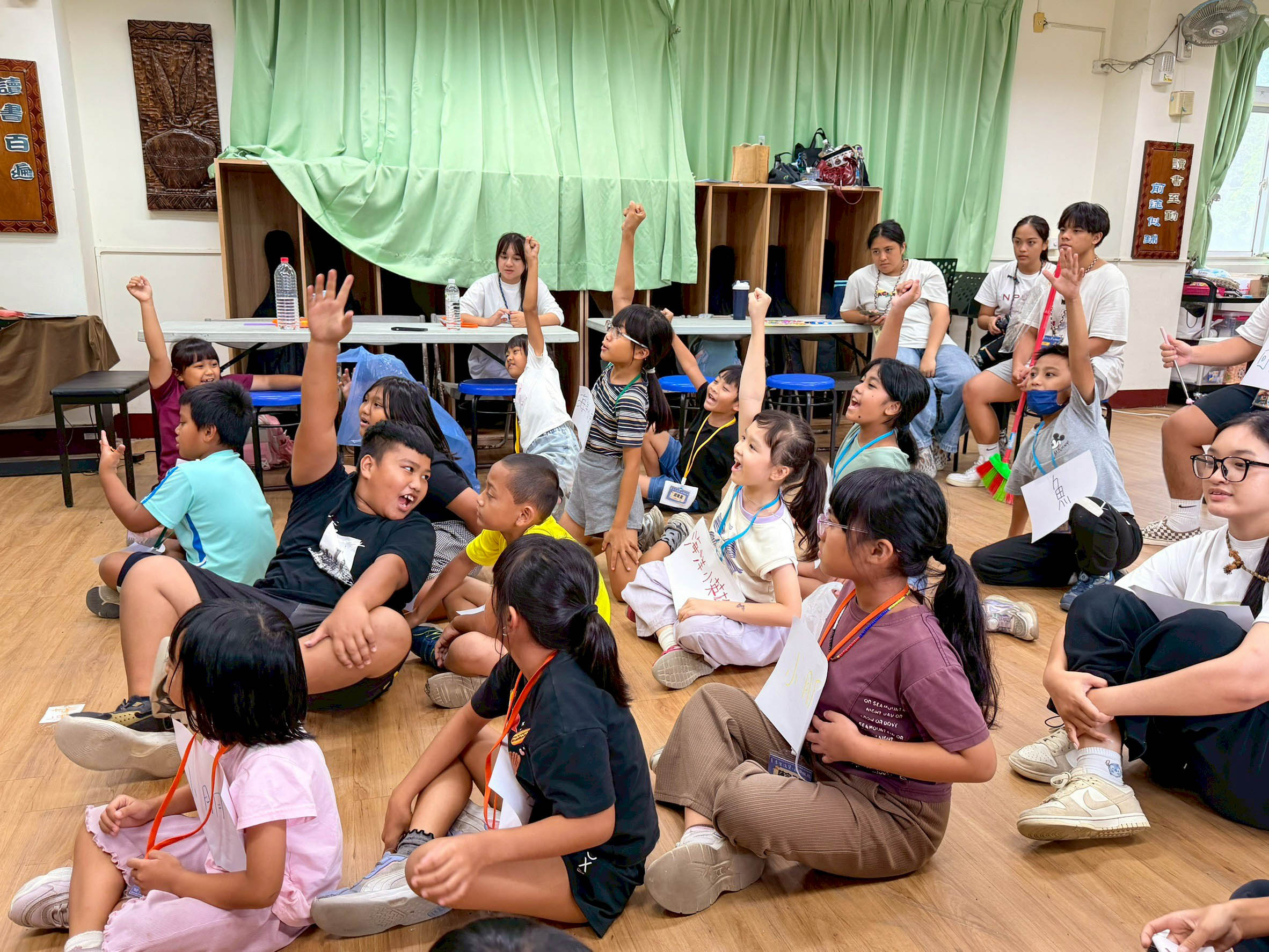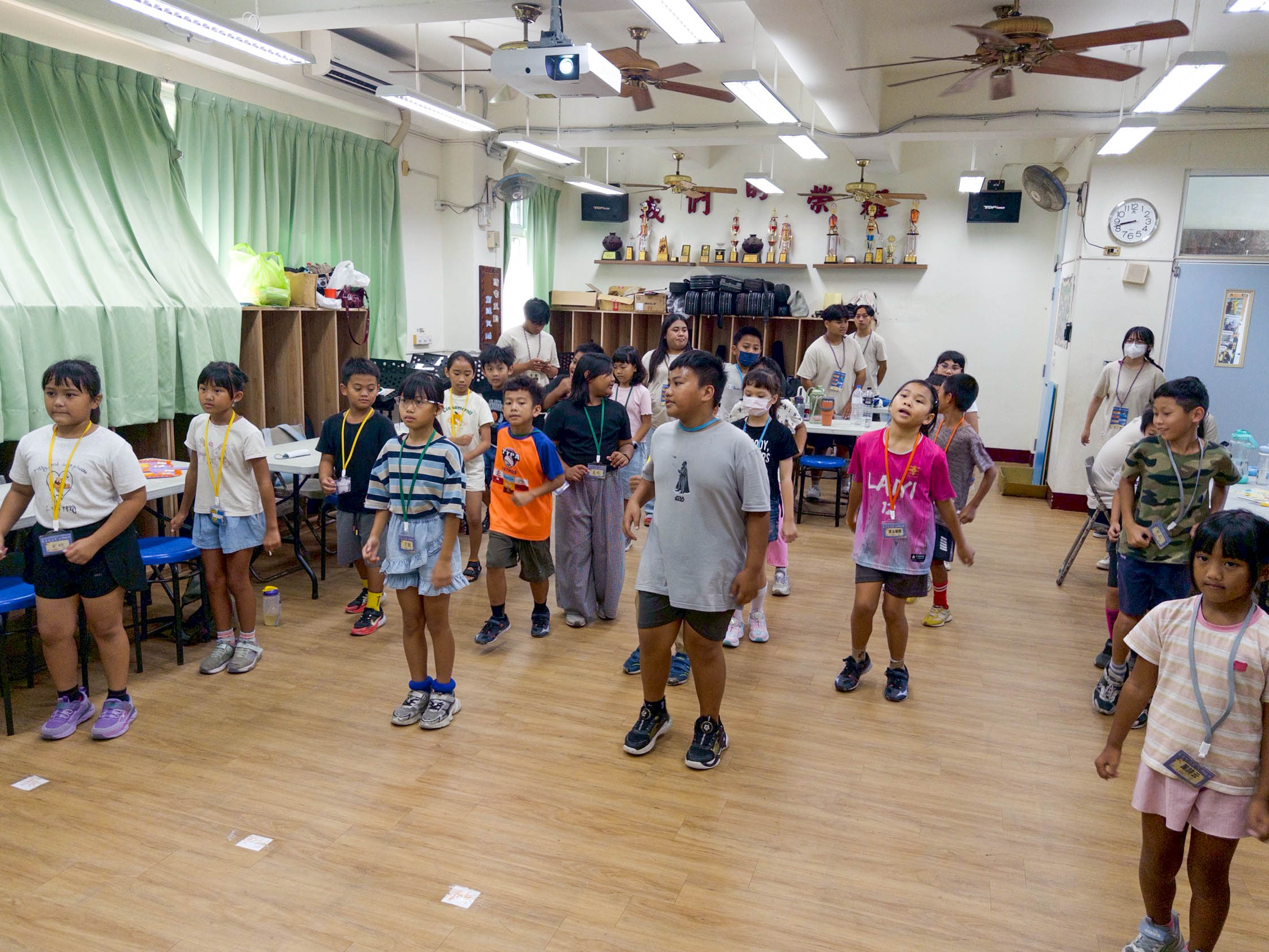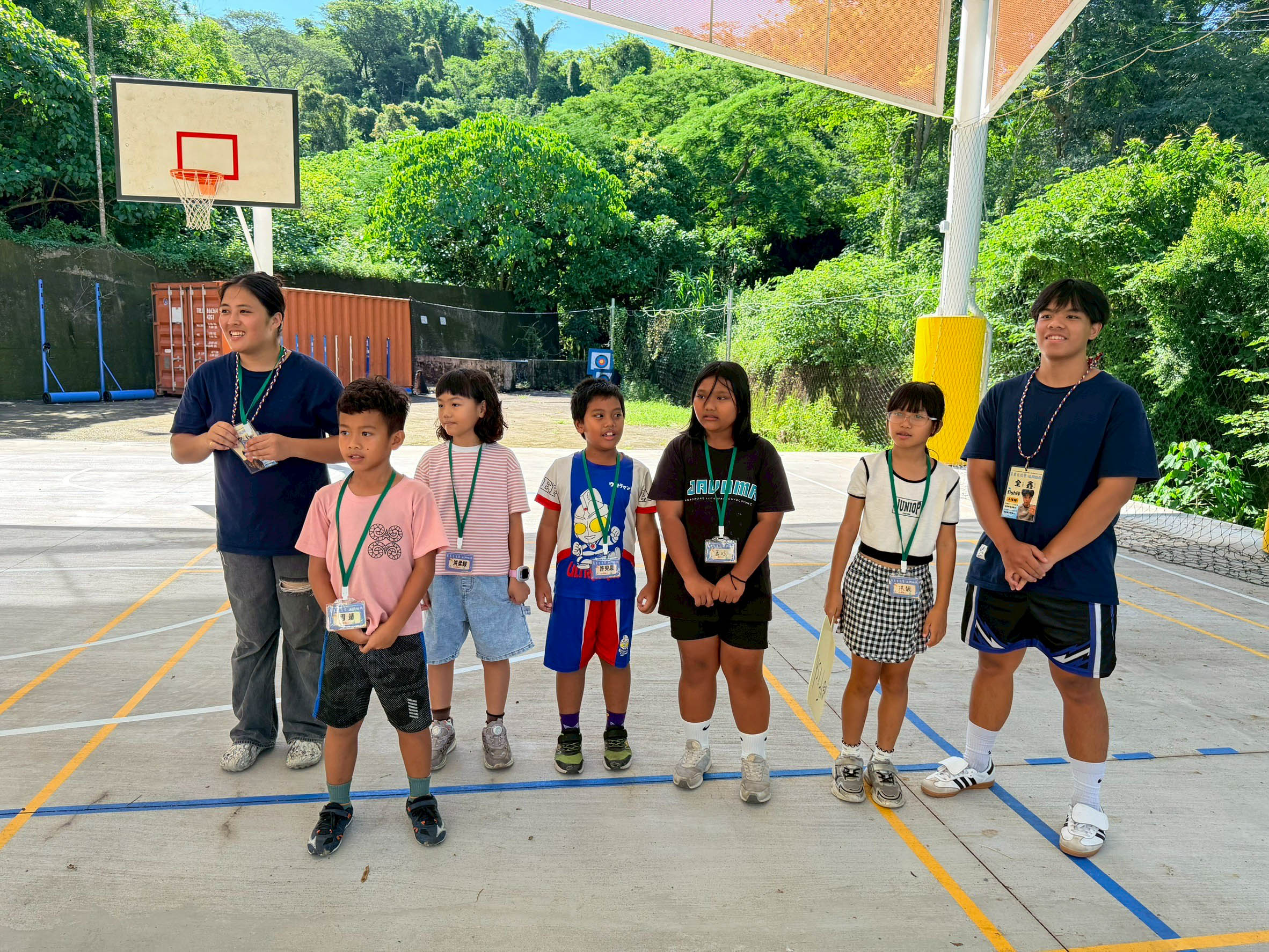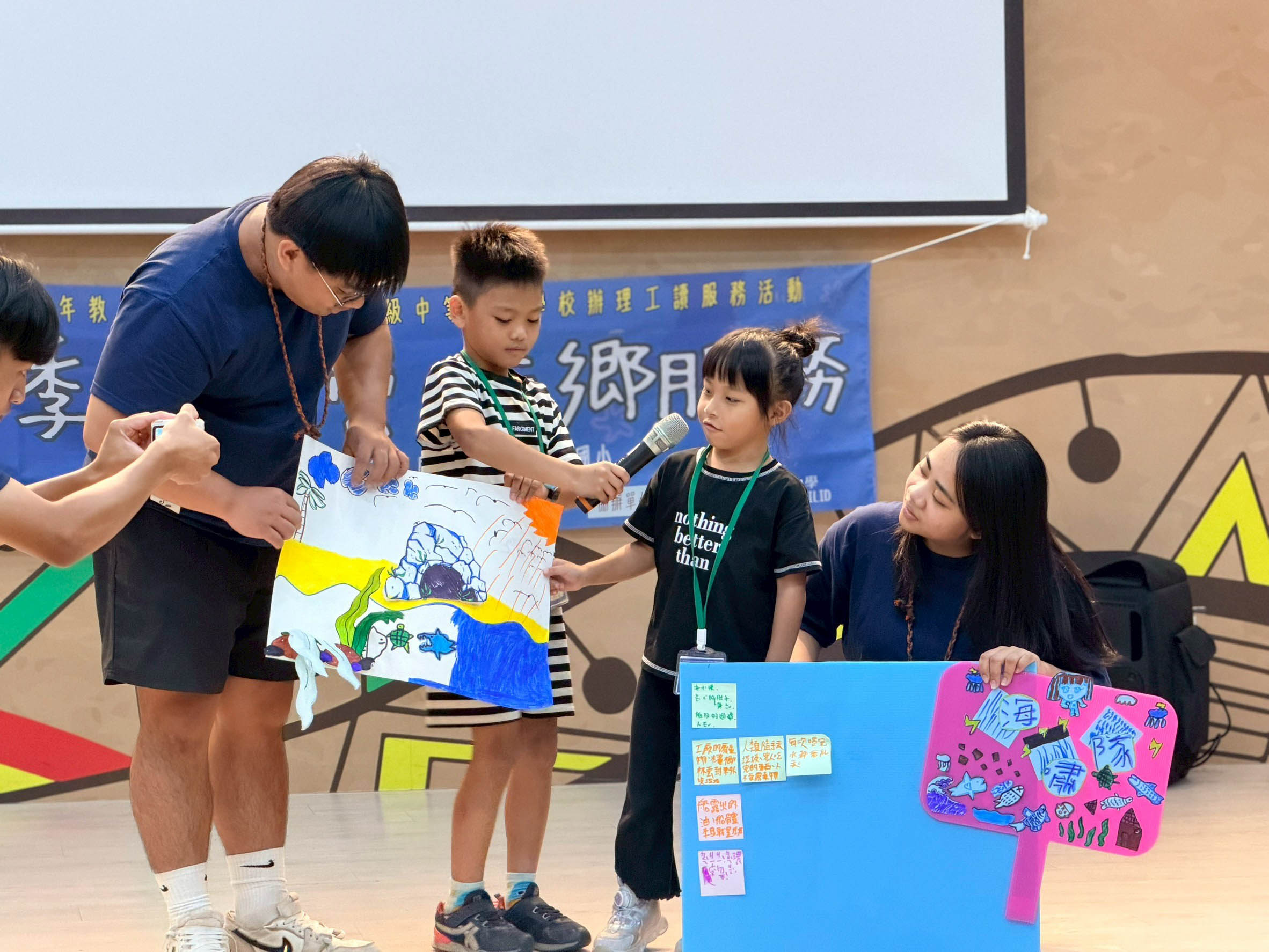
The Indigenous Student Resource Center (ISRC) of National Pingtung University of Science and Technology (NPUST) organized a 10-day, two-week “Back to the Tribal Villages—Summer Living Camp” during the summer vacation. A service team composed of Indigenous students from the university traveled to Kulou Elementary School in Laiyi Township and Beiye Elementary School in Majia Township, Pingtung County, embarking on an exciting learning journey with tribal children centered on the theme of “marine conservation.” Echoing Sustainable Development Goal 14 (SDG 14) of the United Nations—”Conserve and sustainably use the oceans, seas and marine resources for sustainable development”—the camp utilized games and creative courses to explore the connection between the marine environment and human life, starting from daily habits. The initiative helped children foster a sense of care for natural resources and the marine environment, and a sense of agency to safeguard marine ecosystems.
During the learning outcome presentation and closing ceremony, participants shared their reflections from the 10-day camp, expressing that the curriculum was extremely interesting and thanking the university’s student leaders for their companionship and care throughout the period, with many looking forward to participating in the camp again in the future. Reluctant to part ways at the end of the activities, many tribal children said emotional goodbyes to their camp counselors, showcasing the deep bonds built between them and bringing the summer living camp to a successful close.
The ISRC stated that the “Back to the Tribal Villages—Summer Living Camp” provided diverse learning resources for tribal children while enabling NPUST Indigenous students to learn and practice the spirit of giving back to their tribes. With marine conservation as this year’s theme, the center hopes that the environmental education will have a deep impact and that the children will be able to cultivate action-oriented attitudes towards protecting nature. At the same time, the program was able to deepen the connection between youth and their tribes, demonstrating the important role that Indigenous youth can play in social service, environmental care, and cultural transmission.