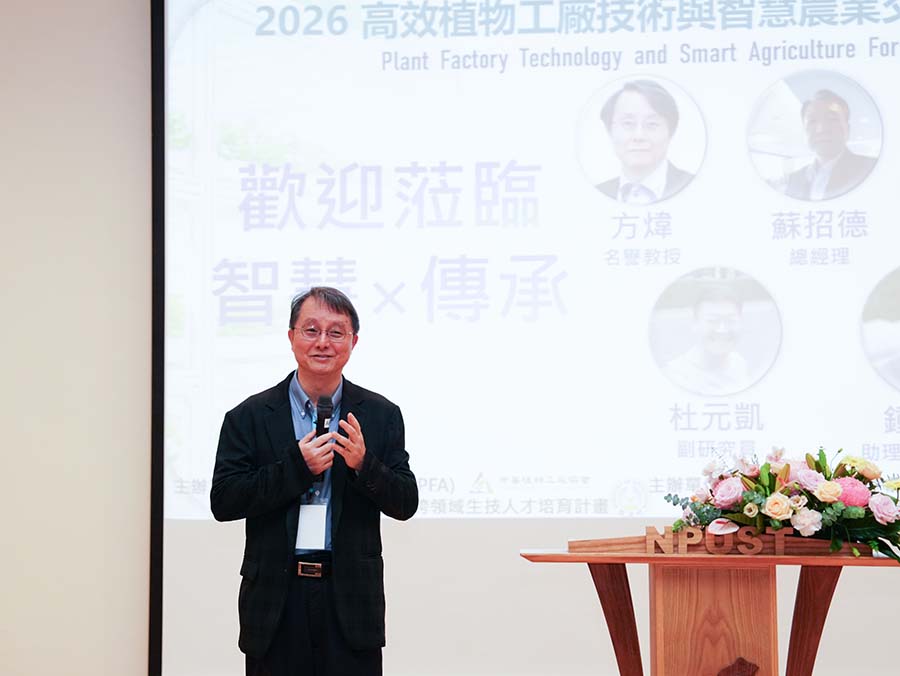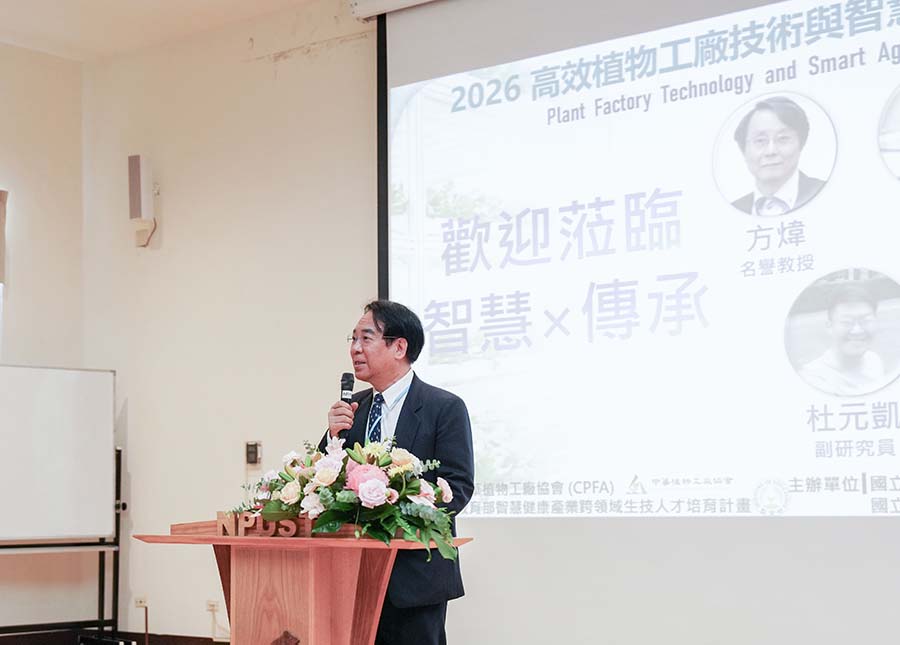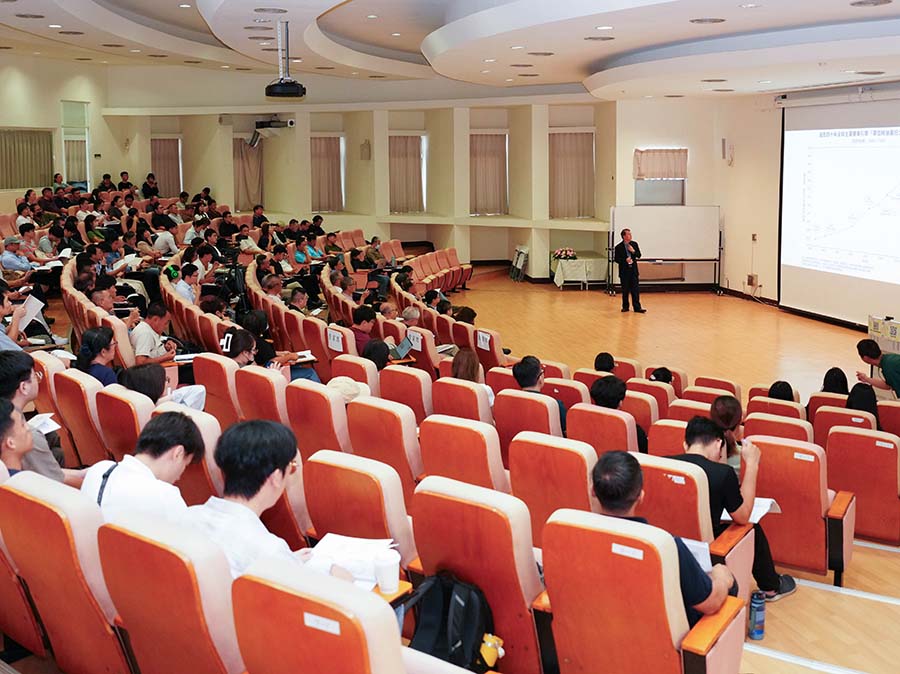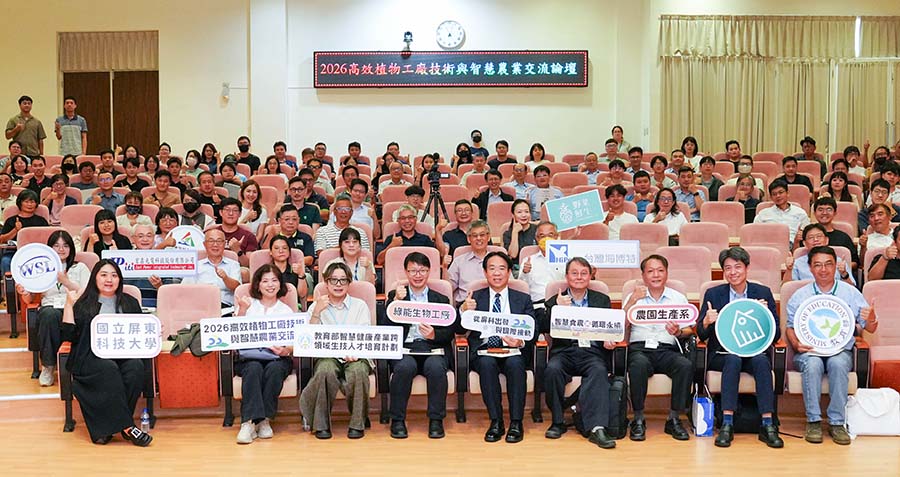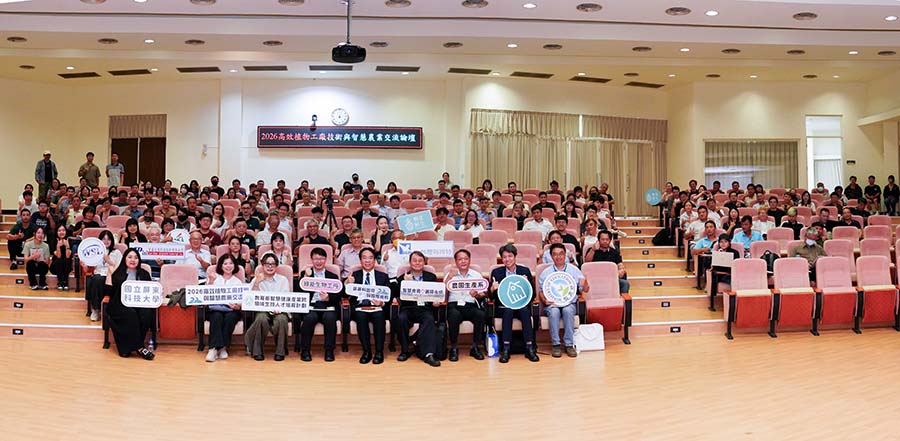
Faced with challenges such as global climate change, food security, net-zero carbon emissions, and agricultural labor shortages, leveraging technology to enhance agricultural production efficiency has become an important issue of common concern worldwide. Plant Factories with Artificial Lighting (PFAL), combined with smart agriculture technologies, break through climatic and seasonal limitations, possessing advantages such as stable production, high quality, and high resource utilization efficiency, and are regarded as an important direction for future agricultural development. On June 30th, the “2026 High-Efficiency Plant Factory Technology and Smart Agriculture Exchange Forum” was held at the College of Agriculture at National Pingtung University of Science and Technology (NPUST). The event was jointly hosted by the Taiwan Plant Factory Association, the Ministry of Education’s Smart Health Industry Interdisciplinary Biotech Talent Cultivation Project, the NPUST College of Agriculture, Department of Plant Industry, and the Green Energy Bio-Factory. It attracted a total of 203 registrations from industry, government, academia, and research representatives from all over Taiwan. Industry representatives accounted for 116 people, making up 57% of the total registrants; academic and research representatives—including those from colleges and universities, research institutions, government scientific research units, and students—totaled 71 people, accounting for about 35%. This comprehensive and diverse participation structure demonstrates that plant factory technology is maturing, becoming an important focal point for cross-disciplinary cooperation in the areas of agriculture, biotechnology, optoelectronics, smart sensing, automated control, and information technology.
Centered on high-efficiency plant factory technology, this forum focused on topics such as the total performance evaluation of artificial light plant factories, smart sensing, plant phenomics, high-value crop production, and high-efficiency cultivation management. It invited prominent experts in the fields of plant factories and smart agriculture from across the country to jointly share their latest research achievements and industrial applications, offering a chance to highlight the migration towards environmentally controlled agriculture and smart production.
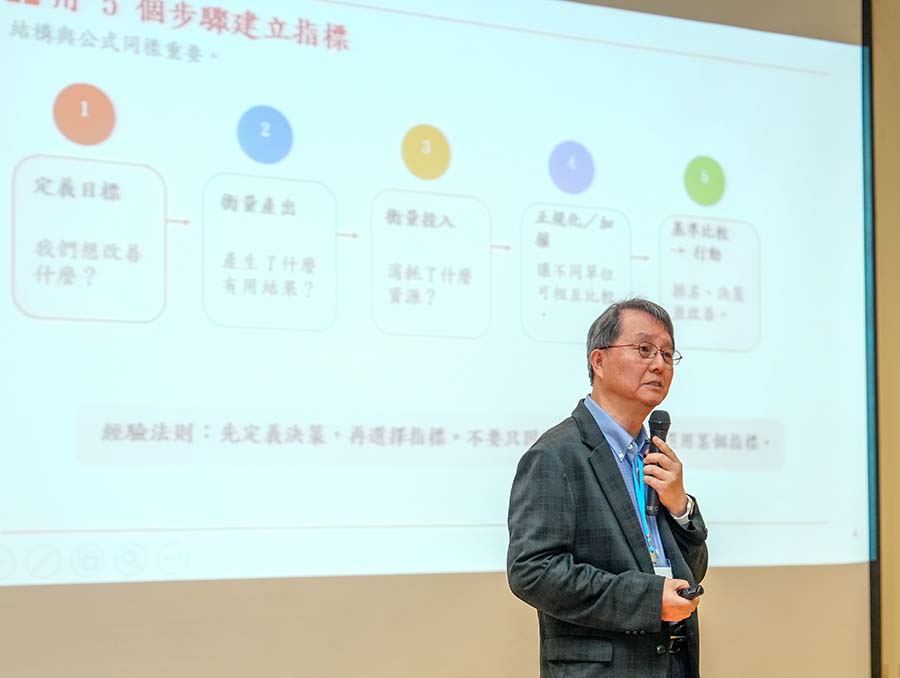
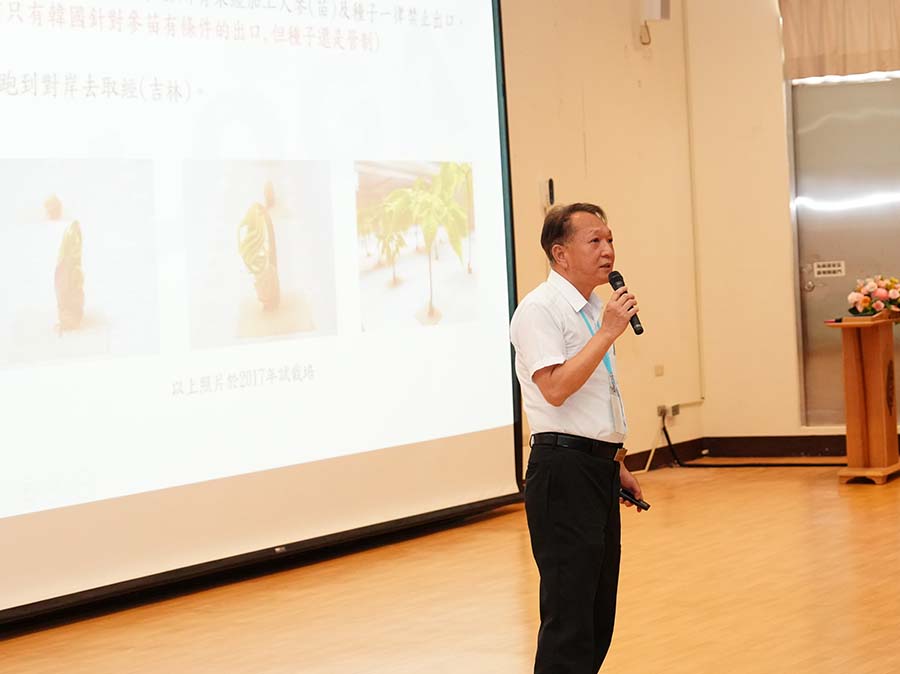
Forum speakers included a number of experts on related subject matter, including Professor Emeritus Wei Fang of National Taiwan University, who spoke on using “Total Performance Evaluation (TPE) for PFAL” to establish a quantitative evaluation framework for production efficiency and economic benefits in plant factories. Su Chao-De, General Manager of Taiwan Loga Solar Co.,Ltd., shared on mass production technology for ginseng seedlings in plant factories, and demonstrated new opportunities for the commercialization of high-value crops, and Professor Lin-Chi Chen of the Department of Bio-Industrial Mechatronics Engineering at National Taiwan University introduced ion-sensing IoT technology for enhancing nutrient solution management and precision cultivation capabilities in plant factories.
Additionally, Tu Yuan-Kai, Associate Research Fellow at the Taiwan Agricultural Research Institute (Ministry of Agriculture) shared on the latest applications of plant phenomics in plant factories and a new-generation plant growth monitoring model through 3D modeling, multispectral imaging, and digital analysis technologies. And finally, Assistant Professor Hsing-Ying Chung of the Department of Plant Industry at NPUST shared research results on high-efficiency production in lettuce factories. The method used, which involves integrating optimal spectrum design, fast-growing varieties, and cultivation management strategies, demonstrates the application potential of plant factories in high-efficiency vegetable production.
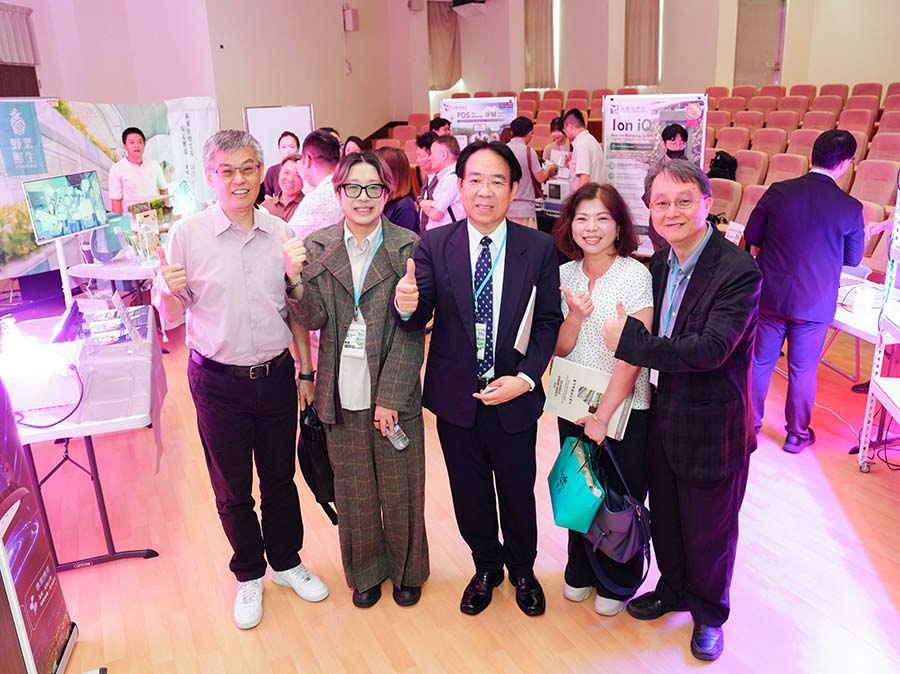
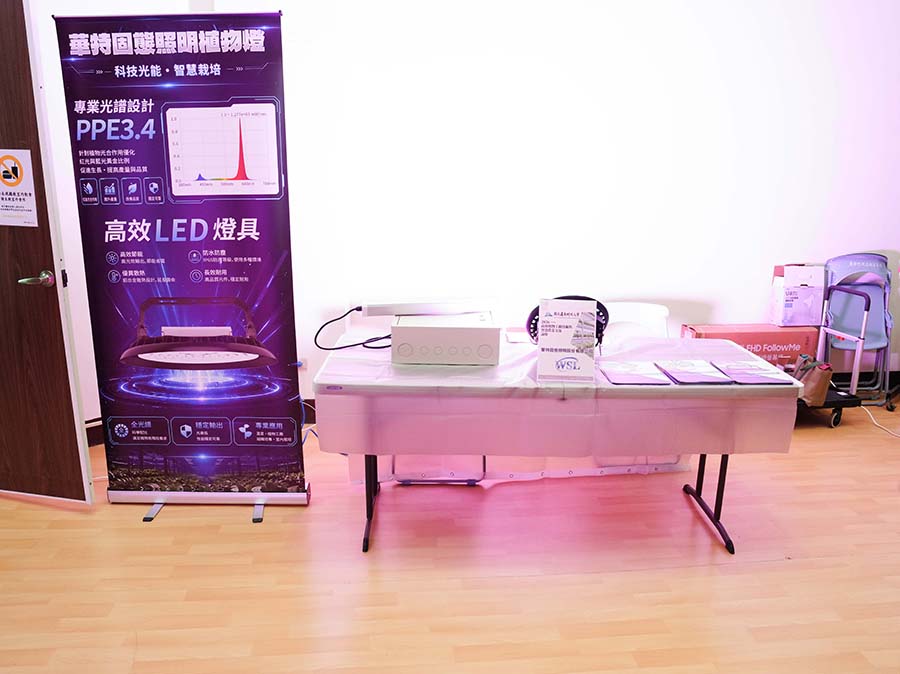
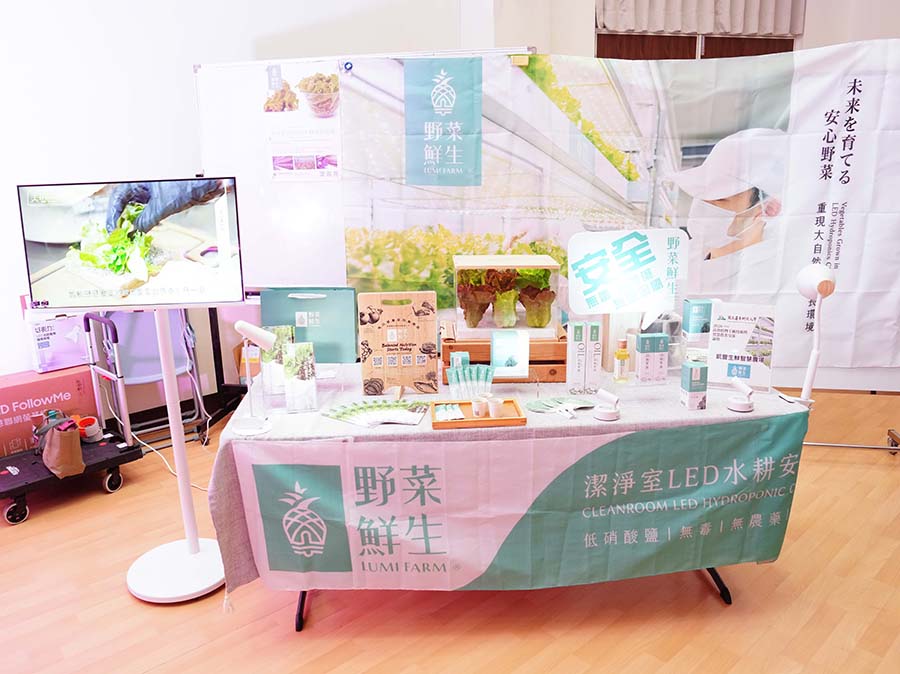
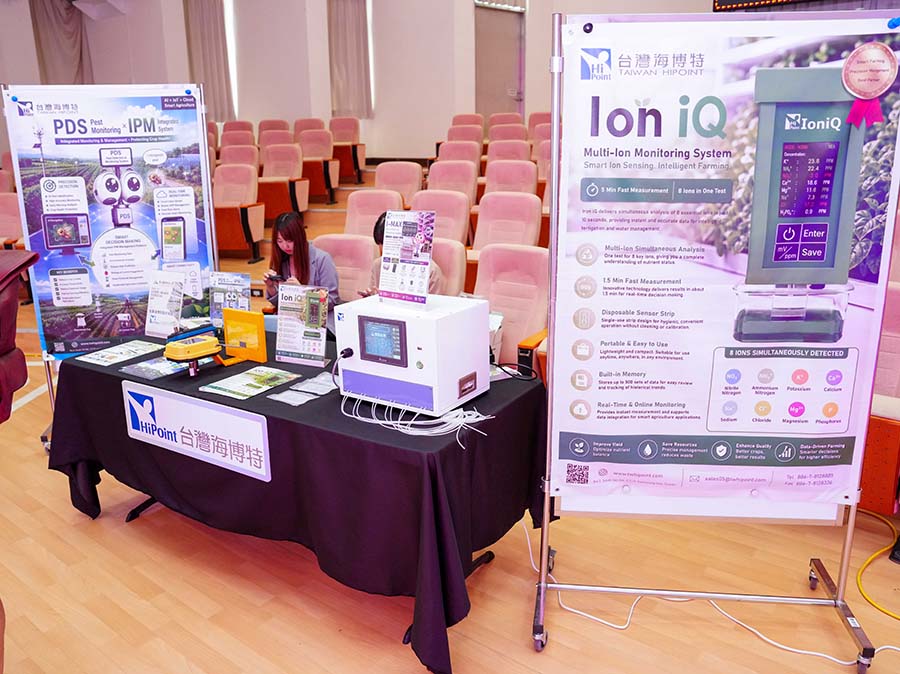
In addition to keynote speeches, the forum also featured a concurrent plant factory technology exhibition area, showcasing the latest technological achievements of the plant factory industrial chain. Taiwan Hipoint Corporation exhibited commercial multi-ion nutrient solution testing equipment, providing real-time monitoring and precise management solutions for plant factory nutrient solutions; Just Power Integrated Technology Inc. displayed spectrally adjustable plant growth LED lighting systems; Walt Solid State Lighting Co., Ltd. showcased high-efficiency LED supplemental lighting equipment dedicated to greenhouses; and KFRT Co., Ltd. and Tingmao Agricultural Biotechnology Co., Ltd. exhibited a variety of plant factory-produced vegetables and high-added-value agricultural products. Together, there was a comprehensive presentation of the overall development achievements of plant factories ranging from environmental control and light source technology to smart sensing and commercial production.
NPUST President Chang Chin-Lung stated that NPUST has been cultivating agricultural talent and technology for many years and is continuously promoting prospective research in smart agriculture, protected horticulture, and plant factories. Last year (2025), the forum focused on Controlled Environment Agriculture (CEA), while this year emphasized Plant Factories with Artificial Lighting (PFAL) with the aim of comprehensively presenting the latest developments in plant factory technology ranging from artificial light environments and smart sensing technology to plant phenomics and high-efficiency production management. In the future, plant factories will not only be an integration of environmental control technologies, but will also establish plant-demand-centered precision production models through emerging tools such as sensing technology, data analysis, and smart decision-making— moving toward a future in agriculture characterized by higher efficiency, higher quality, and greater sustainability. The organizers stated that this forum combined the three major features of academic exchange, technology exhibition, and industrial networking, providing the latest research achievements and technology sharing for plant factories, while also establishing a cooperation and exchange platform for industry, government, academia, and research to promote the alignment of research outcomes according to industrial demands. In the future, NPUST will also continue to join hands with the academic community, research institutions, and the industrial sector to jointly promote technological innovation in plant factories and smart agriculture. Together they will also work to cultivate interdisciplinary talent, and create a new paradigm for future agriculture that is characterized by production efficiency, industrial competitiveness, and sustainability.