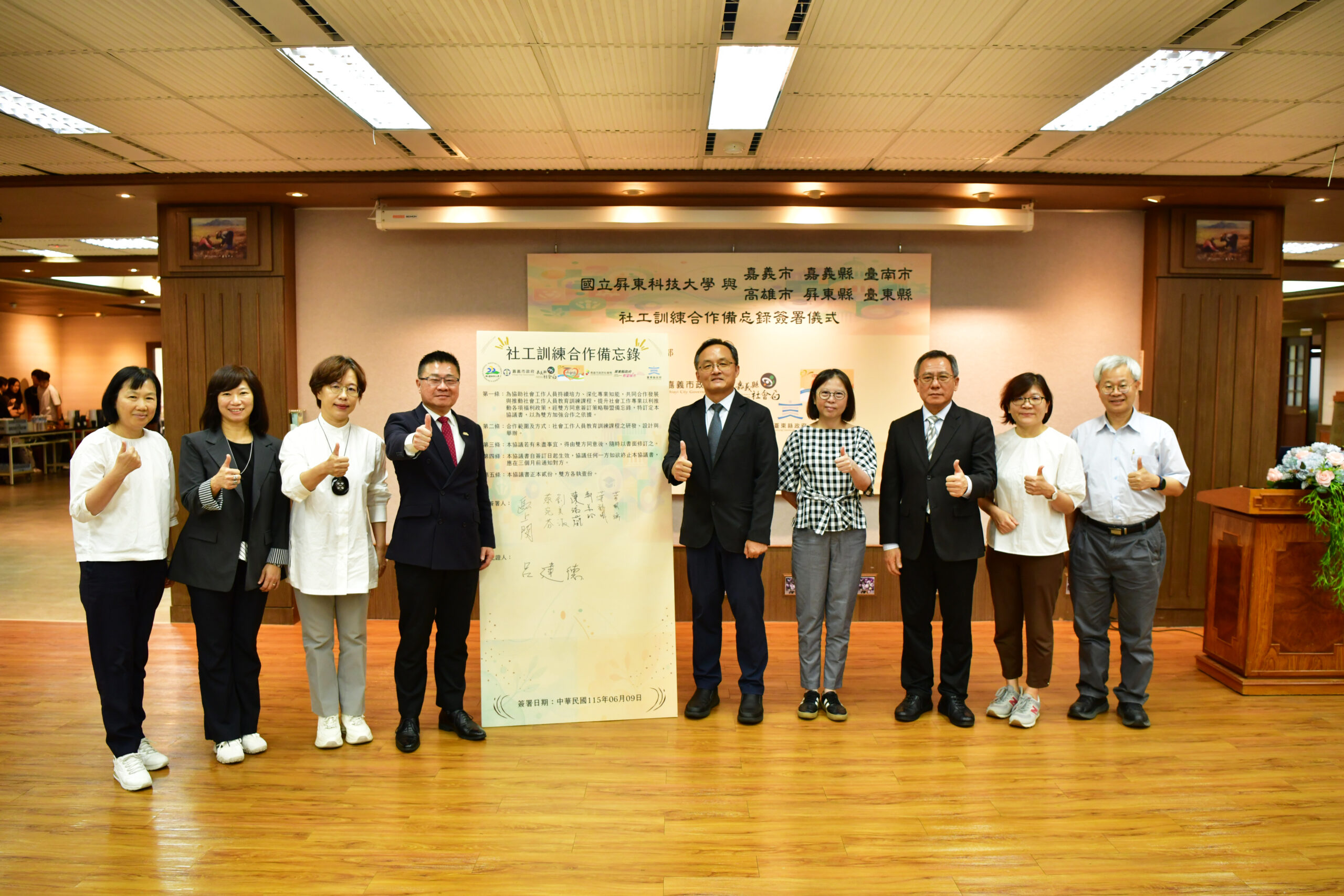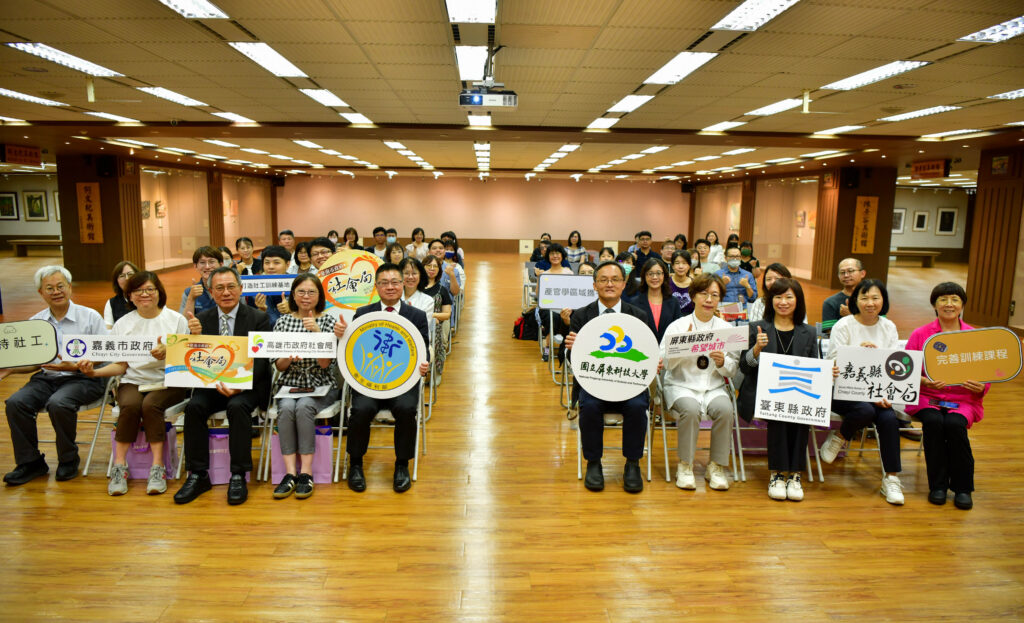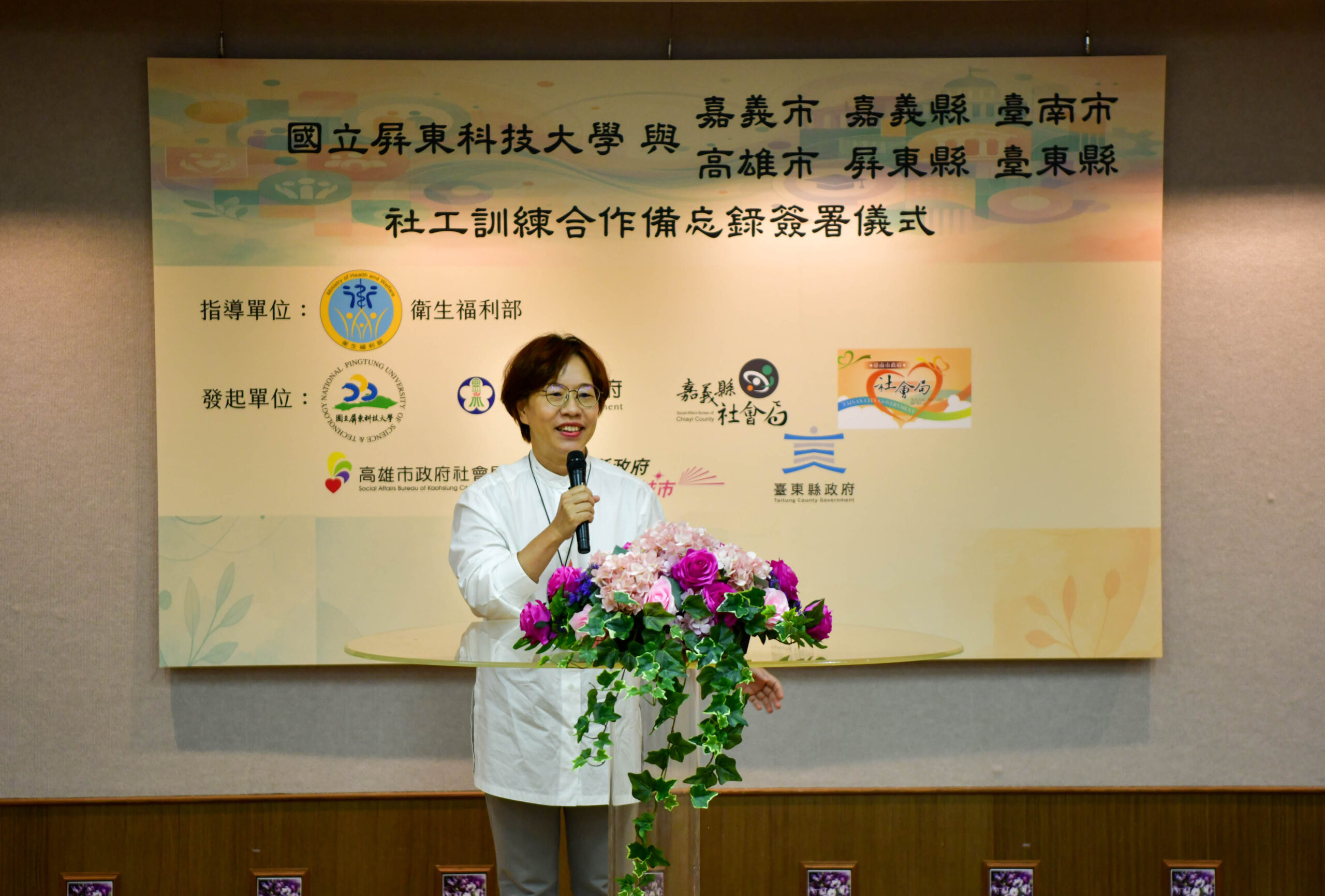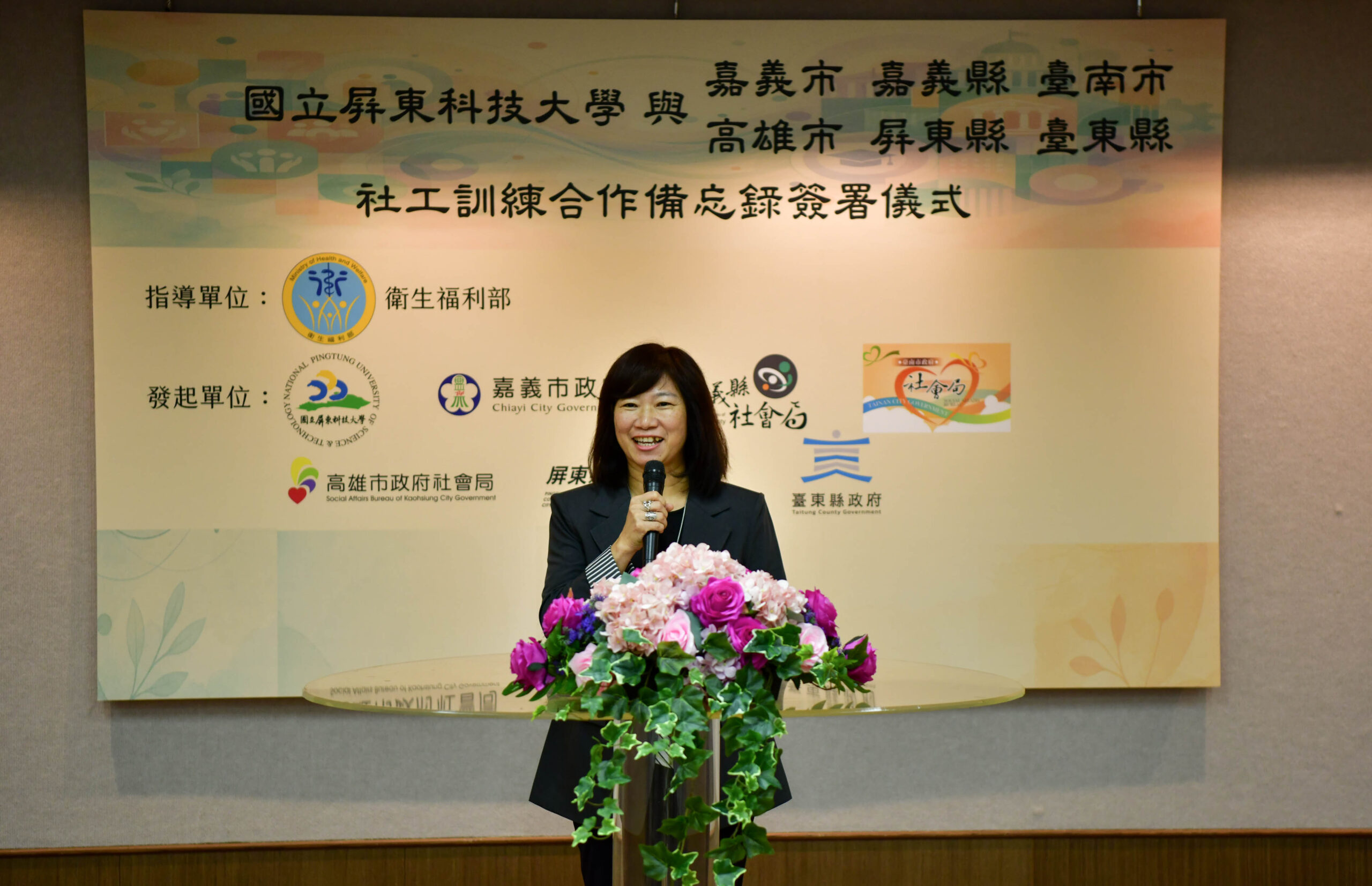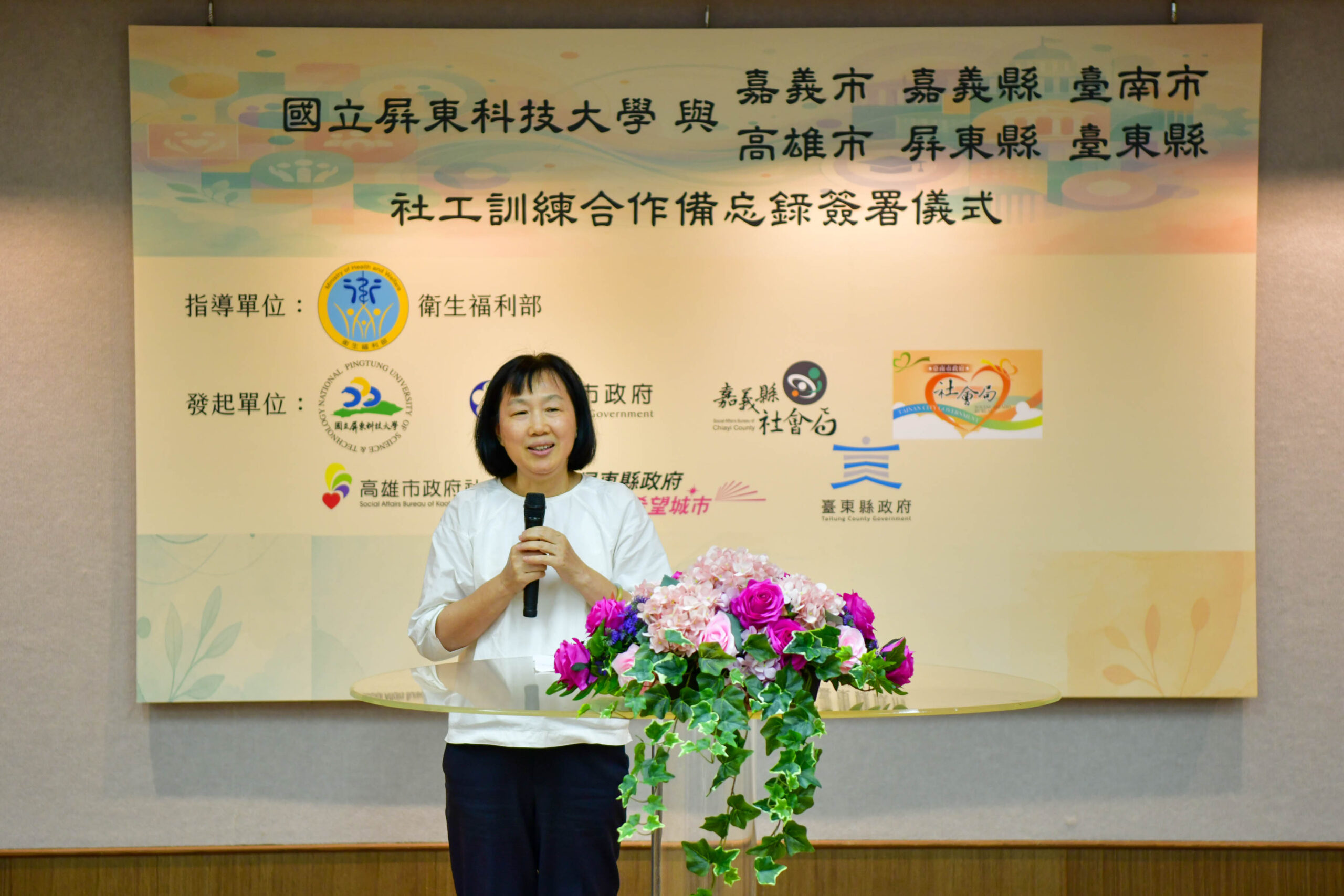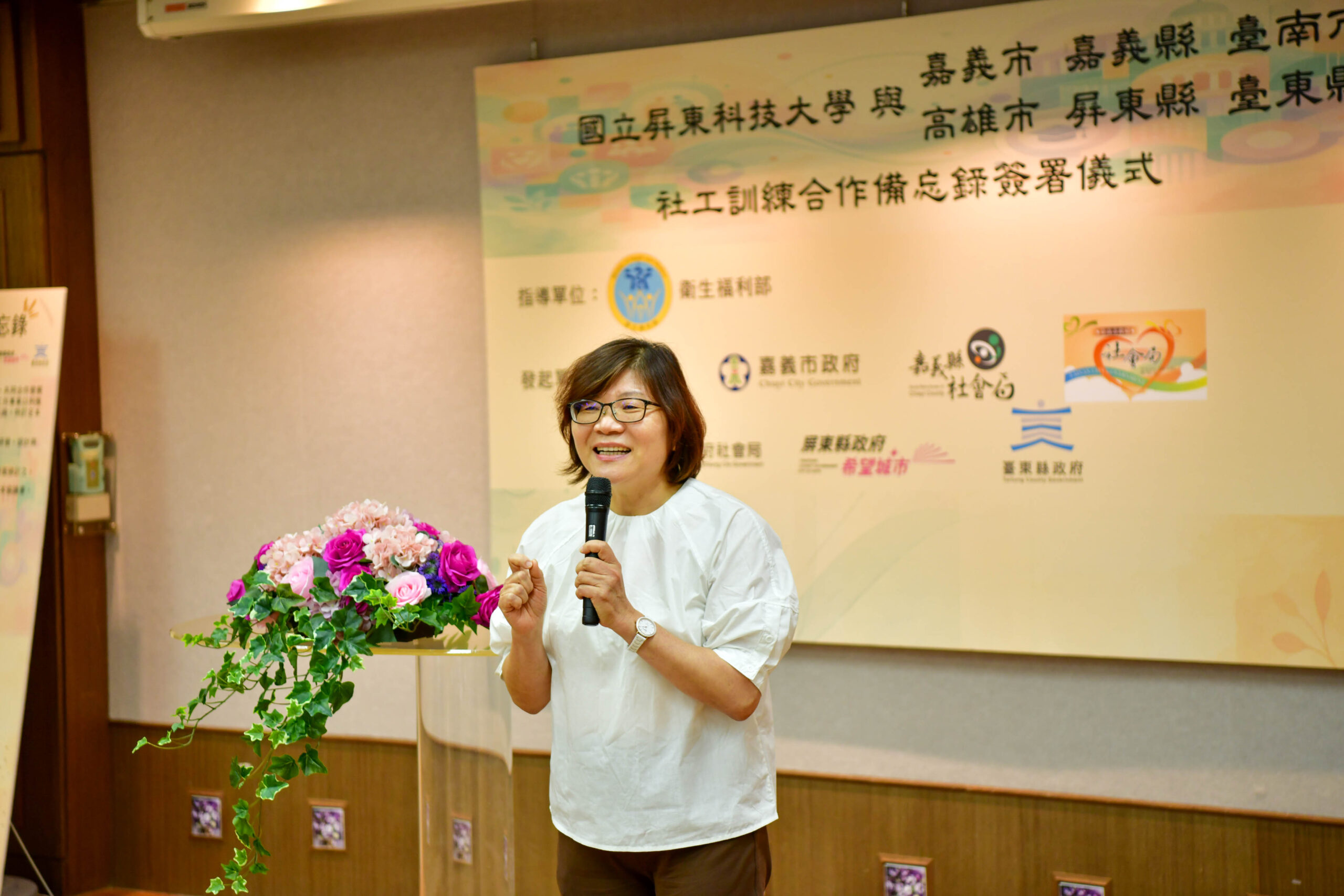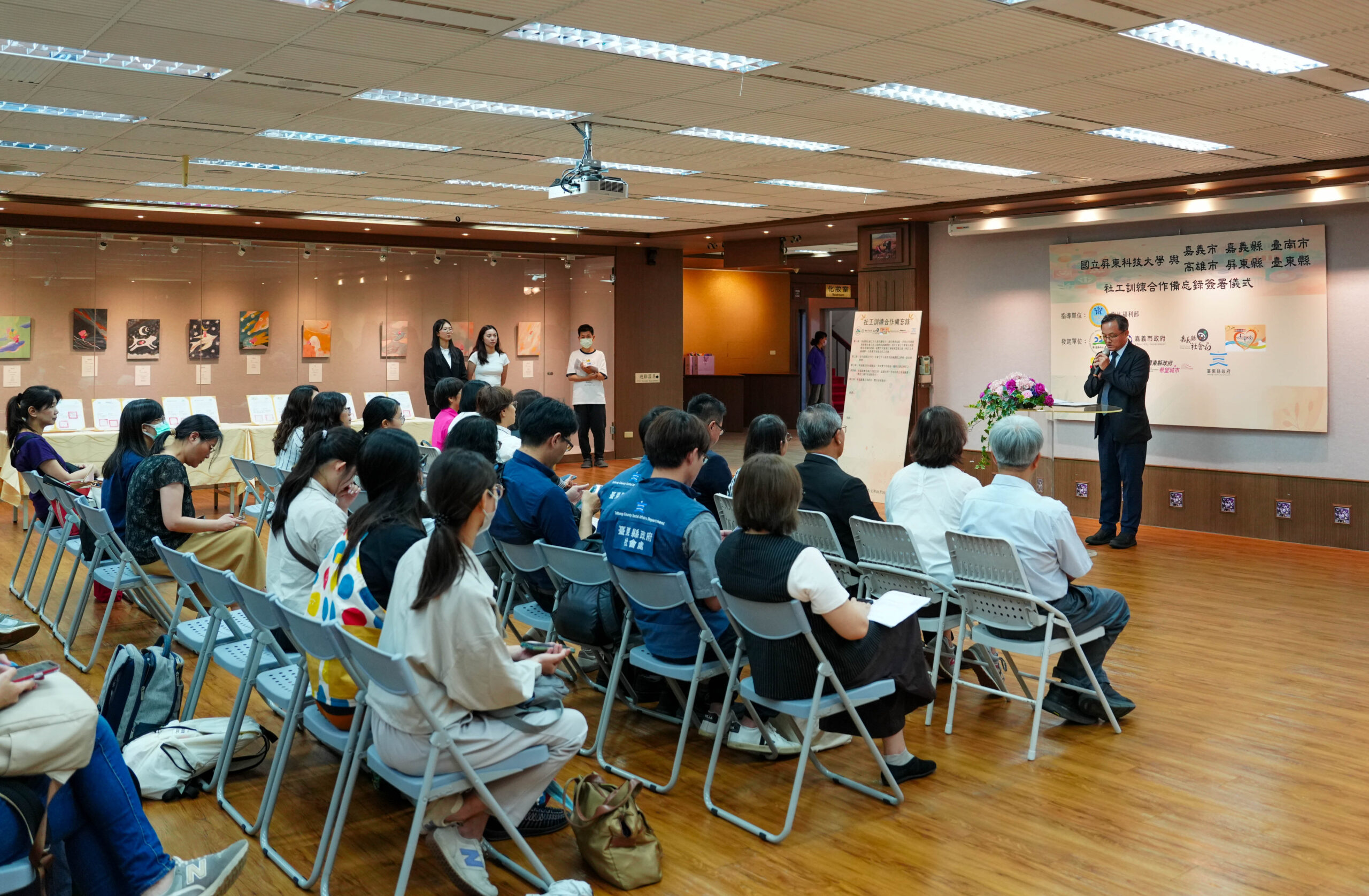
To strengthen the professional knowledge of frontline social workers and establish a systematic training mechanism, National Pingtung University of Science and Technology (NPUST) signed a Memorandum of Understanding (MOU) on Social Work Training with Six Southern and Eastern Counties and Cities” on June 9th, 2026. The initiative was jointly launched by NPUST and local governments of Chiayi City, Chiayi County, Tainan City, Kaohsiung City, Pingtung County, and Taitung County. The participation of Deputy Minister Jen-Der Lue of the Ministry of Health and Welfare (MOHW), who was specially invited to witness the event, demonstrated the commitment that is being made by both central and local governments to support social workers.
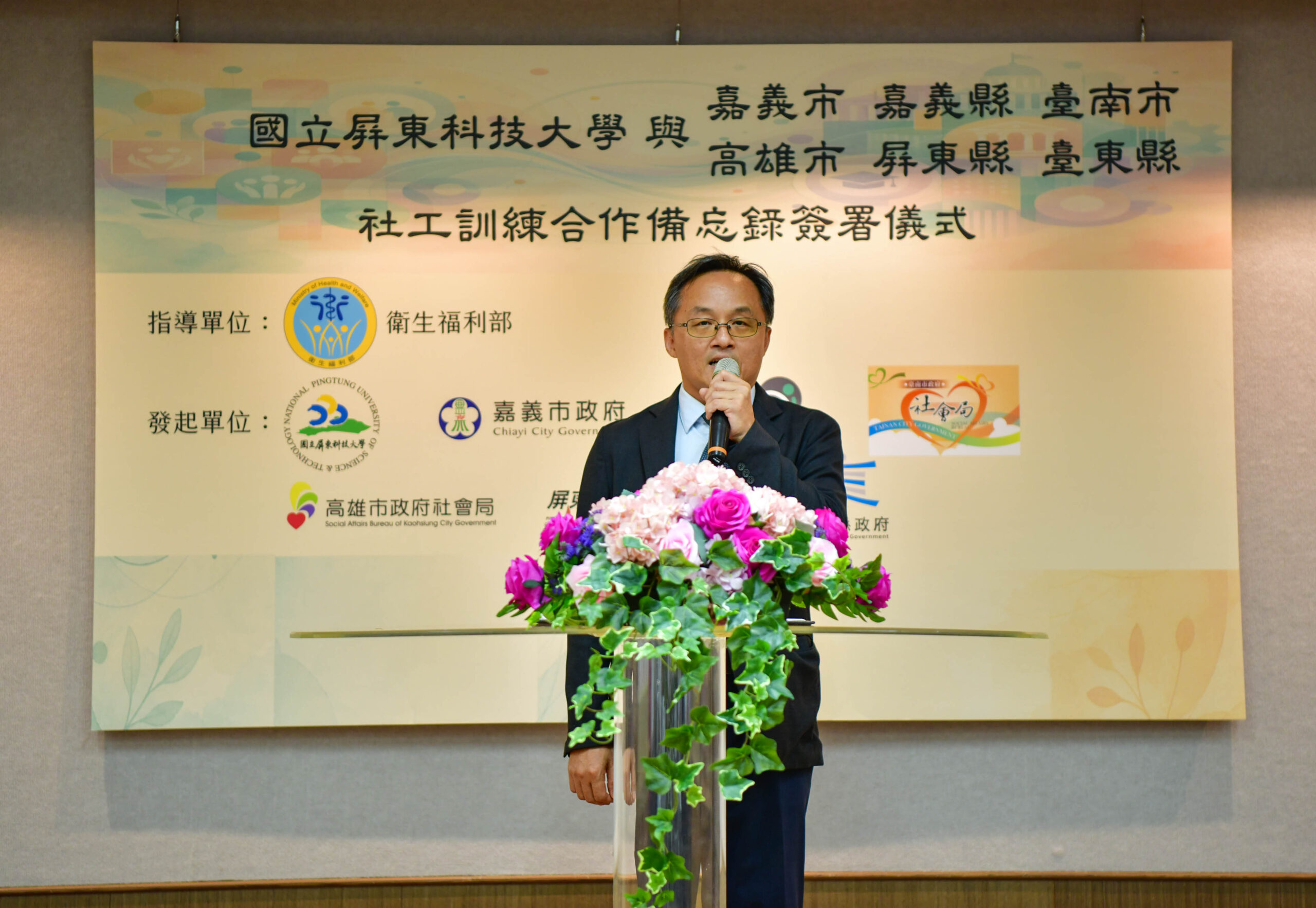
The core objective of the MOU is to assist the six counties and cities in establishing structured, professional social work training courses that are both “tiered” and “multi-year progressive.” In this way the initiative aims to enhance social workers’ professional expertise, and thereby increase their willingness to remain in their positions so that they can serve as stabilizing forces in the sector. MOHW Deputy Minister Jen-Der Lue stated that social work is an incredibly arduous and challenging profession that requires robust support, including salary adjustments, information systems, psychological counseling, and legal assistance. The Deputy Minister also expressed his deep gratitude to NPUST for taking the lead to collaborate across regions with the six local governments to create this training base—and he pledged full support from the Ministry of Health and Welfare.
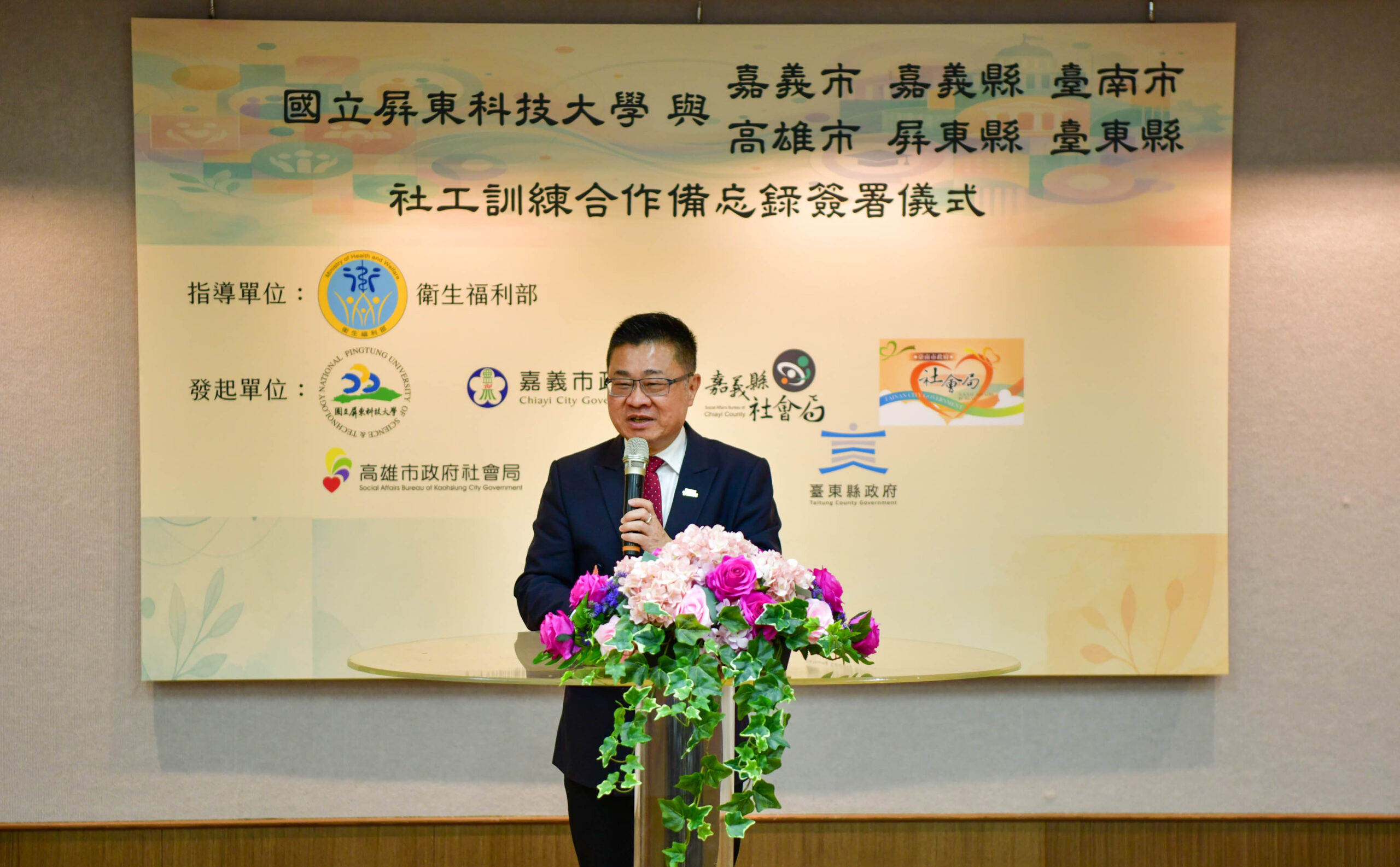
In his address, NPUST Vice President for Academic Affairs Shang-Min Ma expressed his gratitude to Deputy Minister Jen-Der Lue for coming to witness the signing ceremony, and he thanked the distinguished guests from the six counties and cities for gathering together. He noted that through the signing of this alliance and the injection of regional collaborative resources, they will be able to optimize the training of social work personnel. Modern emerging topics such as “social work ethics, AI application, and new media” will also be integrated into the curriculum to keep pace with the times. This will ensure that social work partners receive the most systematic and professional training, which in turn will allow families in need of assistance to receive better service and support.
Taiwan’s Ministry of Health and Welfare and local governments have already promulgated relevant tiered training implementation plans, laying a solid foundation for the in-service training of social workers. However, based on practical observations, NPUST identified that the current system still has room for optimization and refinement across four major dimensions: the planning of training timelines, progressive multi-year training, the integration of course content, and the timely inclusion of emerging topics. Therefore, through the project NPUST is cooperating with the six counties and cities to specifically target these areas.
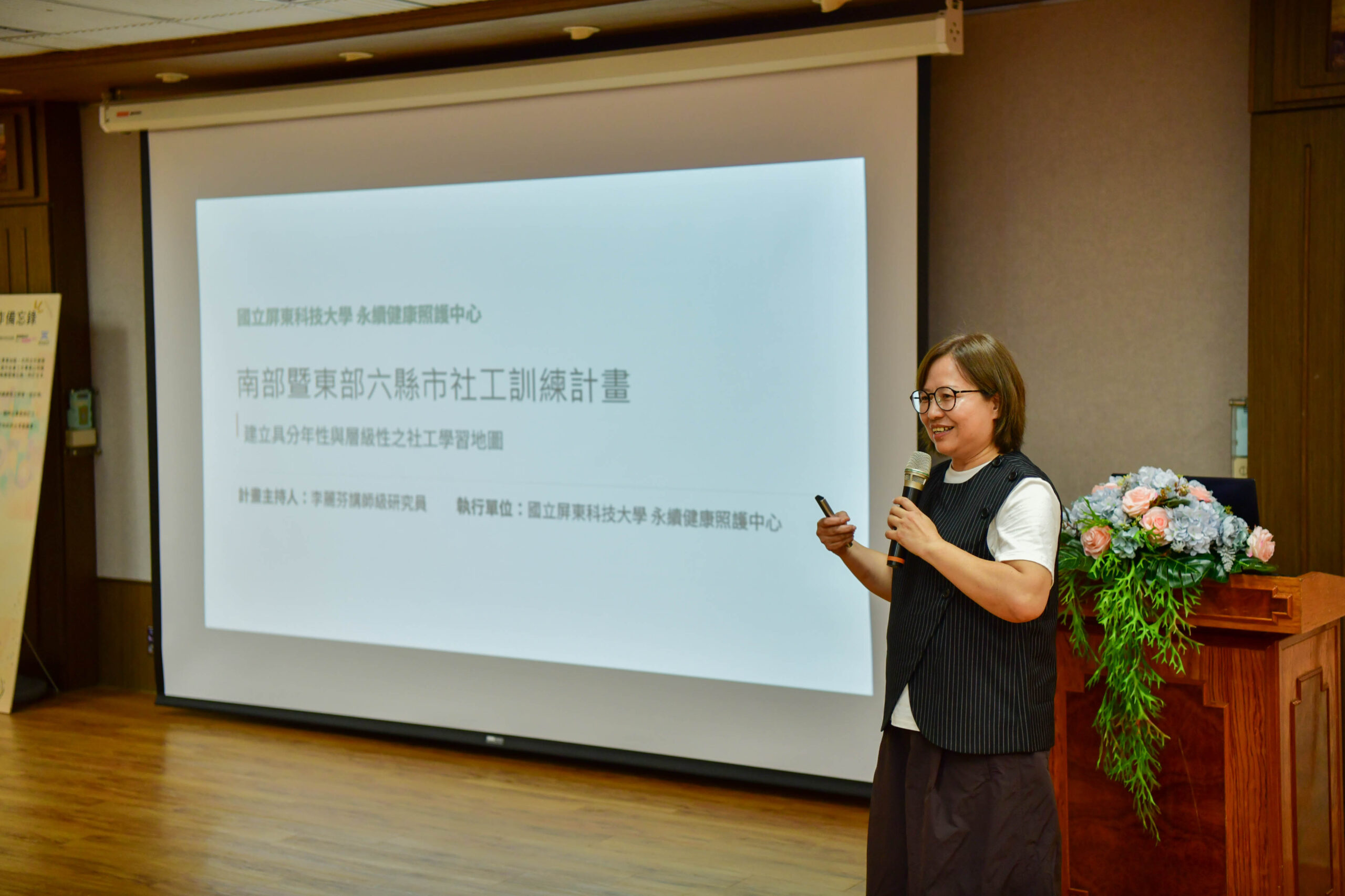
Funded by the Ministry of Health and Welfare’s Public Welfare Lottery Feedback Fund, the NPUST Sustainable Health Care Center is developing a multi-year progressive curriculum for vulnerable family and child protection social workers. Led by Instructor Li-Fen Li, the project involves a monthly committee—including NPUST social work faculty and division chiefs from six local governments—that will analyze central and local training courses from the past five years.
Frontline social workers will also provide feedback through focus groups. The updated curriculum will incorporate emerging topics like social work ethics, AI application, and new media. Expected to finish planning by late 2026, joint training courses will launch in 2027. This initiative expands professional resources in southern and eastern Taiwan, reducing travel costs for local workers while fostering cross-regional cooperation and a more resilient social safety net.