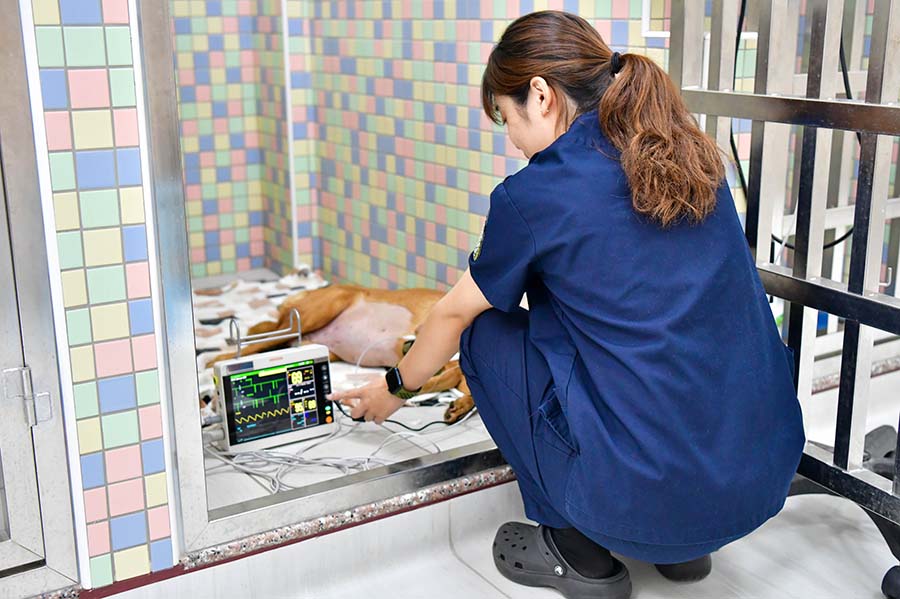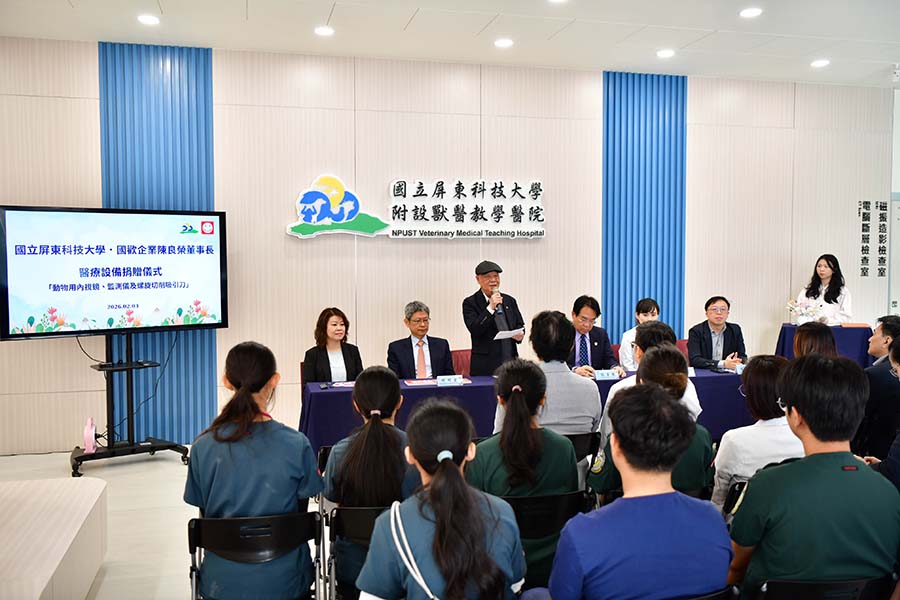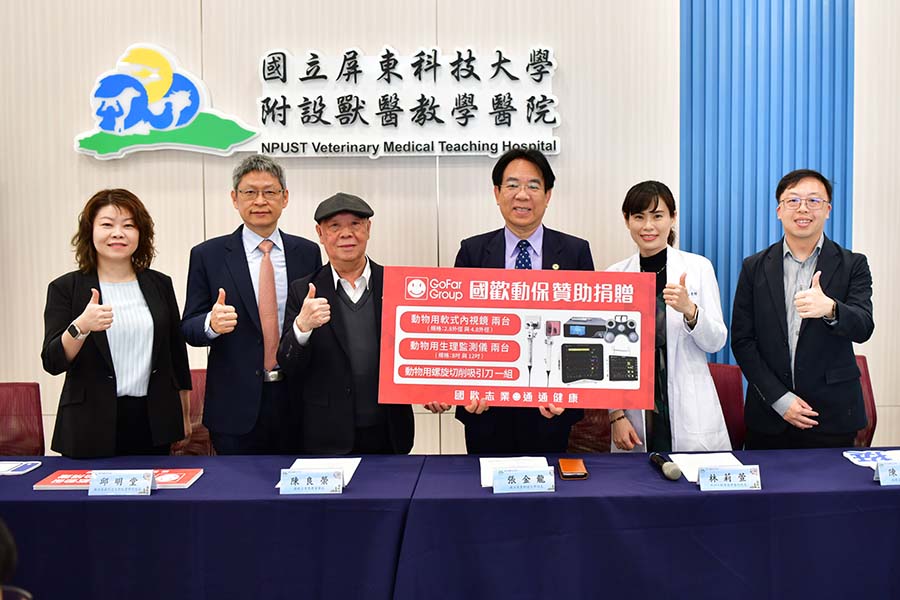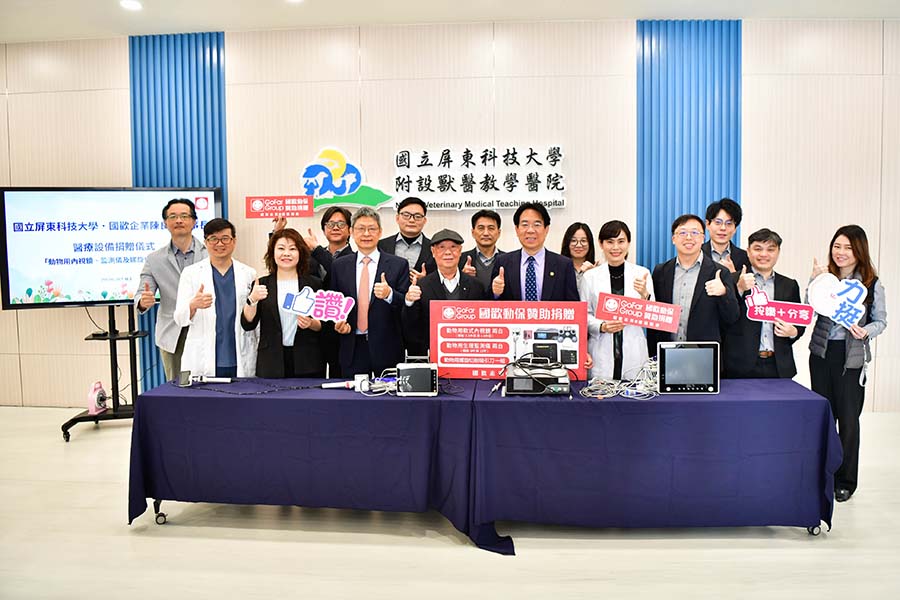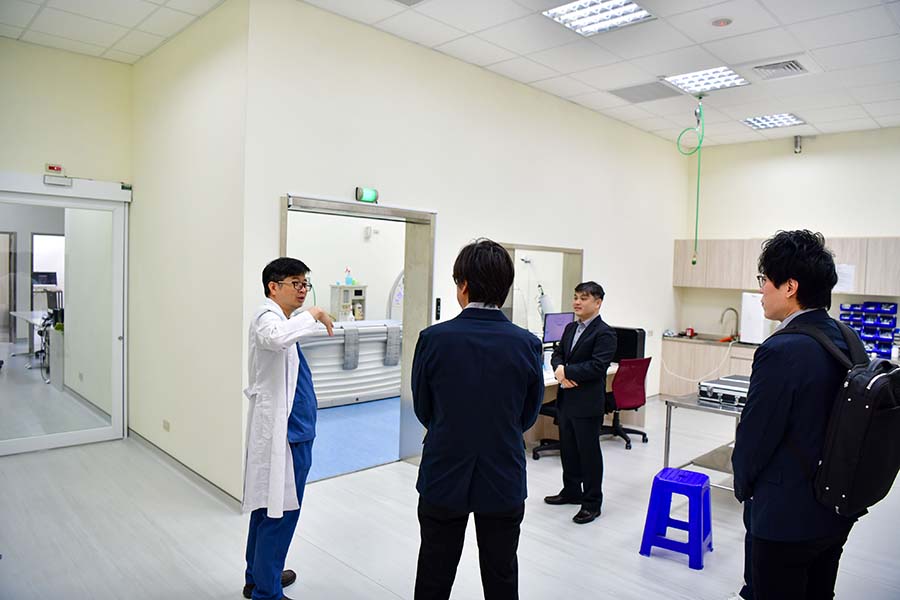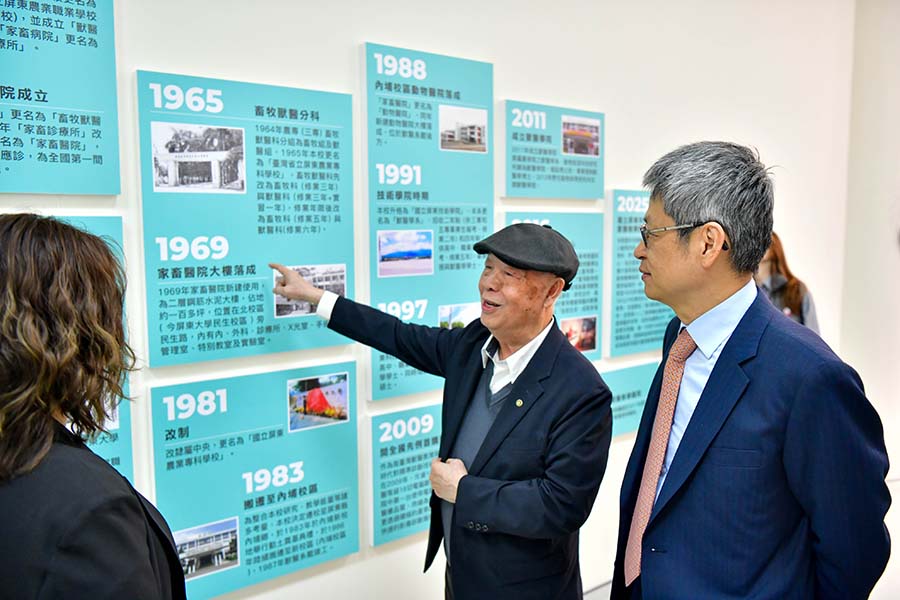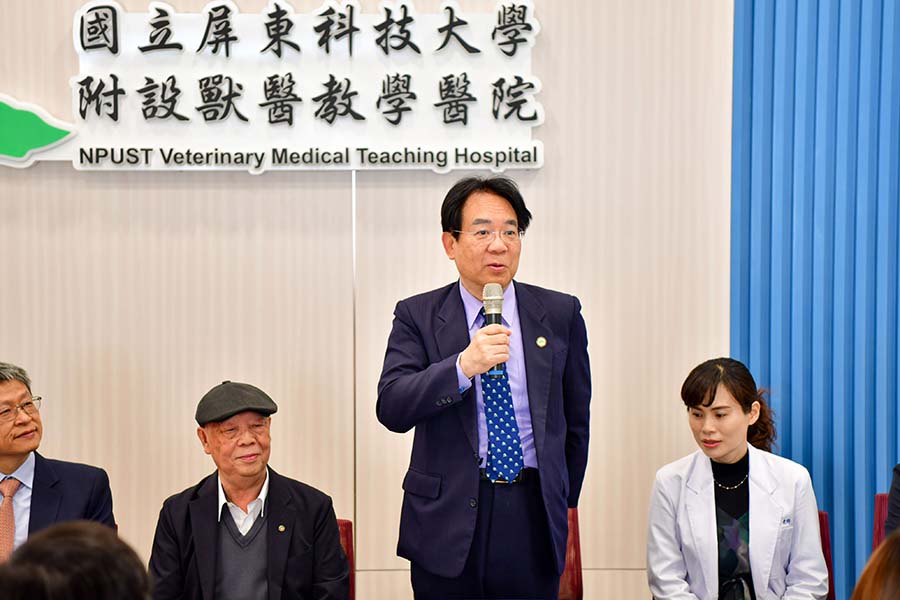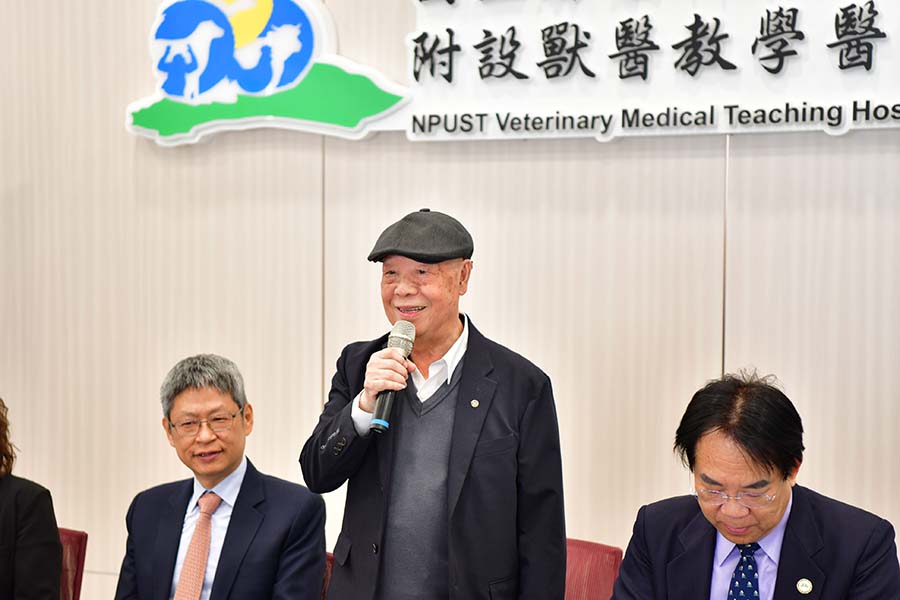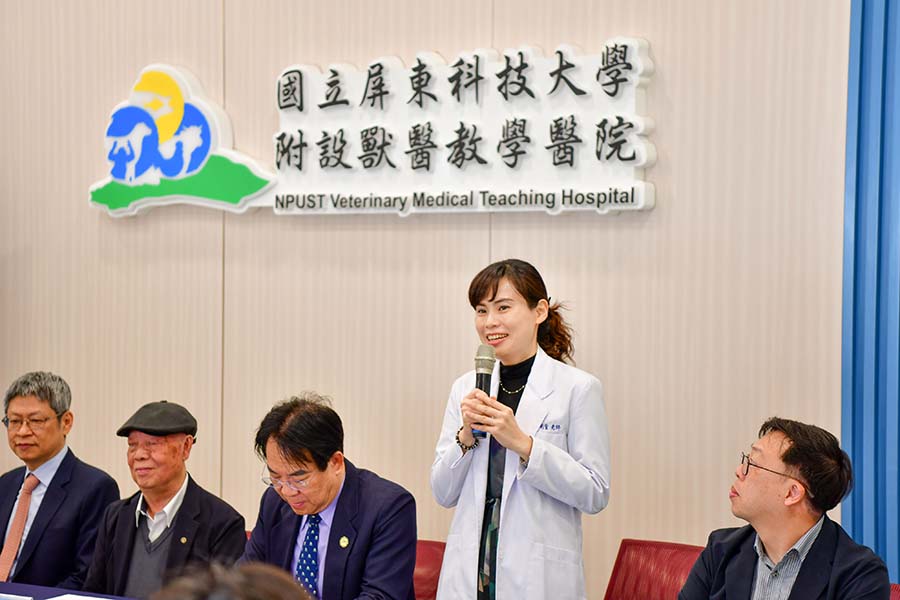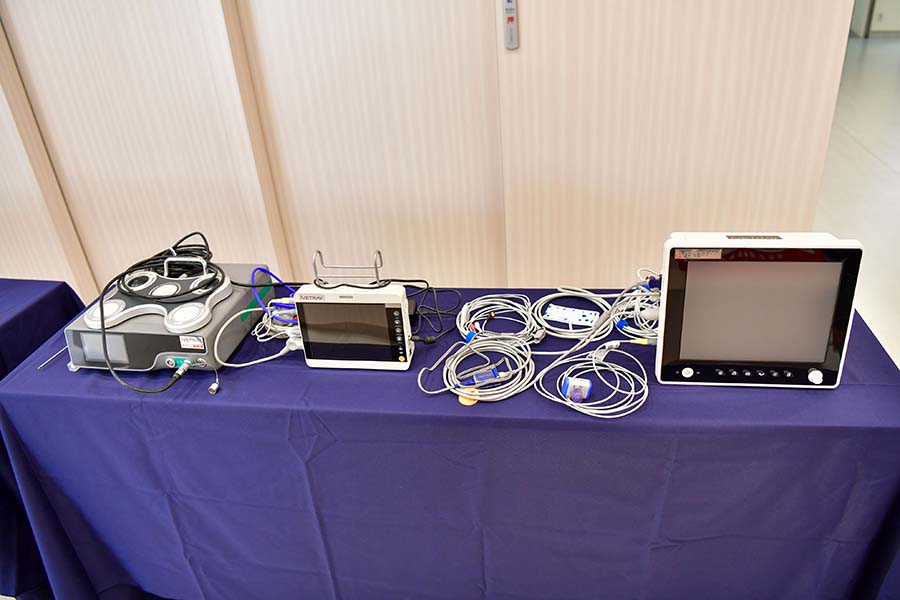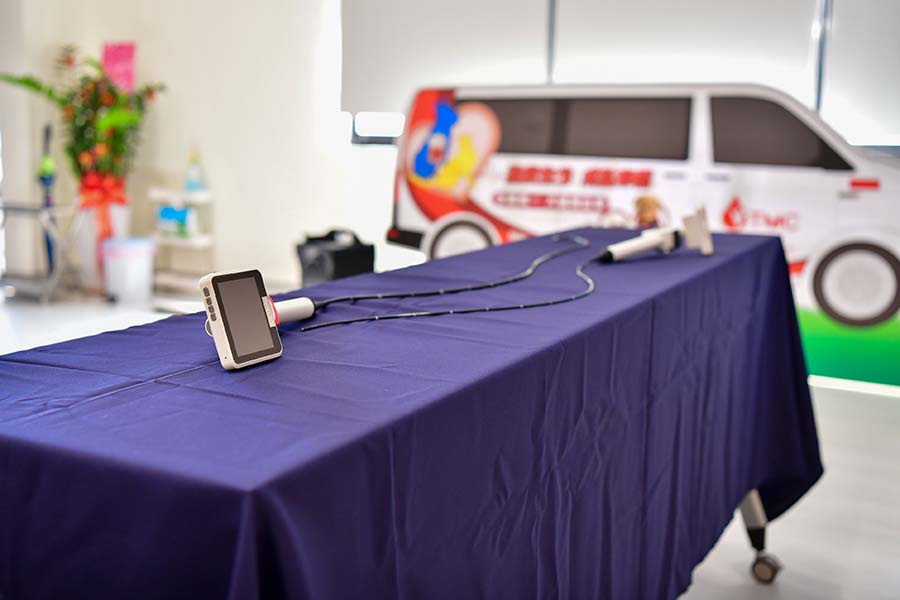
Since NPUST opened the Veterinary Teaching Hospital Urban Campus, outpatient and surgical services have seen steady rise, with overall medical demand and referral volumes continuing to grow. Aiming to fortify the facilities even more, and give back to his alma mater, distinguished alumnus and Chairman of the GoFar Group, Mr. Liang-Jung Chen, donated a suite of high-end animal medical equipment to the urban campus on February 3rd (2026). The donation includes one microdebrider systems for animals, two portable flexible animal endoscopes, and two physiological monitors for clinical diagnosis and pedagogical training. NPUST President Chin-Lung Chang represented the university at the donation ceremony, which was witnessed by Dean Ming-Tang Chiou of the College of Veterinary Medicine, Director Yi-Lun Tsai of the Department of Veterinary Medicine, and Director Li-Hsuan Lin of the Veterinary Teaching Hospital, along with faculty and students. The warm and solemn event was an example of the deep friendship NPUST alumni share with their alma mater and a common desire to promote the development of animal healthcare.
As the trend of aging becomes increasingly evident among companion animals—coupled with shifts in disease patterns and rising expectations from owners for medical quality—clinical demand for “precision diagnosis” and “minimally invasive treatment” has grown rapidly. The NPUST Veterinary Teaching Hospital has been proactively working on the development of minimally invasive medicine for over a decade, accumulating extensive experience in laparoscopic and thoracoscopic surgeries. The newly donated microdebrider is expected to become a key tool for the hospital’s future advancement in arthroscopic medicine. Beyond improving the precision and efficiency of treating intra-articular lesions, it will enhance the safety and visual clarity of minimally invasive oral and nasal surgeries, further reducing intraoperative risks and shortening recovery times. Additionally, with the expansion of the new campus and clinical workload, the existing flexible endoscopes and physiological monitors were reaching capacity. These new additions will effectively fill the gap, enhancing the immediacy and comprehensiveness of anesthesia monitoring and endoscopic examinations for critically ill and geriatric pets. Overall, the equipment represents not just an expansion of resources, but an upgrade to NPUST’s veterinary clinical technology and teaching capacity.
NPUST President Chin-Lung Chang stated that he is grateful for the timely support from distinguished alumnus Liang-Jung Chen. Modern veterinary clinical practice is rapidly evolving toward minimally invasive, precise, and high-quality care. The addition of this equipment will make the university’s Veterinary Teaching Hospital more comprehensive and competitive in providing clinical services, emergency monitoring, and minimally invasive surgeries. This is more than an increase in hardware; it is an elevation of medical quality and teaching depth which will allow veterinarians and students to align with global trends through frontline practice while providing professional care for more pets in the Pingtung area.
During his speech, GoFar Group Chairman Liang-Jung Chen remarked that this donation is a continuation of 20 years of industry-university collaboration between GoFar Group and veterinary departments across Taiwan. He hopes the precision instruments will assist NPUST in advancing precision medicine and student internships. He also expressed great pride in seeing his alma mater evolve from the early Pingtung Institute of Agriculture into a comprehensive university covering agriculture, engineering, and veterinary medicine.
Director Li-Hsuan Lin of the Veterinary Teaching Hospital pointed out that the significant increase in patients since the new campus opened provides valuable learning opportunities for clinical teaching, but also tests the efficiency of equipment allocation. Flexible endoscopes play an irreplaceable role in examining gastrointestinal and respiratory diseases, while physiological monitors effectively track the vital signs of elderly or high-risk animals under anesthesia. The arrival of the microdebrider completes the hospital’s portfolio of minimally invasive endoscopic surgical options, allowing for more diverse and refined treatment choices in the future.
The NPUST Veterinary Teaching Hospital has long been committed to integrating teaching, research, and clinical services. By providing a practice-oriented training environment, students can engage with professional instruments and technical workflows that reflect current clinical standards. Through alumni contributions and industry-university support, the hospital can steadily update its equipment and deepen clinical skill cultivation, further narrowing the gap between academia and industry.
In the future, the NPUST Veterinary Teaching Hospital will continue to refine its medical technology and teaching environment, actively responding to new trends in animal disease treatment to provide stable, long-term strength for animal health and regional medical quality.