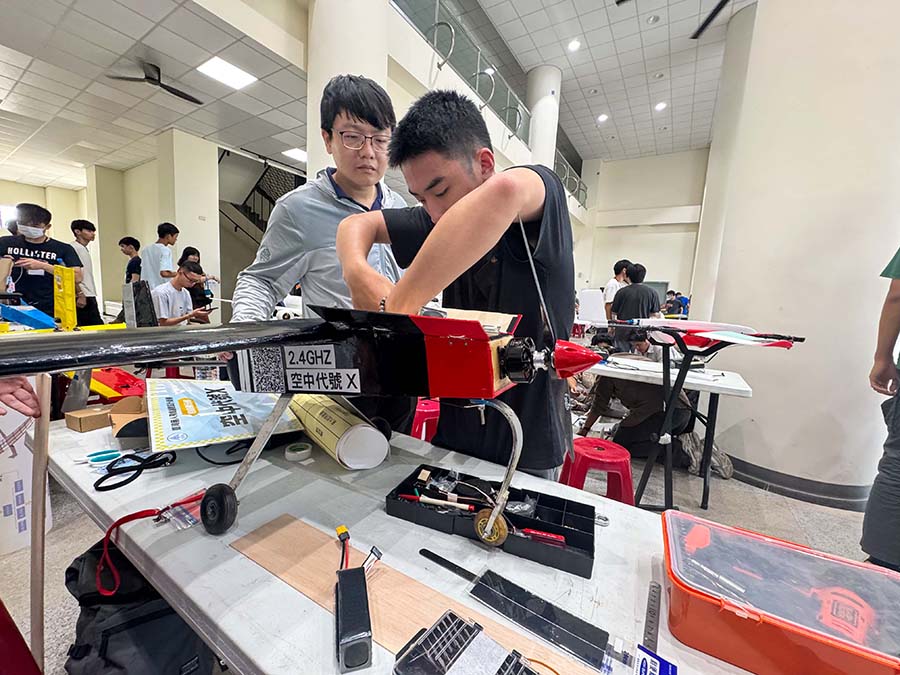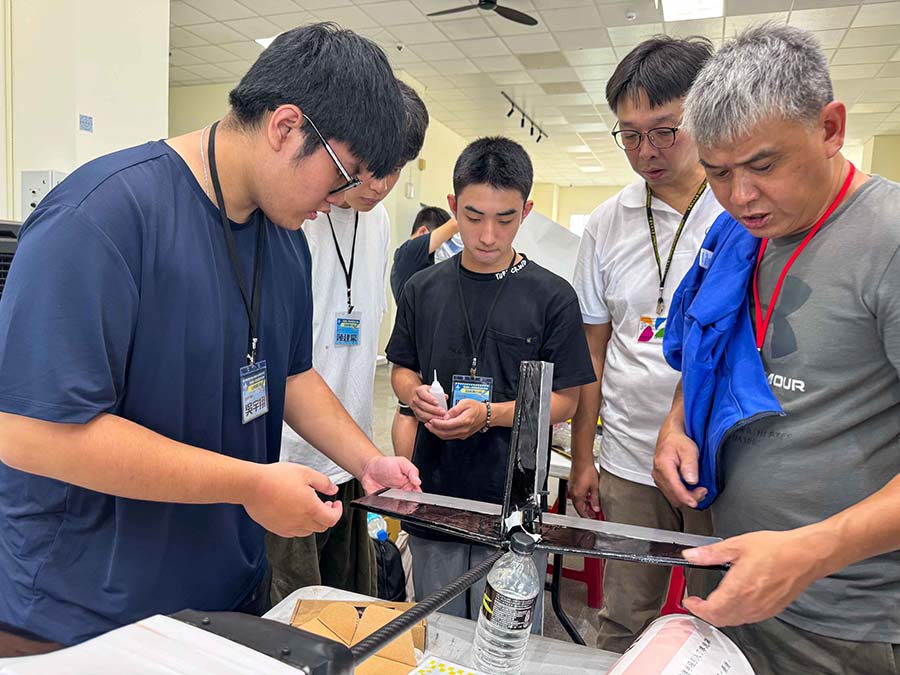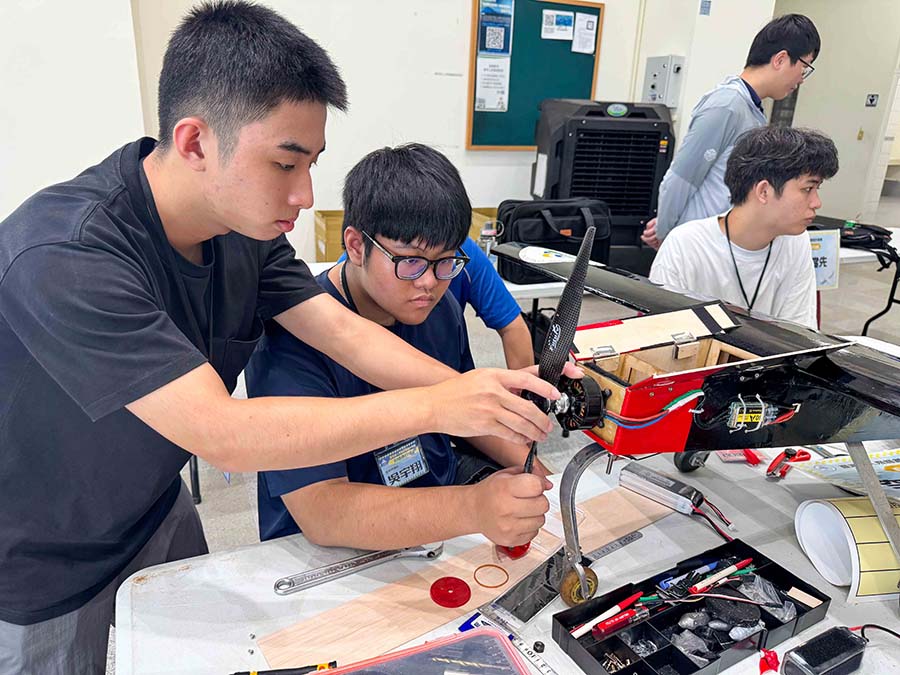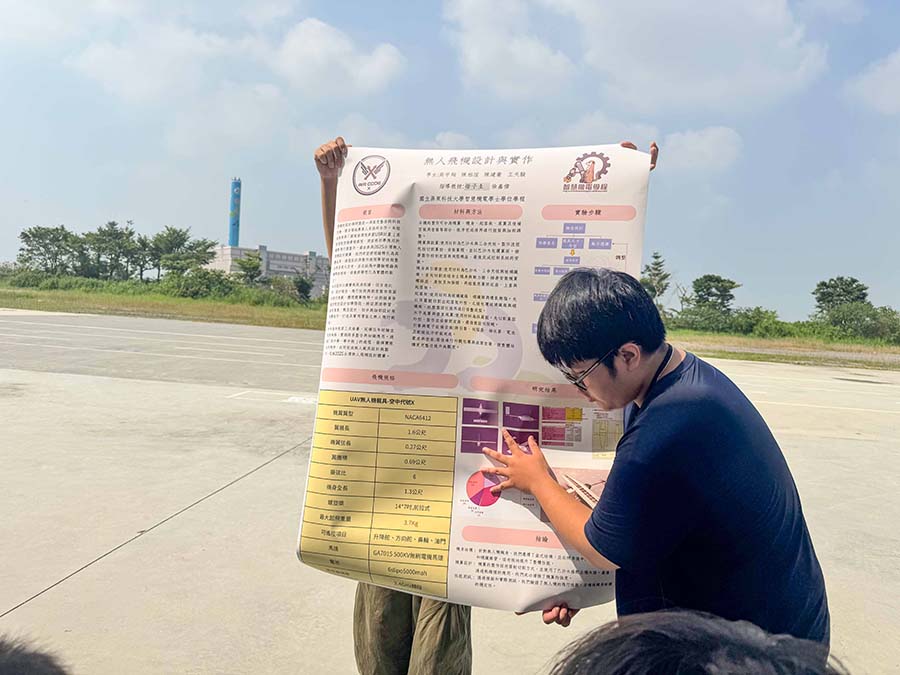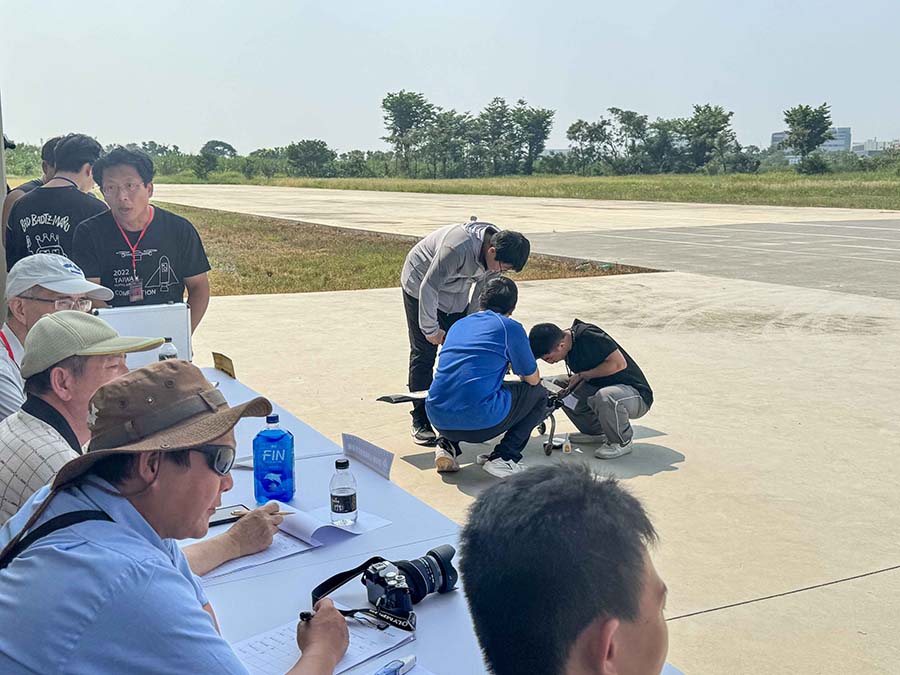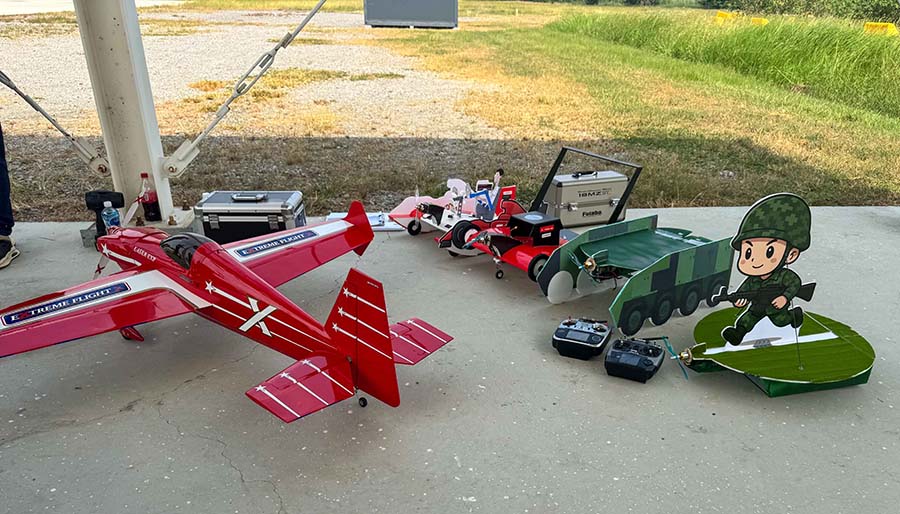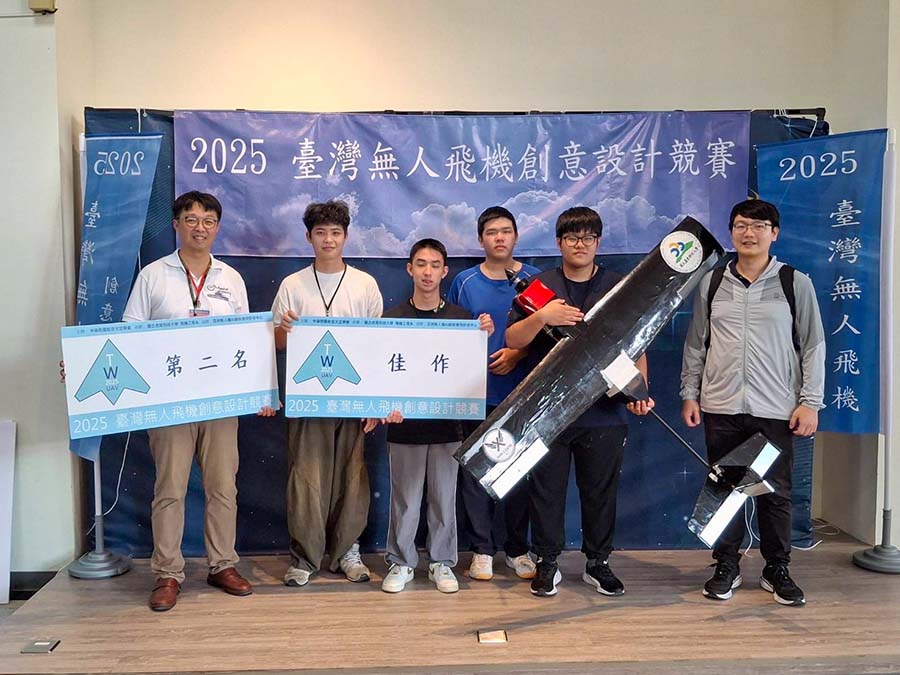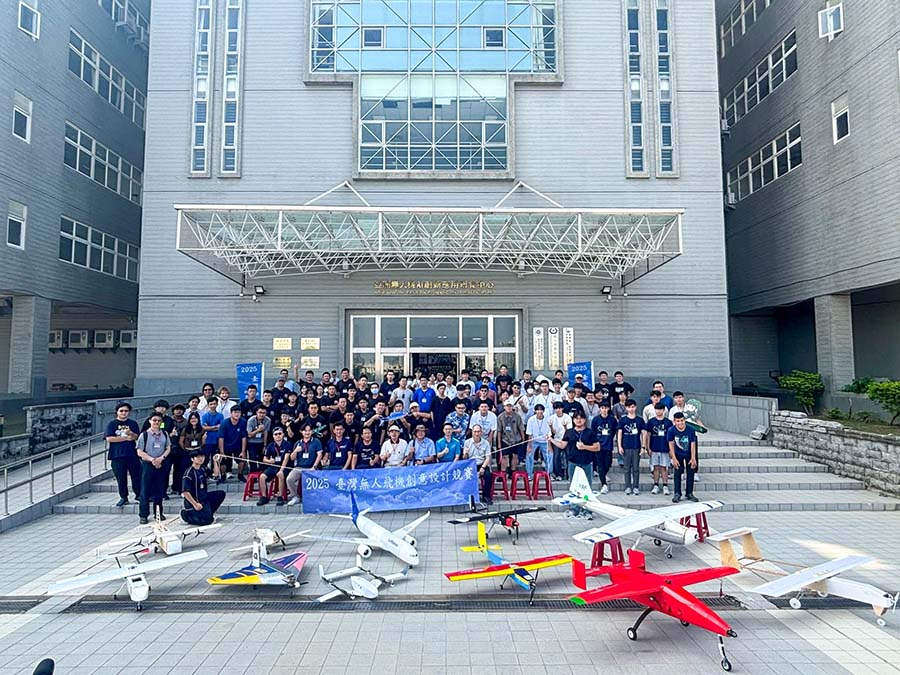
The 2025 Taiwan UAV Creative Design Competition, organized by the Aeronautical and Astronautical Society of the Republic of China (AASRC), was recently held at the Asia UAV AI Innovation Application R&D Center in Chiayi. At the event, a team of faculty and students from National Pingtung University of Science and Technology (NPUST) showcased their innovative fixed-wing UAV, “Sky Code X”, standing out among 17 finalist teams from major universities nationwide to secure Second Place Aircraft Design Award in Flight Maker Category and an Honorable Mention for the Creativity Awards group.
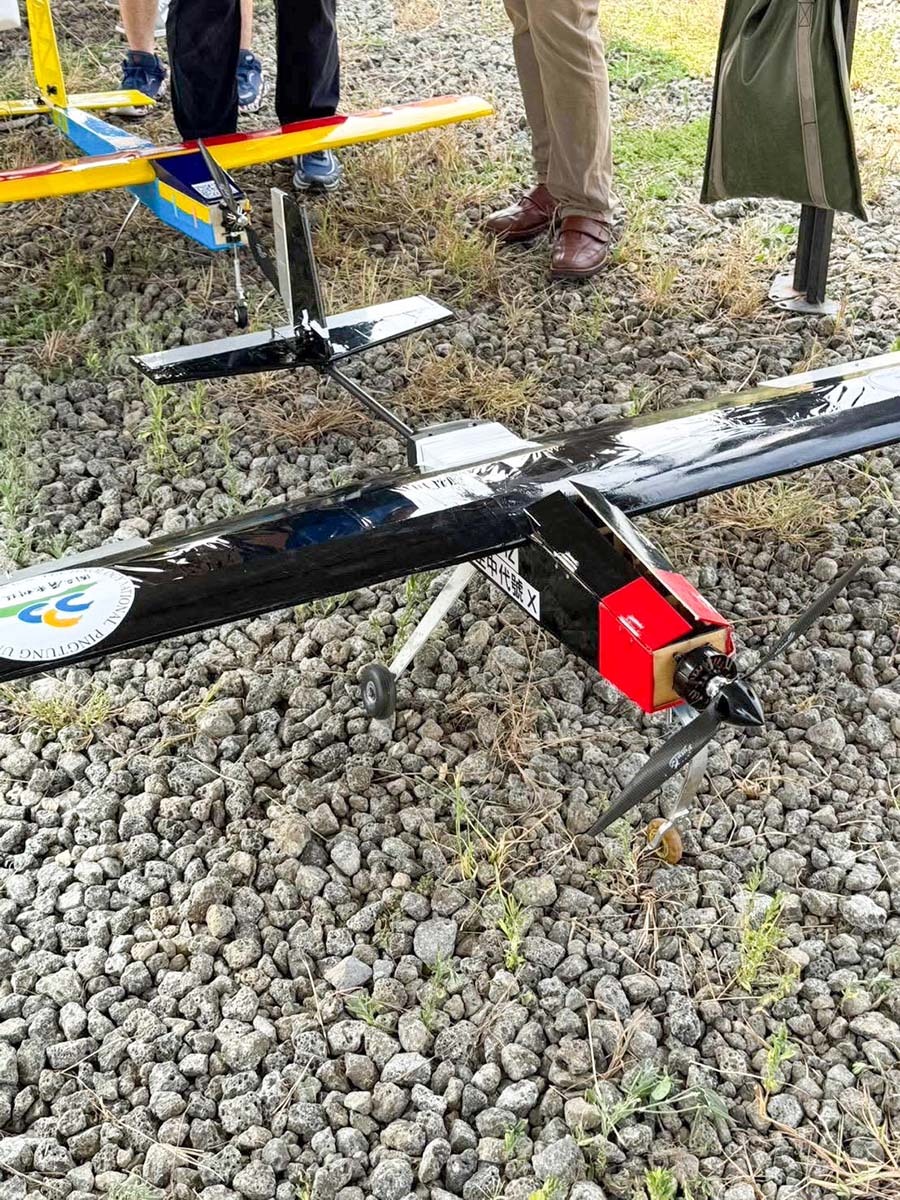
The “Sky Code X” fixed-wing UAV was co-designed and built by students Yu-Hsiang Wu, Tien-Chun Wang, Chian-Hao Chen, and Po-Hsuan Chen under the guidance of Professor Hudson Uzu-kuei Hsu, Associate Professor Chia-Wei Hsu, and Researcher Hong-Bin Zhang. Featuring a wingspan of 2 meters, the aircraft’s bulkheads and airframe were constructed from plywood and balsa wood. It utilizes a stable high-wing and tricycle landing gear configuration, ensuring excellent flight stability and operational reliability. Furthermore, the design allows for an additional payload capacity of 5 kg. Through optimized high lift-to-drag and large thrust-to-weight ratios, the team enhanced overall flight performance and mission flexibility, successfully impressing the panel of judges. Student Yu-Hsiang Wu reflected on the experience, saying: “Coming from an electrical engineering background, I never imagined I would design an aircraft. Under the guidance of my mentors, seeing our self-designed plane successfully take off and complete the designated flight maneuvers was incredibly exhilarating.”
Professor Hudson Hsu of the Smart Mechatronics Bachelor Degree Program, who served as the lead advisor, remarked that when facing new fields, students can transition from “familiarity” to “specialization” and eventually become “experts” as long as they remain curious and courageous. In terms of youth career development, interdisciplinary learning and integrated applications have become vital trends. Through “learning by doing,” students not only accumulate skills and experience but also build the confidence and resilience needed to face future competitive challenges.
NPUST has long been committed to the Ministry of Education’s University Social Responsibility (USR) Project, and under that initiative has developed popular science activities and Aviation Science Micro-programs to cultivate talent in UAV design, maintenance, flight operations, communication, and air traffic control. These courses promote learning in diverse UAV applications such as forest observation, air pollution detection, soil and water monitoring, bridge inspections, marine conservation, and smart agriculture. The robust training provided is helping to broaden the talent pool required by the UAV industry and injecting new momentum into the development of drone businesses in Southern Taiwan.