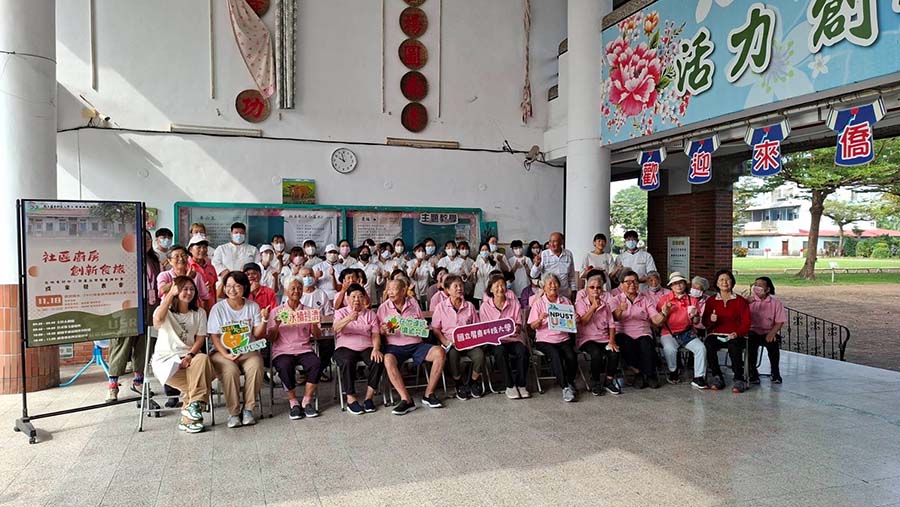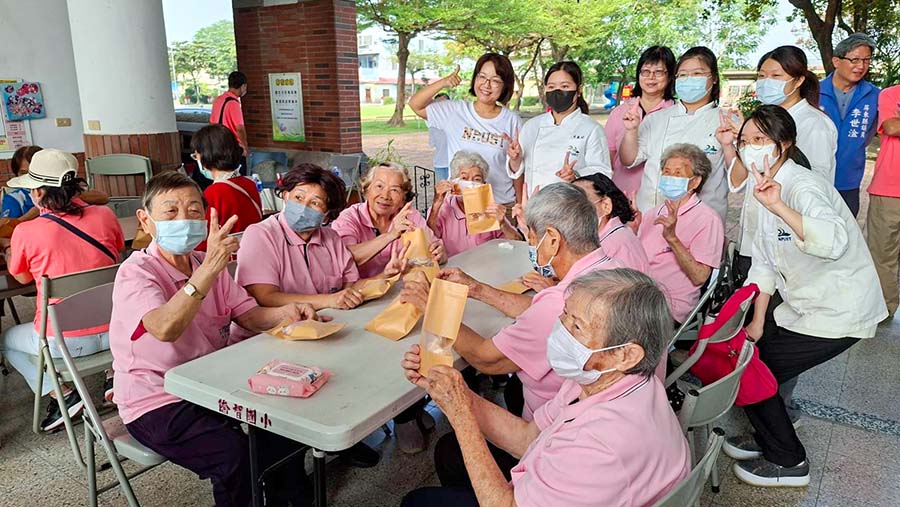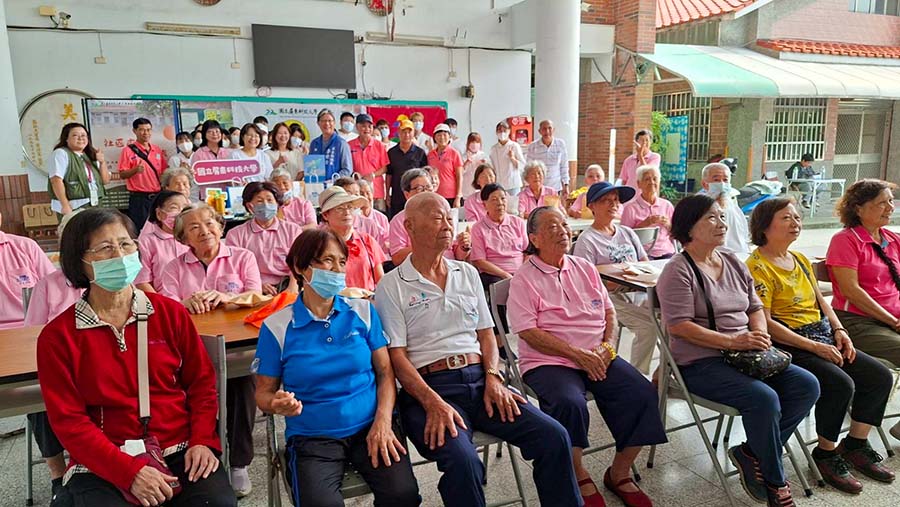
On November 18, a University Social Responsibility (USR) team from the Department of Hotel and Restaurant Management (DHRM) at National Pingtung University of Science and Technology (NPUST) presented the results of its successful USR pilot project: “Community Kitchen × Innovative Food Tourism”. The event was co-hosted with the Mitsumaya group from the Pingtung Plains Indigenous Culture Association.
The project made use of Meihe Village in Neipu Township as its practice field, where the team put the focus on local Hakka culture a Pingtung’s agricultural products. The USR team worked with community elders to develop three innovative yet traditionally-Hakka-inspired snacks: Taiwanese Macarons, Peanut Tofu Cookies, and Basil Savory Pastries. Their initiative successfully demonstrated the power of cross-disciplinary collaboration.
The event received support from local officials, including Pingtung County Councilor Shih-kan Li and Er-lun Village Chief Li Yi-jen (Jhutian Township).
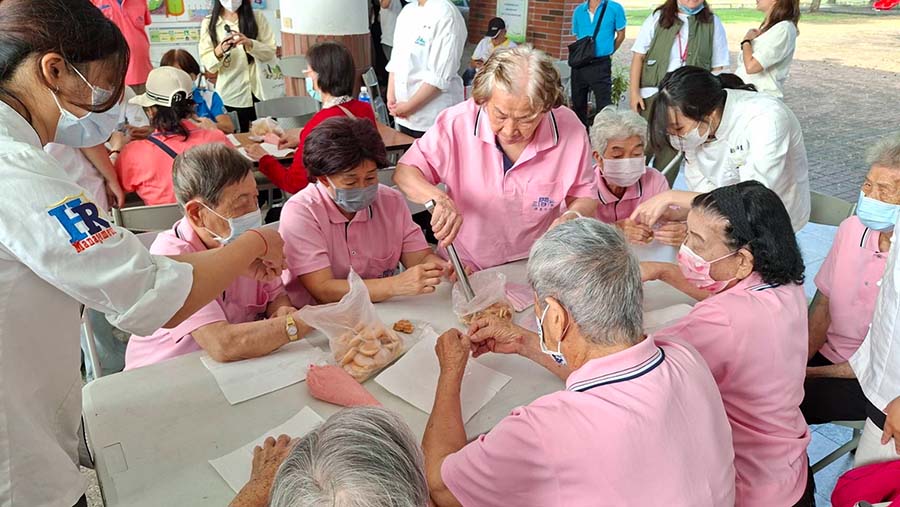
Throughout the project, Department of Hotel and Restaurant Management faculty and students made frequent visits to the community to conduct demonstration classes. They provided hands-on guidance, accompanying the elders from their initial unfamiliarity with baking equipment to gradually mastering techniques such as kneading, filling, flipping, and packaging. Through continuous practice and mutual support, the baking classes turned into a shared journey of growth for the community, students, and the university—perfectly embodying the USR spirit of “the university entering the community, and the community supporting the university.”
CONNECTING PROFESSIONAL EXPERTISE WITH COMMUNITY WISDOM
Dr. Hui-Wen Shih, an Assistant Professor at the Department of Hotel and Restaurant Management, stated that the project’s most valuable asset is not simply the product development, but the genuine connections it is creating by bringing together the university’s professional knowledge and the community’s local wisdom. She pointed out that “Every time we enter the community, it is a joint learning experience. Students bring skills and creativity, while the elders share local culture and life experiences. Everyone completes their creations through mutual support”.
Mr. Hsi-cheng Tseng, Chairman of the Pingtung Plains Indigenous Culture Association, echoed this sentiment: “Only through joint discussion, hands-on work, and execution can we create models that truly meet needs and can take root in the community”. He hopes to continue this collaborative experience in the future and build more community food education models that integrate culture, innovation, and culinary learning.
LOOKING AHEAD: SUSTAINABLE COMMUNITY PARTNERSHIPS
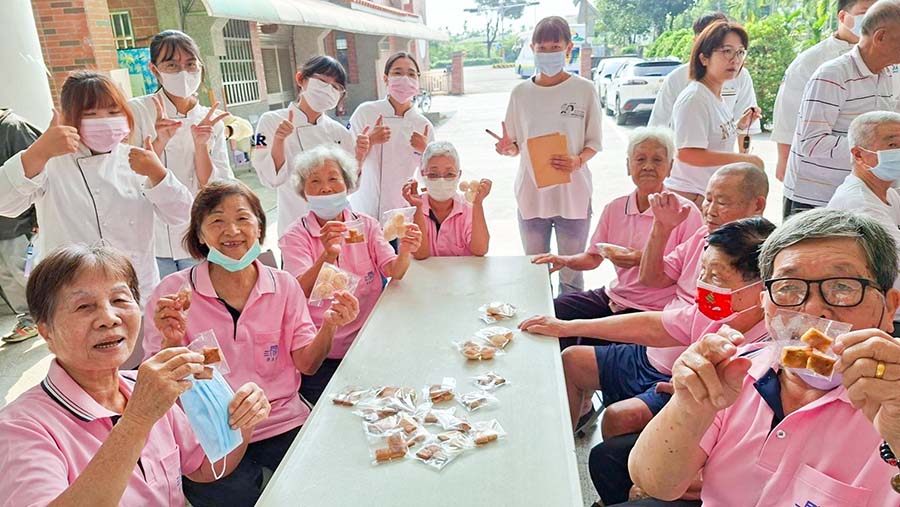
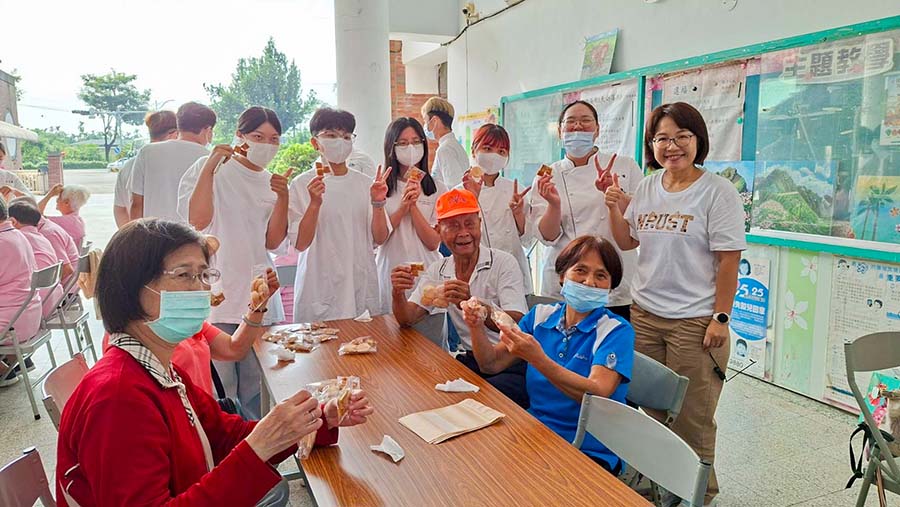
At the results presentation, community partners, faculty, and students were invited to celebrate the achievement. The snacks created by the community elders were put out on display and samples were shared with the attendees, allowing them to taste the fruits of this cross-sector collaboration.
Moving forward, NPUST plans to continuously nurture its USR spirit by promoting more replicable, scalable, and sustainable local models. The goal is for the university to truly become a long-term partner with the community, working together to create a better life for locals.