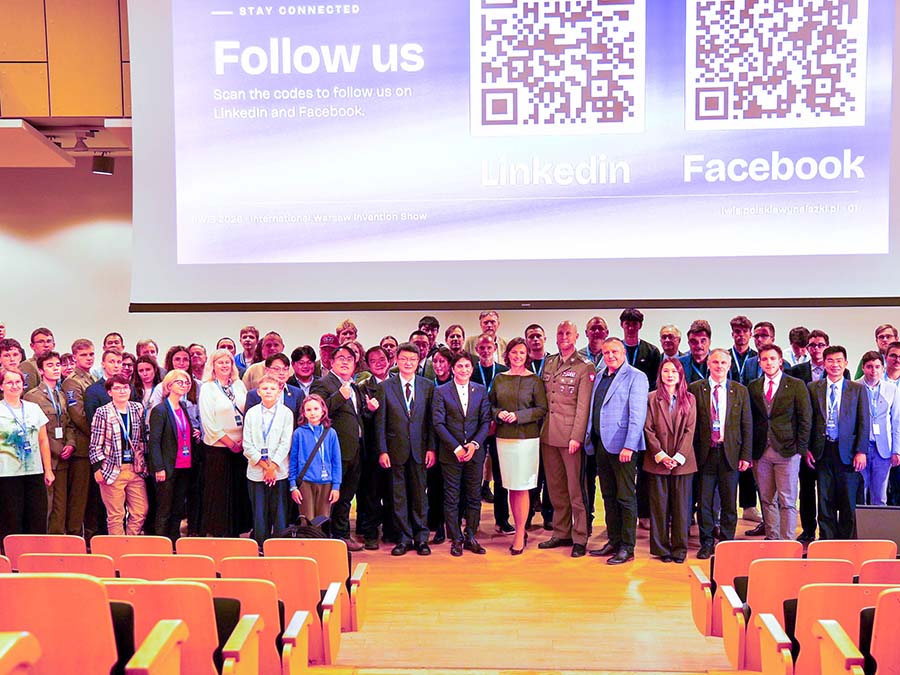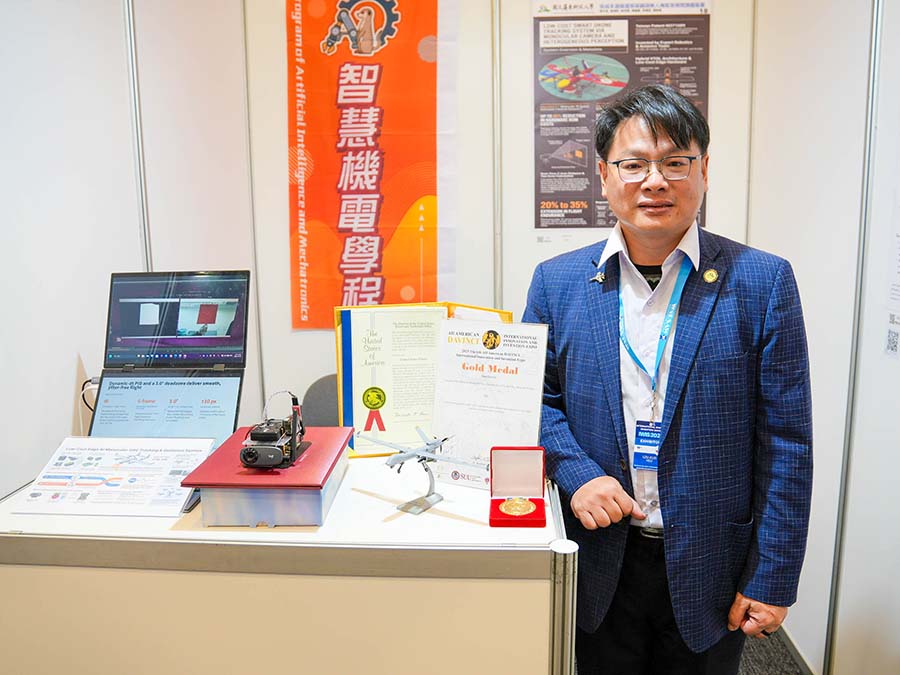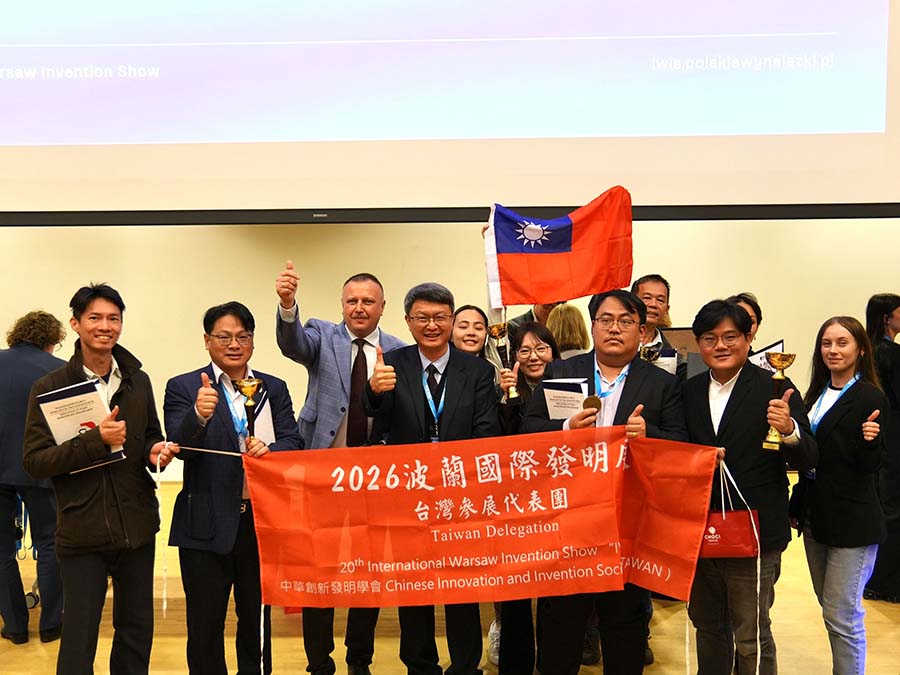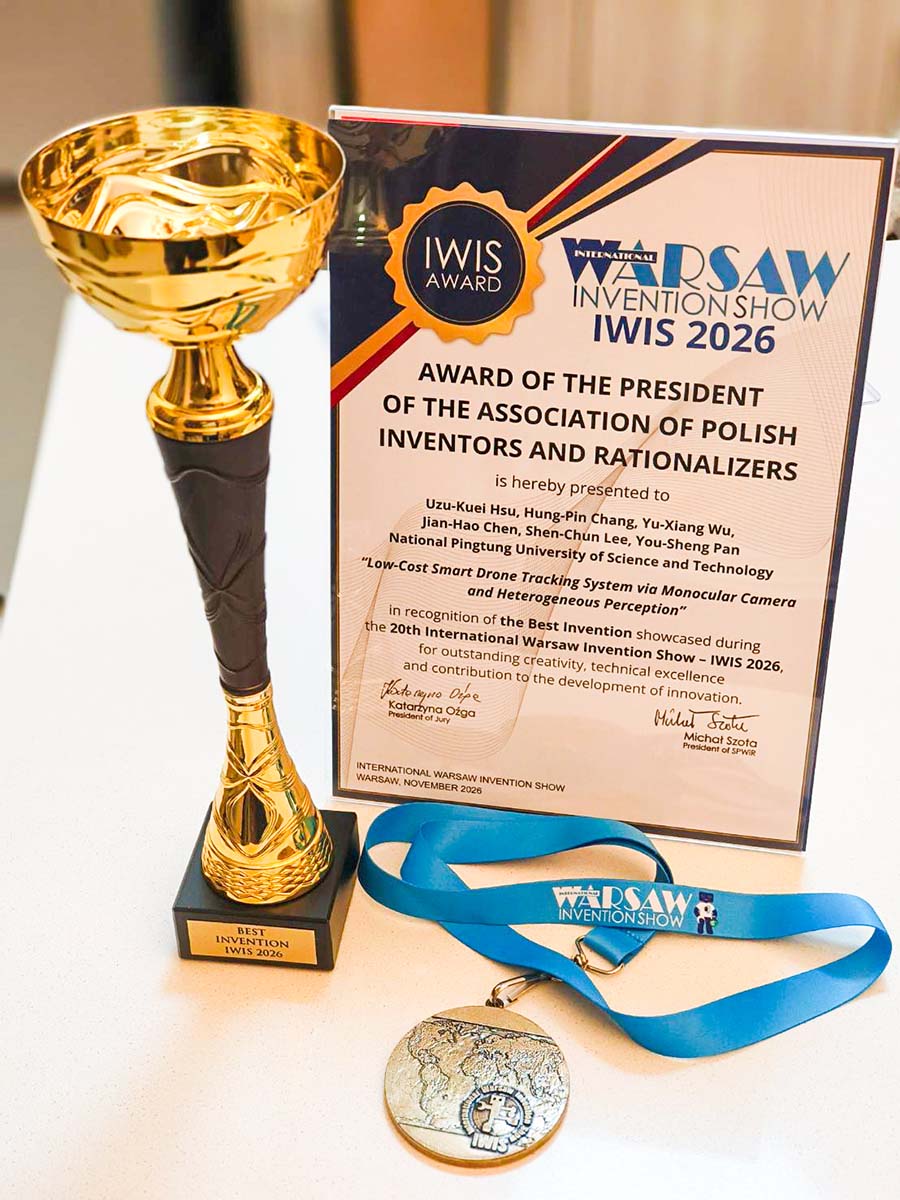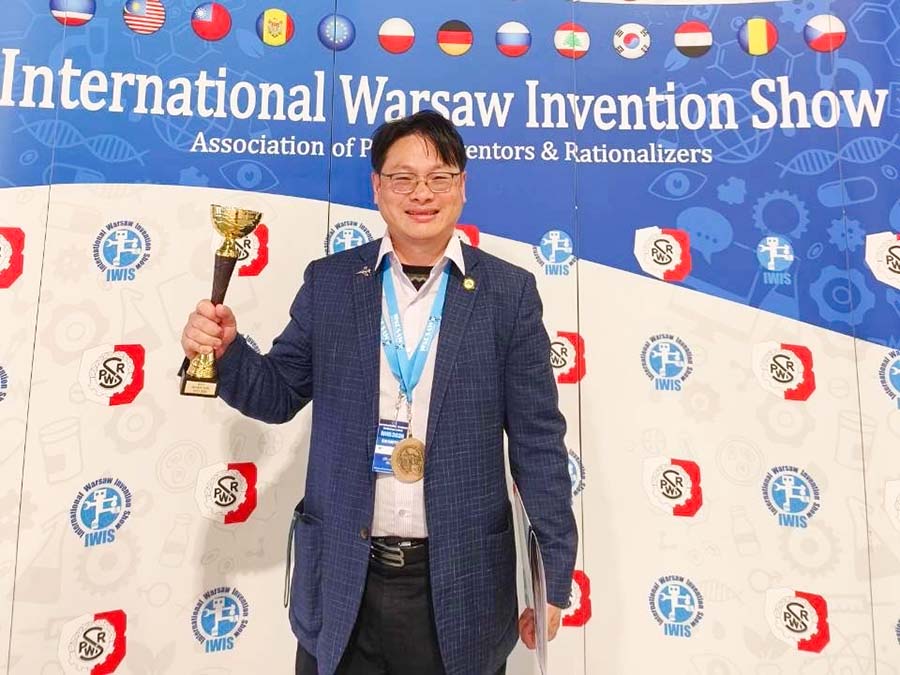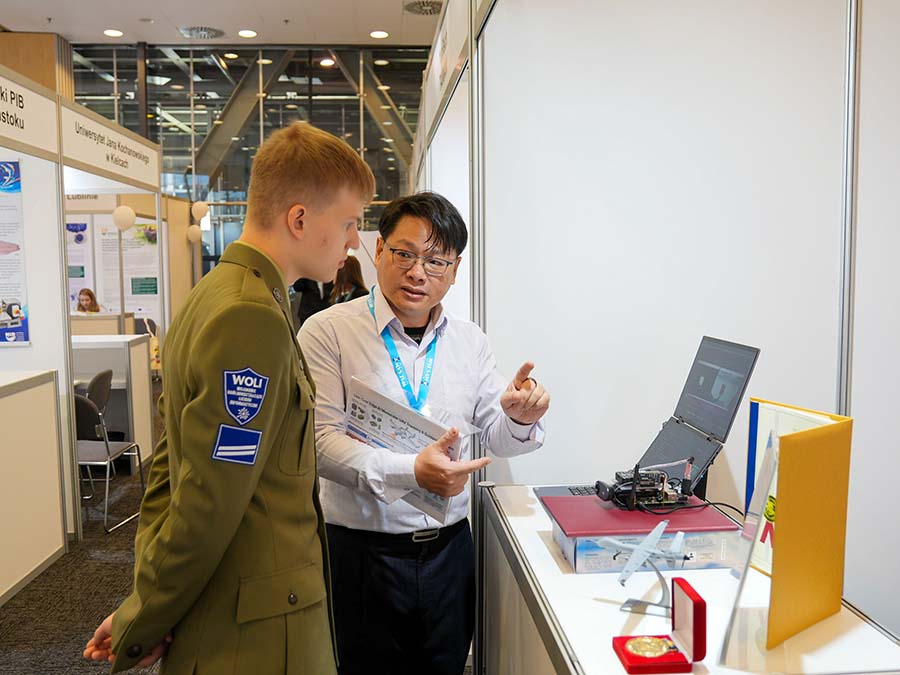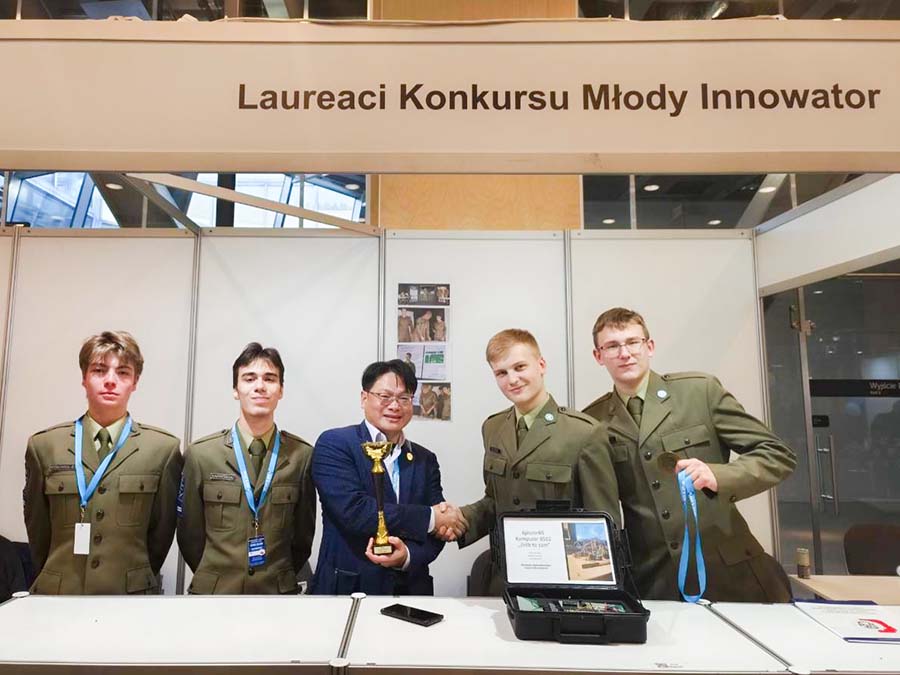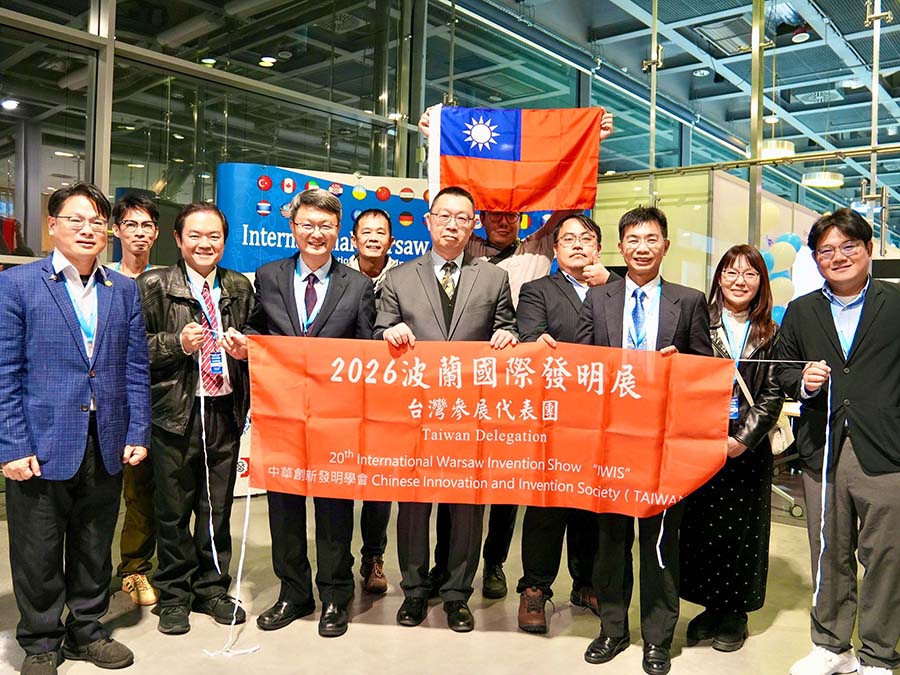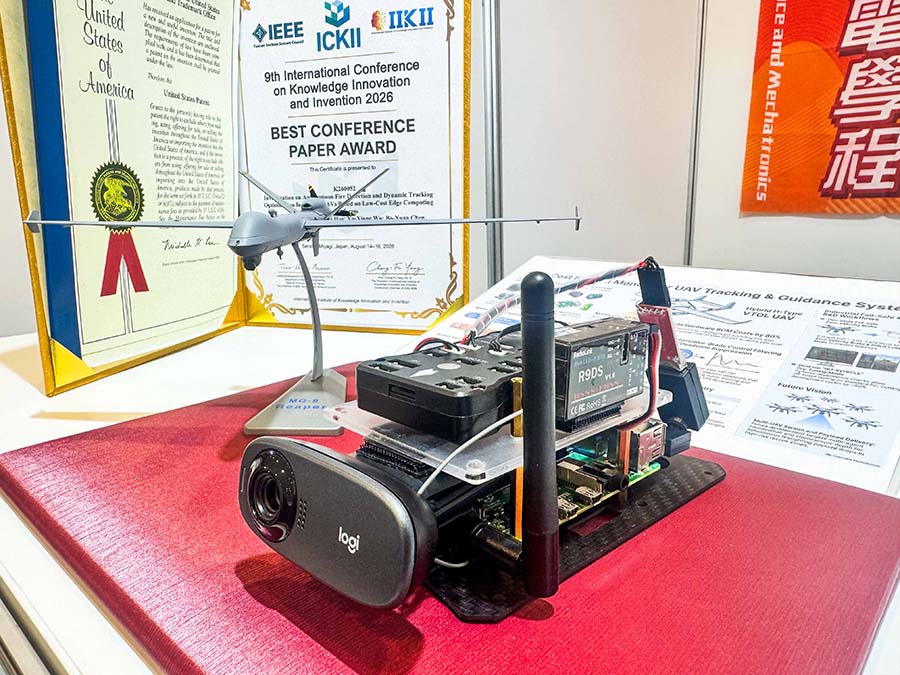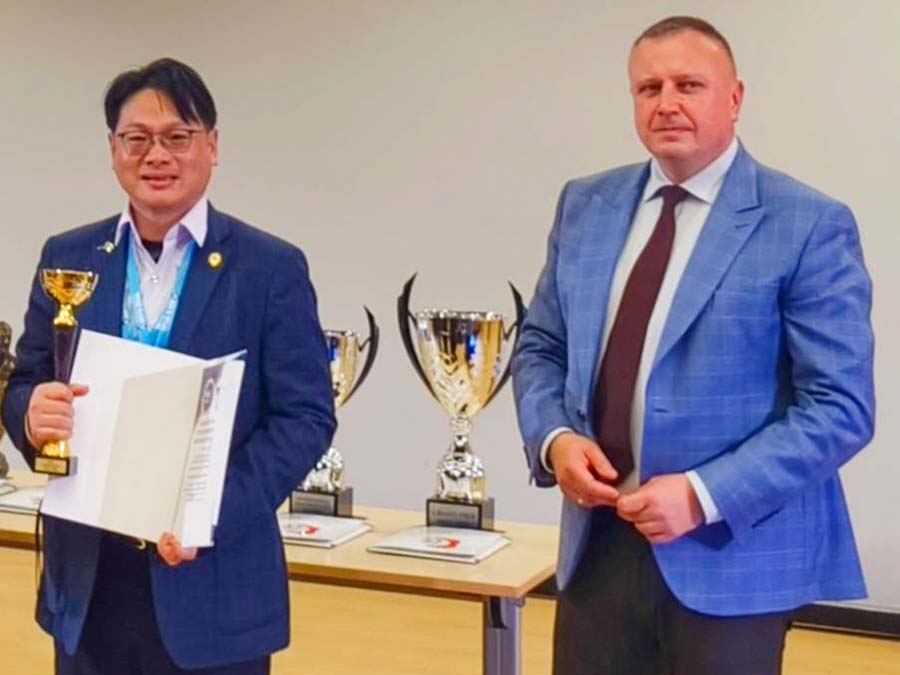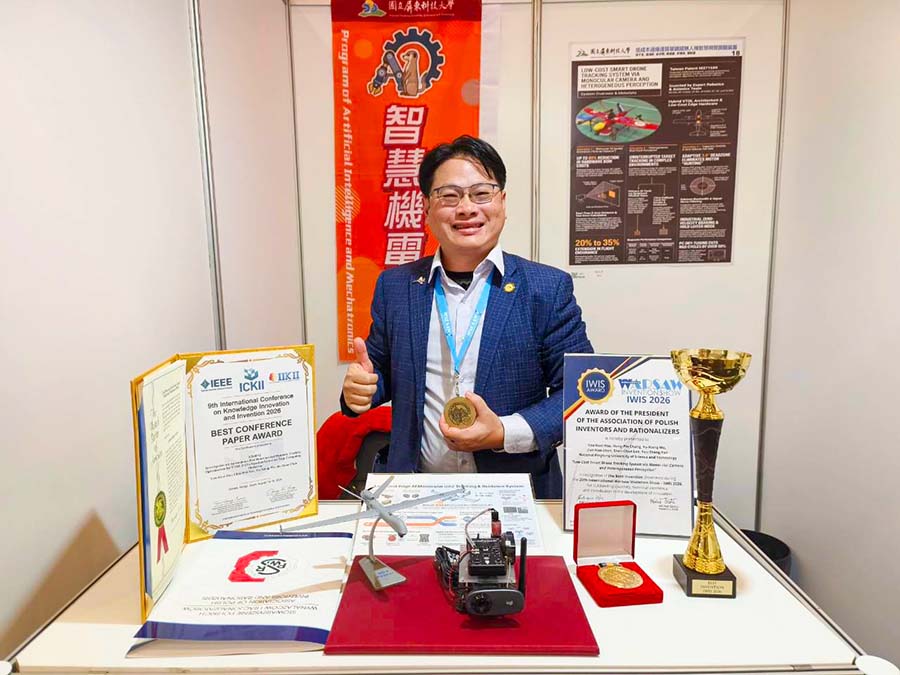
National Pingtung University of Science and Technology (NPUST) has once again showcased its strong R&D capabilities on an international stage. At the 20th International Warsaw Invention Show (IWIS 2026) held in Warsaw, Poland, in November 2026, a research team led by Professor Hudson Hsu of NPUST’s Smart Mechatronics Bachelor Degree Program earned both a Gold Medal and the Best Invention Award for their “Dual-Target Edge-Computing Single-Lens Intelligent Visual Tracking Drone Technology.” Recognized as the second-largest international invention exhibition in the European Union, IWIS 2026 featured more than 400 innovative entries from 31 countries and regions. NPUST’s top honors not only bring distinction to the university, but also underscore Taiwan’s strong global competitiveness in intelligent unmanned aerial vehicle (UAV) development.
The core aim behind the invention is “assisting AI with physical models and replacing costly hardware with software innovation.” Professor Hsu noted that the team successfully developed a low-cost, single-lens solution capable of replacing traditional, expensive dual- or triple-sensor electro-optical gimbal cameras. By integrating YOLO artificial intelligence, edge computing, and dynamic PID flight control, the system equips drones with a sharp “AI Eagle Eye” capable of autonomously identifying, locking onto, and tracking moving targets.
In a major cross-disciplinary breakthrough, the team incorporated Particle Image Velocimetry (PIV) from fluid mechanics alongside explicit time-stepping prediction methods commonly used in computational fluid dynamics (CFD) to build a physical trajectory prediction model. By analyzing a target’s position, velocity, and direction across consecutive video frames, the system can forecast likely movement trajectories up to 10 seconds in advance. This significantly reduces the risk of losing visual lock during sudden acceleration, sharp turns, or temporary occlusion—overcoming a major limitation of conventional AI tracking systems that rely primarily on real-time frame-by-frame recognition. Combined with a proprietary “area-for-distance” algorithm that accurately estimates target range and automatically adjusts flight speed, the technology can cut hardware costs by up to 80% while boosting flight endurance by an estimated 20% to 35%. Lightweight, modular, and cost-effective, the technology holds vast potential across a wide range of applications, including disaster search and rescue, missing-person searches, smart infrastructure inspection, logistics, hazardous environment monitoring, and defense or high-attrition missions requiring expendable smart drones. NPUST stated that this international recognition affirms Professor Hsu’s team for their innovative integration of AI, fluid mechanics, and autonomous flight control, while demonstrating Taiwan’s ability to enter the global smart drone market with highly-efficient, low-cost solutions. Moving forward, the university will continue leveraging Taiwan’s strengths in AI chips, electronic controls, and drone manufacturing—driving technology transfer and industry-academia collaboration to bring NPUST’s “AI Eagle Eye” from Taiwan to the global stage.