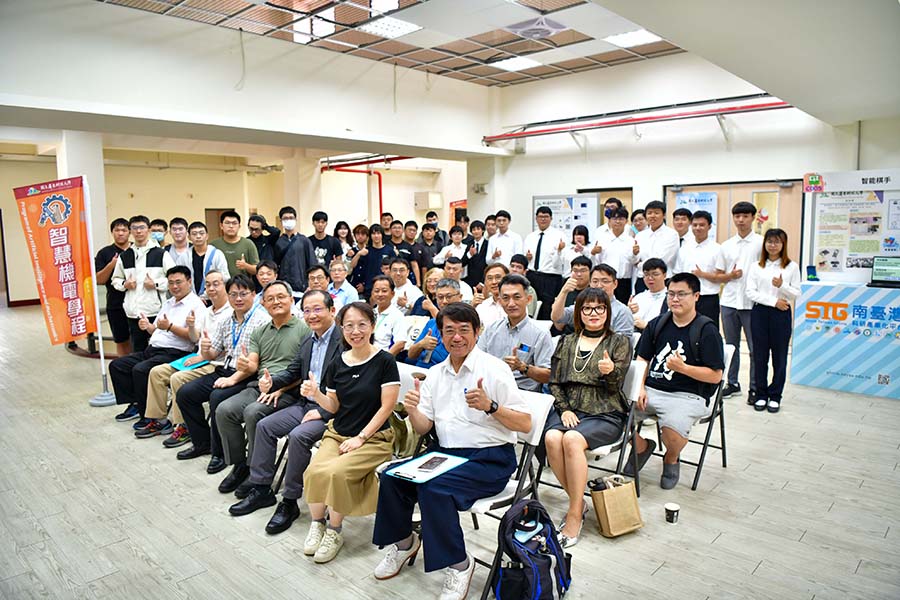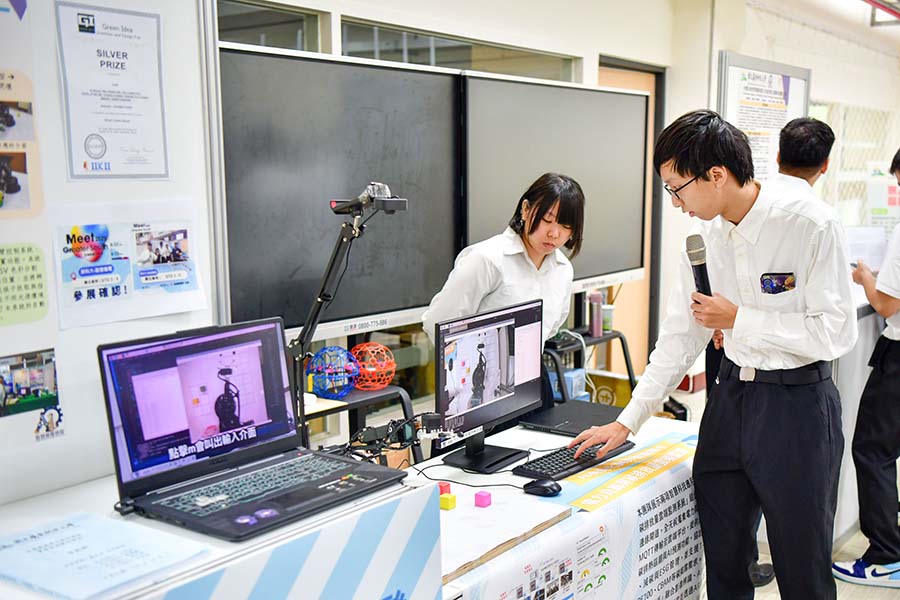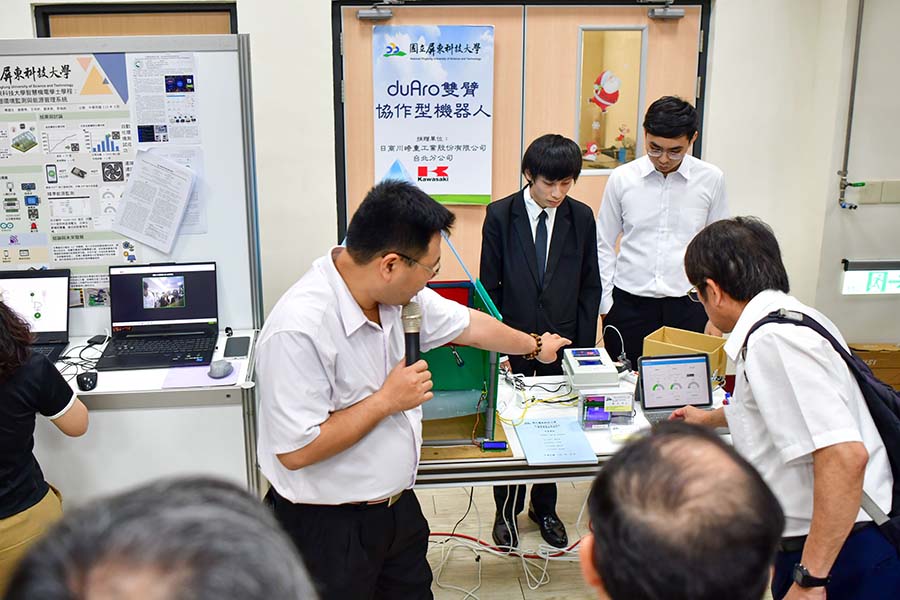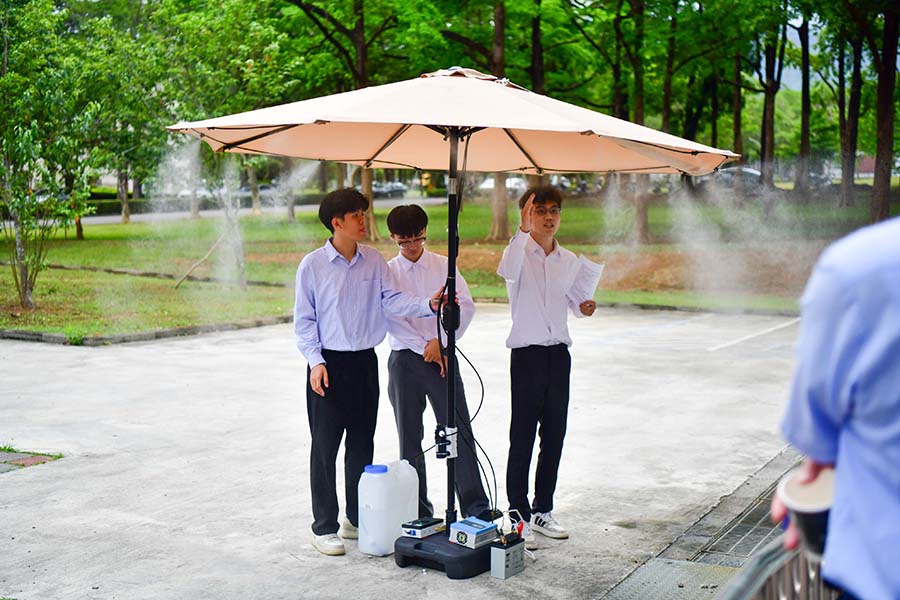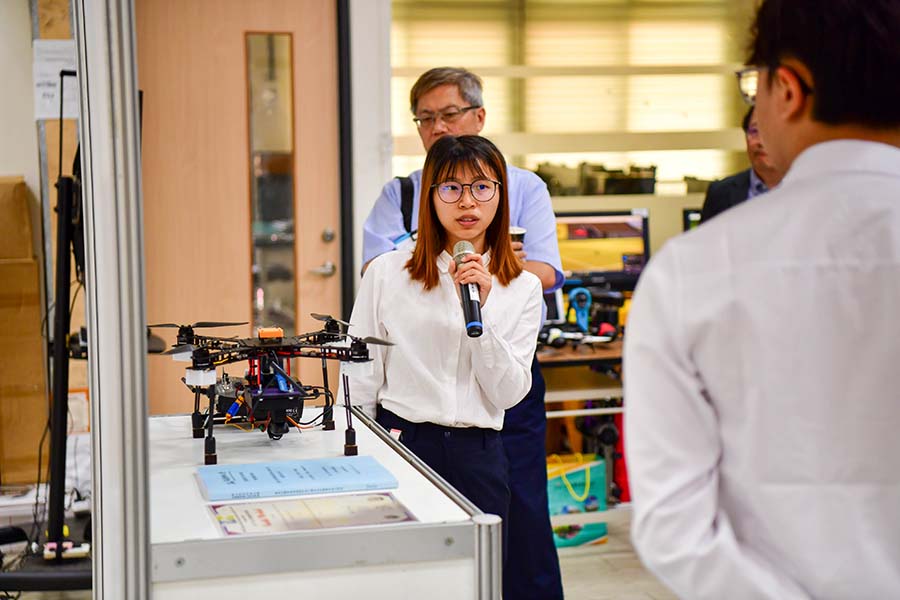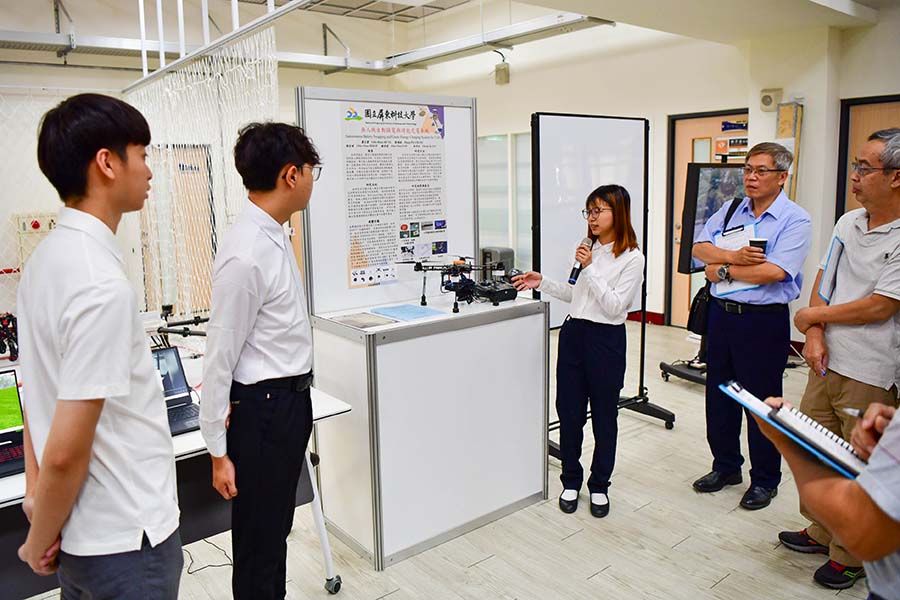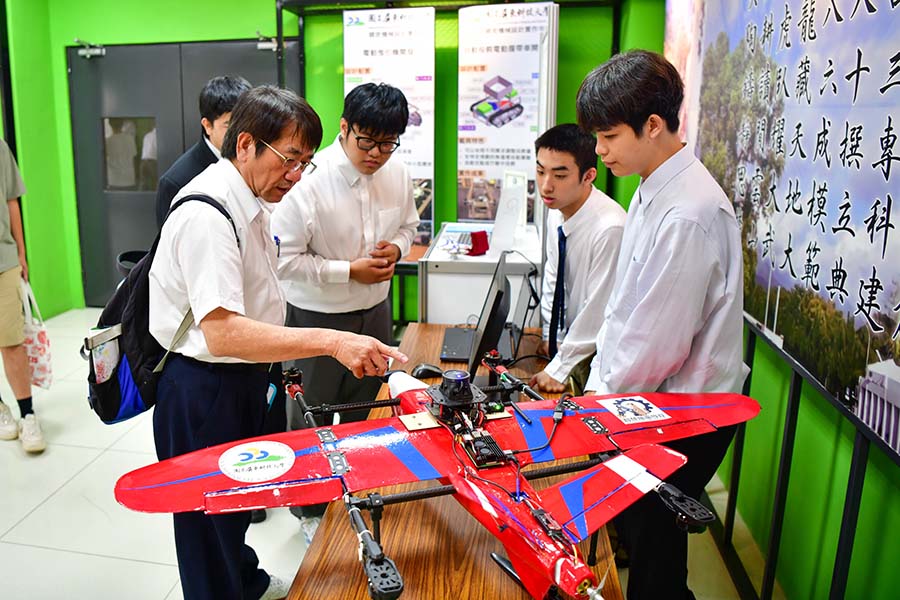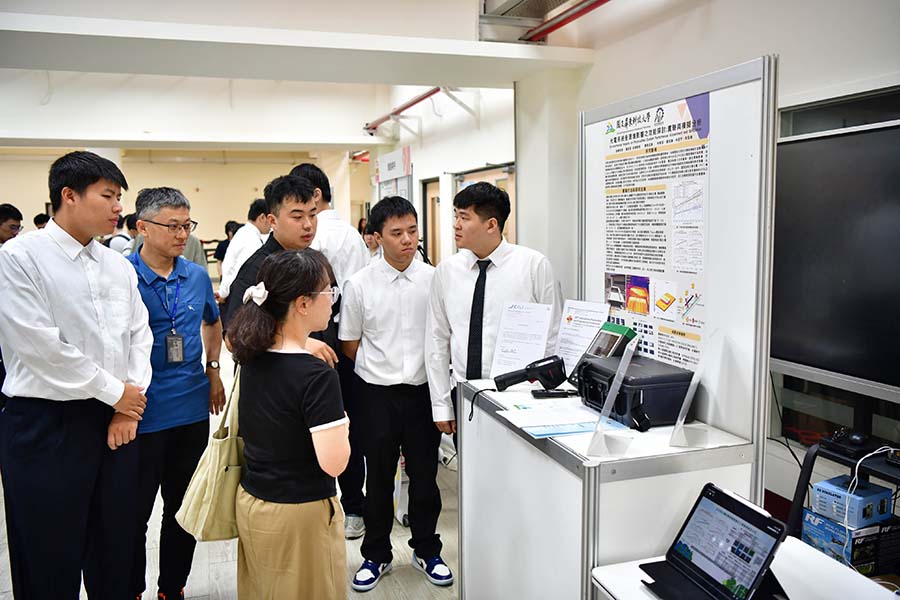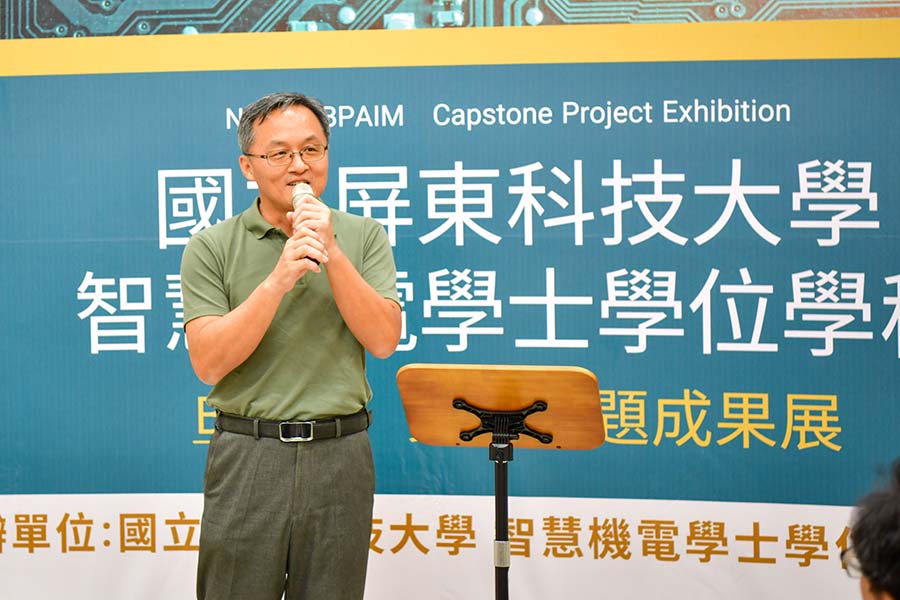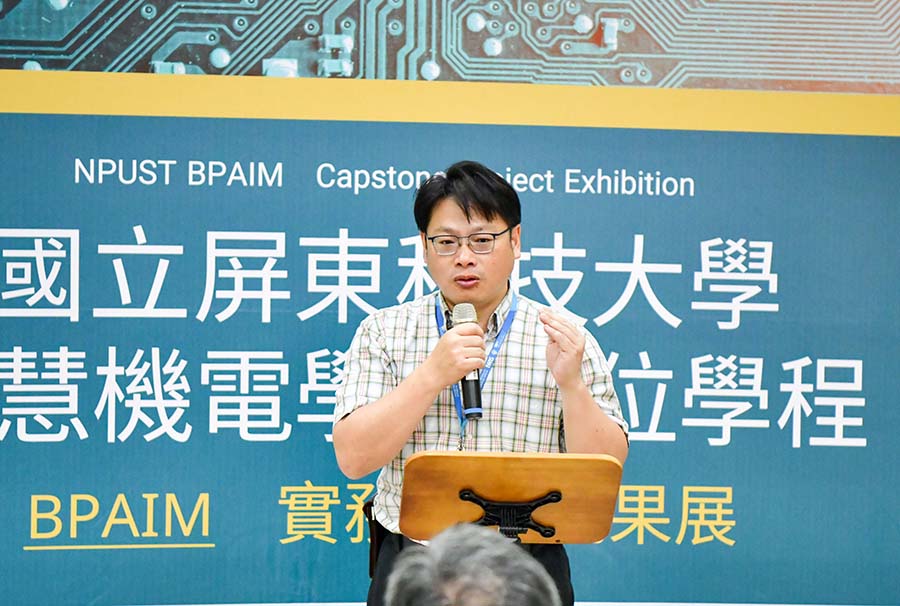
The Smart Mechatronics Bachelor Degree Program at National Pingtung University of Science and Technology (NPUST) held its “Second Annual Hands-on Capstone Project Exhibition” on May 18, 2026 at the Smart Agriculture Machinery Center. The projects on display each implemented the core philosophy of “learning by doing” and “pragmatic application”. Featured works included the “Disaster Prevention, Reconnaissance, and Vertical Takeoff and Landing (VTOL) Long-Endurance UAV,” which won a Gold Award at the International Innovation and Invention Competition (IIIC). This drone integrates deep learning models to accurately identify disaster conditions and significantly improve rescue efficiency during natural disasters in Taiwan. Another notable project was the “Sun ‘Umbrella” smart shading system, which cleverly combines water-mist cooling with energy self-sufficiency to mitigate the urban heat island effect. These innovations attracted a large audience of faculty, students, and industry professionals, who gathered to witness the students’ cross-disciplinary R&D potential and ability to transform theory into practical application.
In addition to disaster prevention and lifestyle technology, this year’s capstone projects comprehensively covered diverse fields such as automation technology and sustainable green energy. Regarding advanced UAV applications, the project titled “A Study on the Application of AI Precision Landing Technology in UAV Autonomous Charging and Battery Swapping Systems” utilizes the Jetson Nano edge computing platform to estimate errors via pixel offset and dynamically adjust flight controls, achieving highly precise, autonomous green energy replenishment.
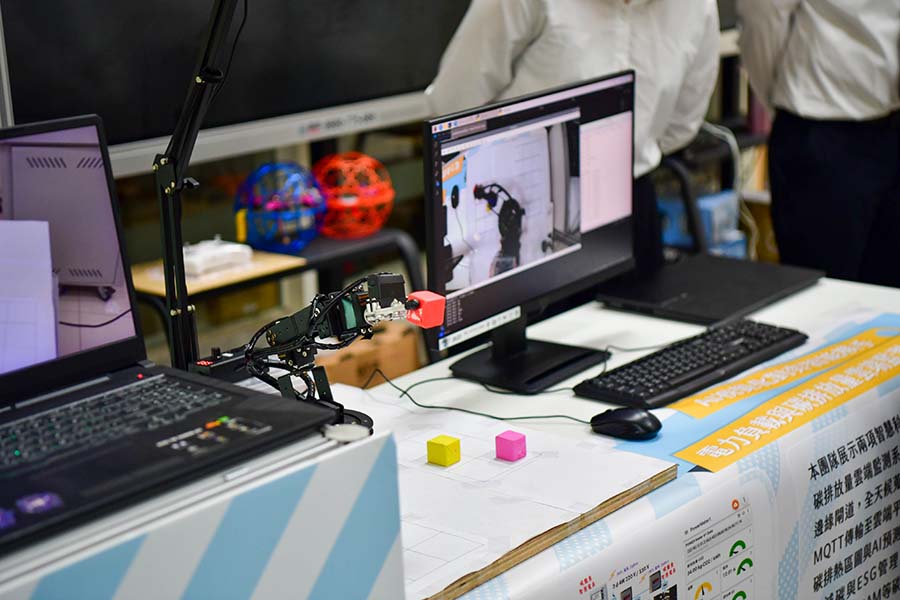
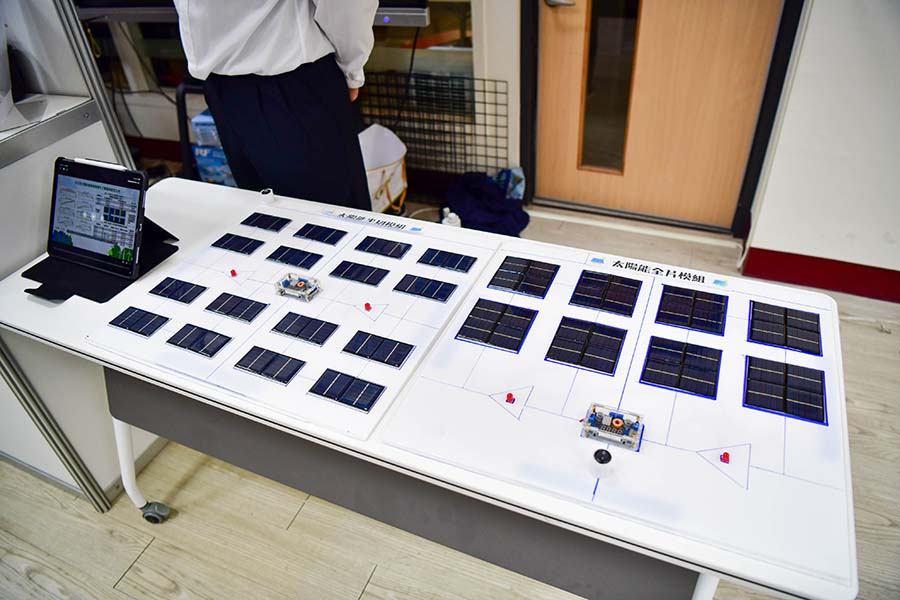
For smart logistics, the “Smart Internet of Things (IoT) Logistics” project bypassed expensive sensors by innovatively adopting HSV color segmentation and grid coordinate positioning. This approach successfully integrated image recognition with mechanical control, maintaining stable identification and classification accuracy under various lighting conditions. Furthermore, in response to the global net-zero trend, the “Smart Agricultural Greenhouse” project provides cross-platform data visualization and remote-control functions, allowing managers to monitor environmental conditions at any time and seamlessly take over control. Finally, the project “Investigation into the Environmental Impacts on the Performance of Photovoltaic Systems” conducted shading field tests in accordance with the CNS 61215-2 standard to determine the optimal configuration. This study aims to enhance system efficiency while contributing to the goal of achieving net-zero emissions by 2050.
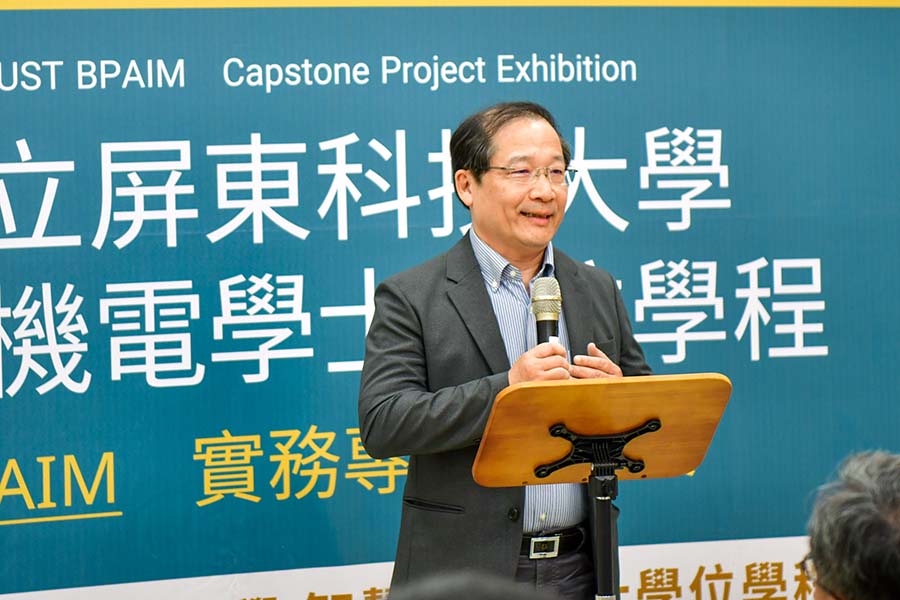
Professor Hudson Hsu, Director of the Smart Mechatronics Bachelor Degree Program, stated that the program was established to meet the rapid development of science parks in the Kaohsiung and Pingtung areas. It aligns closely with innovative industry trends such as Industry 4.0, Artificial Intelligence (AI), the Internet of Things (IoT), cloud computing, and big data. By uniquely combining cross-disciplinary expertise in mechanical engineering, electrical engineering, computer science, information engineering, and business administration, the program is dedicated to cultivating smart mechatronics elites with versatile integration capabilities. Professor Hsu further emphasized that the curriculum remains strictly employment-oriented. This focus not only significantly enhanced the practicality and market alignment of the exhibited projects, but also reflects the program’s ongoing commitment to cultivating professional talents with both hands-on capabilities and innovative mindsets—injecting a continuous stream of new vitality into Taiwan’s industrial development.