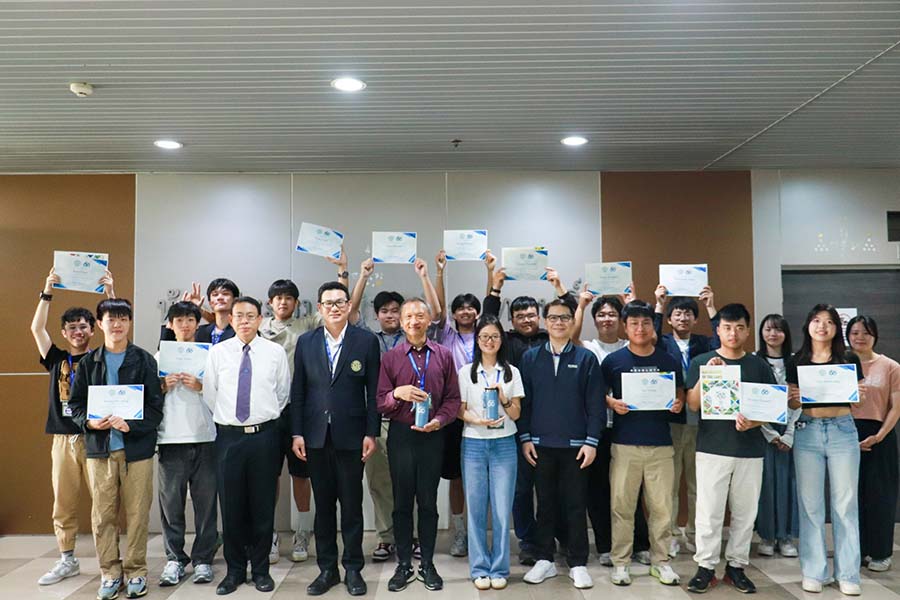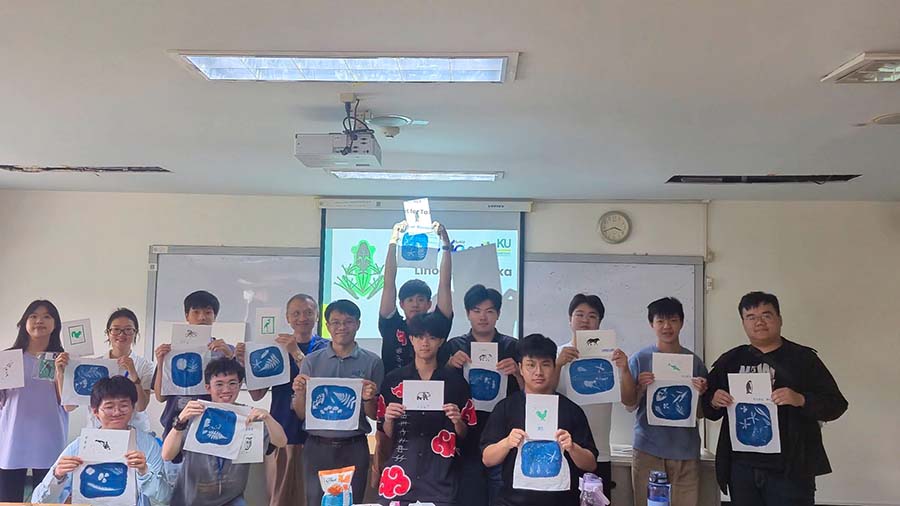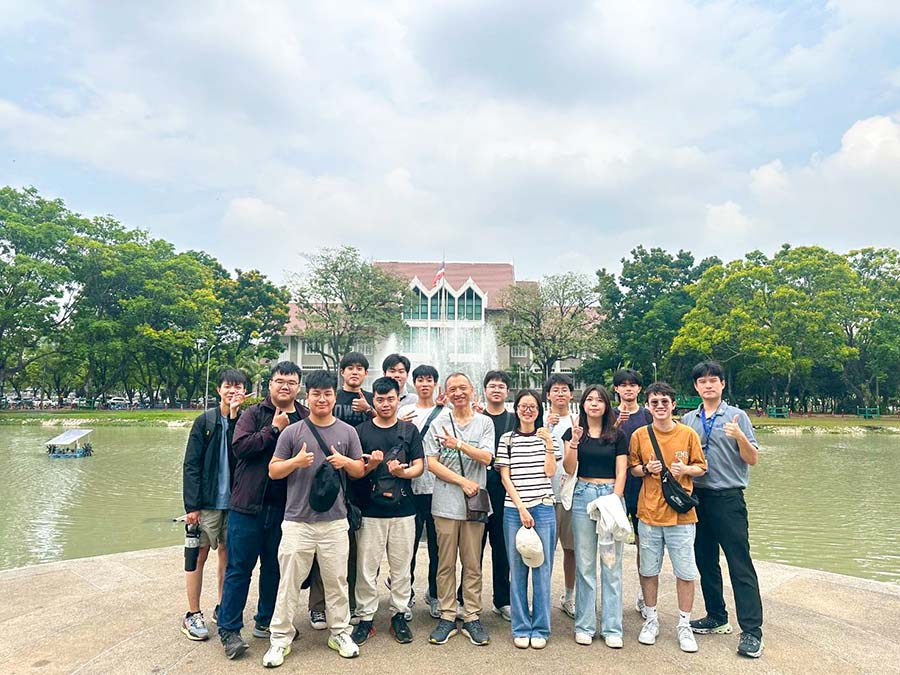
Twelve faculty members and students from the Department of Biomechatronics Engineering at National Pingtung University of Science and Technology (NPUST) recently traveled to Kasetsart University in Thailand to participate in the SciKU International Camp. Through interdisciplinary coursework, laboratory visits, and cultural exchanges, the group demonstrated high levels of academic engagement and highlighted the potential for further international cooperation. The camp spanned a variety of important fields including physics, genetics, botany, zoology, and fisheries. By combining theoretical lectures, hands-on laboratory work, and problem-based learning, the program allowed students to understand the practical application of scientific knowledge within real research environments while also fostering interdisciplinary integration and innovative thinking.
Professor Jyh Jian Chen, Director of the Department of Biomechatronics Engineering and leader of the delegation, stated that the activity was not merely a short-term exchange but a vital opportunity to establish institutionalized cooperation between the two universities. By implementing an annual alternating model for holding camps in the future, it would help create a stable and sustainable international education platform for faculty and students with several strategic advantages:
Global Visibility: It would effectively enhance the university’s international profile and brand image, attracting outstanding students and scholars from Southeast Asia to engage in exchange or enroll at NPUST.
Resource Strengthening: By introducing international faculty and curricular resources, the university will be able strengthen its teaching and research capabilities in specialized areas such as agricultural technology, biological engineering, smart agriculture, and sustainable development.
Competitive Edge: Students will be able to benefit from “off-site learning” in different national contexts, cultivating cross-cultural adaptability and problem-solving skills that improve their competitiveness in the global job market and scientific research collaborations.
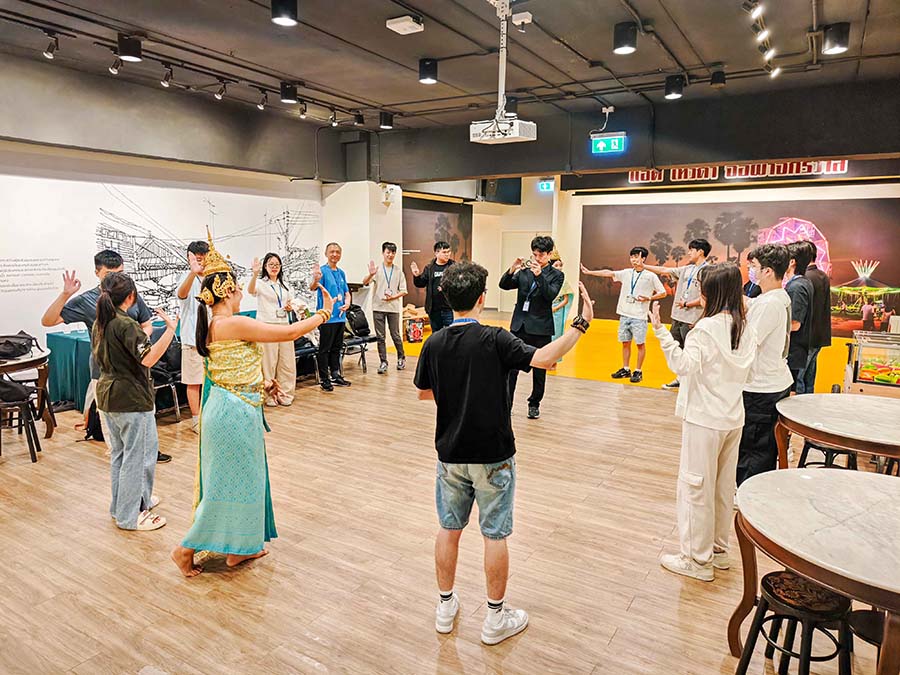
Beyond professional courses, the camp also featured a variety of cultural experiences. These included visits to the Temple of the Emerald Buddha (Wat Phra Kaew) and the Grand Palace, a Chao Phraya River cruise, explorations of traditional markets, and guided museum tours, allowing students to immerse themselves in Thai history and local life. Additionally, the curriculum incorporated Thai folk-dance practice and basic Thai language lessons, enabling students to experience cultural depth through movement and linguistics. By wearing traditional attire, tasting street food, and participating in interactive exhibitions, students not only observed cultural differences but also built mutual respect and global citizenship. Various team activities and workshops further encouraged close interaction, fostering transnational friendships and strengthening cultural ties.
NPUST emphasized that it will continue to deepen its partnership with Kasetsart University and add momentum to its international development. By building a forward-looking and practice-oriented learning environment through long-term, reciprocal exchange mechanisms, both parties can further develop dual-degree programs, joint research projects, and industry-academic collaborations.