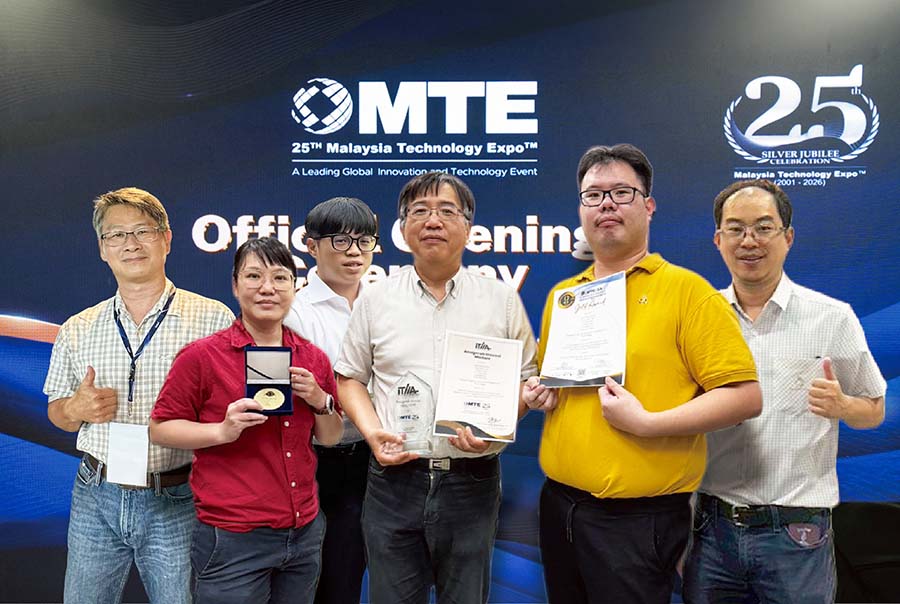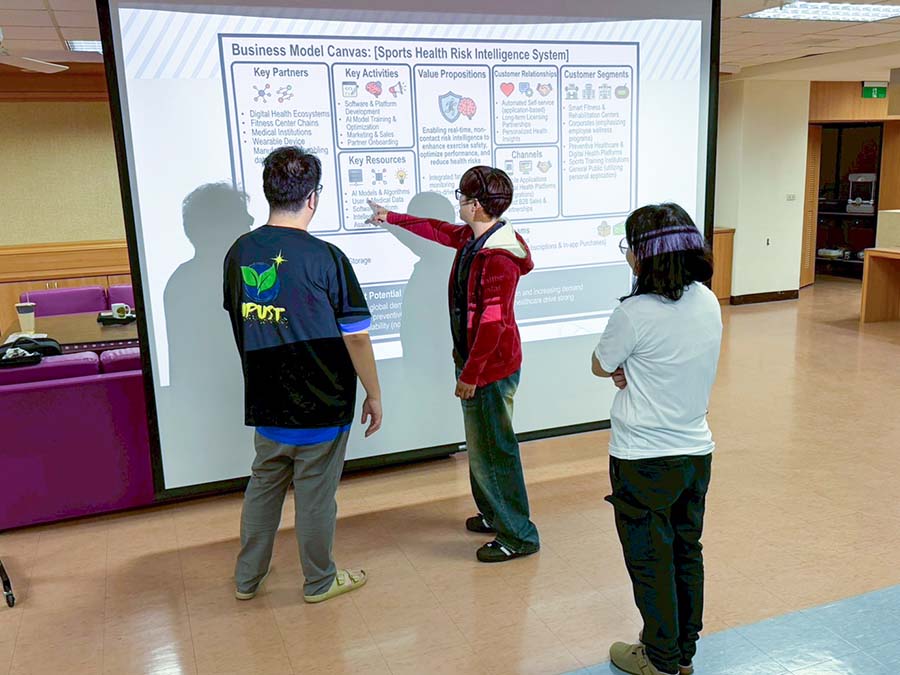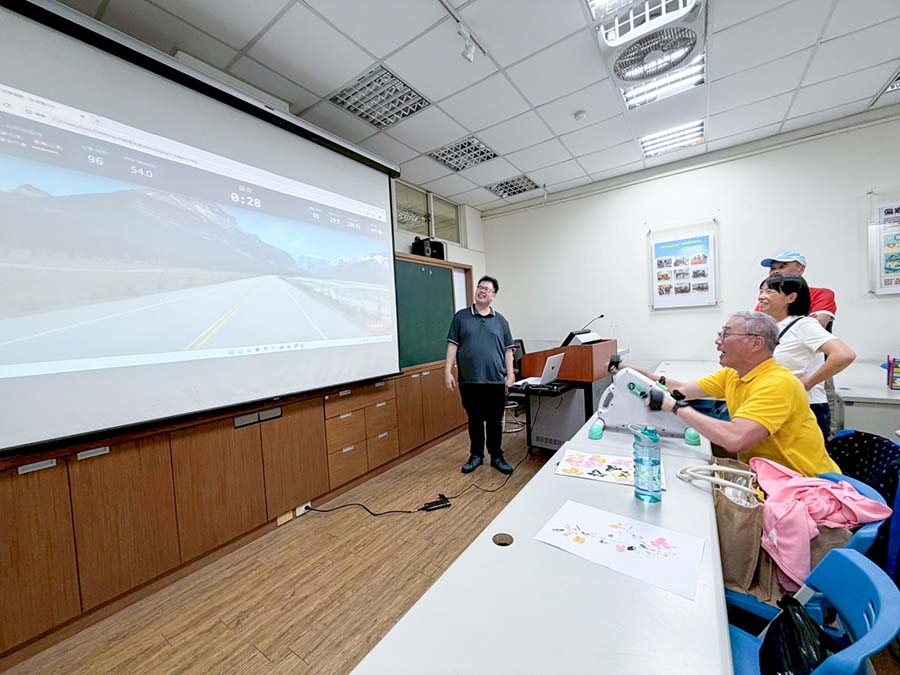
A cross-institutional research team led by National Pingtung University of Science and Technology (NPUST) successfully developed an intelligent AI sports risk prediction and regulation system—”NeuroAxis Adaptive”. Combining non-contact pressure sensing, real-time AI analysis, and dynamic exercise regulation technology, the project made a significant impact at the Malaysia Technology Expo (MTE), winning a Gold Medal. The achievement further aligned with the core values of Sustainability, Innovation, and Well-being, and also earned them a prestigious Malaysian national-level innovation honor: the “Anugerah Inovasi MADANI” Award. Their success not only showcases the team’s technical innovation but also underscores Taiwan’s competitive advantages and ability to bring smart health technology to the international stage.
The award-winning work was led by NPUST General Research Service Center Assistant Professor-level Researcher, Tsai-Chiao Wang and Dean of Research and Development and Professor of Biological Science and Technology, Yo-Chia Chen. The cross-institutional team included Distinguished Professor Chia-Liang Tsai from the Institute of Physical Education, Health and Leisure Studies at National Cheng Kung University (NCKU) and Associate Professor Da-Wei Tang from Asia University. Together, they integrated key technologies in artificial intelligence, biomarkers, analytical techniques, sports technology, and health promotion. Under their guidance, NPUST doctoral students Wei-An Wang and Chia-Wei Chen helped implement the project to create a forward-looking smart sports safety and health promotion platform.
“As smart health technology develops rapidly, traditional models relying on wearable devices and single-source physiological monitoring struggle to reflect athletes’ physical and mental states comprehensively in real time,” said Researcher Tsai-Chiao Wang. “Our system breaks through existing frameworks. By using non-contact sensing technology, we can quantify pressure signals instantly. AI then performs real-time analysis and interpretation to dynamically adjust exercise intensity and rhythm.”
The research team pointed out that the core innovation of their system lies in the successful construction of three key mechanisms: non-contact sensing, real-time analysis, and intelligent decision-making. It can instantly transform complex physiological data into actionable exercise regulation strategies. This upgrades sports safety from traditional passive monitoring to active prediction and intelligent regulation, significantly improving exercise safety and training effectiveness. The technology holds high application potential and can be widely introduced into the fitness industry, sports training, medical rehabilitation, and elderly health management. In the future, it may extend to personalized health management and smart care services, driving the growth of the smart health industry.
As one of Asia’s most influential invention competitions, the Malaysia Technology Expo (MTE) provides a prestigious platform for international recognition. Securing both the Gold Medal and the ‘Anugerah Inovasi MADANI’ Award underscores the innovation, practicality, and market potential of this technology. Moving forward, the team aims to advance AI-driven sports risk prediction and intelligent regulation systems, facilitate commercialization through international partnerships, and establish new global standards for smart sports safety to enhance quality of life.