Committed to transparent and accountable sustainable governance, National Pingtung University of Science and Technology (NPUST) publishes a Sustainability Report every two years. With three editions published to date, the reports serve to facilitate two-way communication with internal and external stakeholders and the general public.
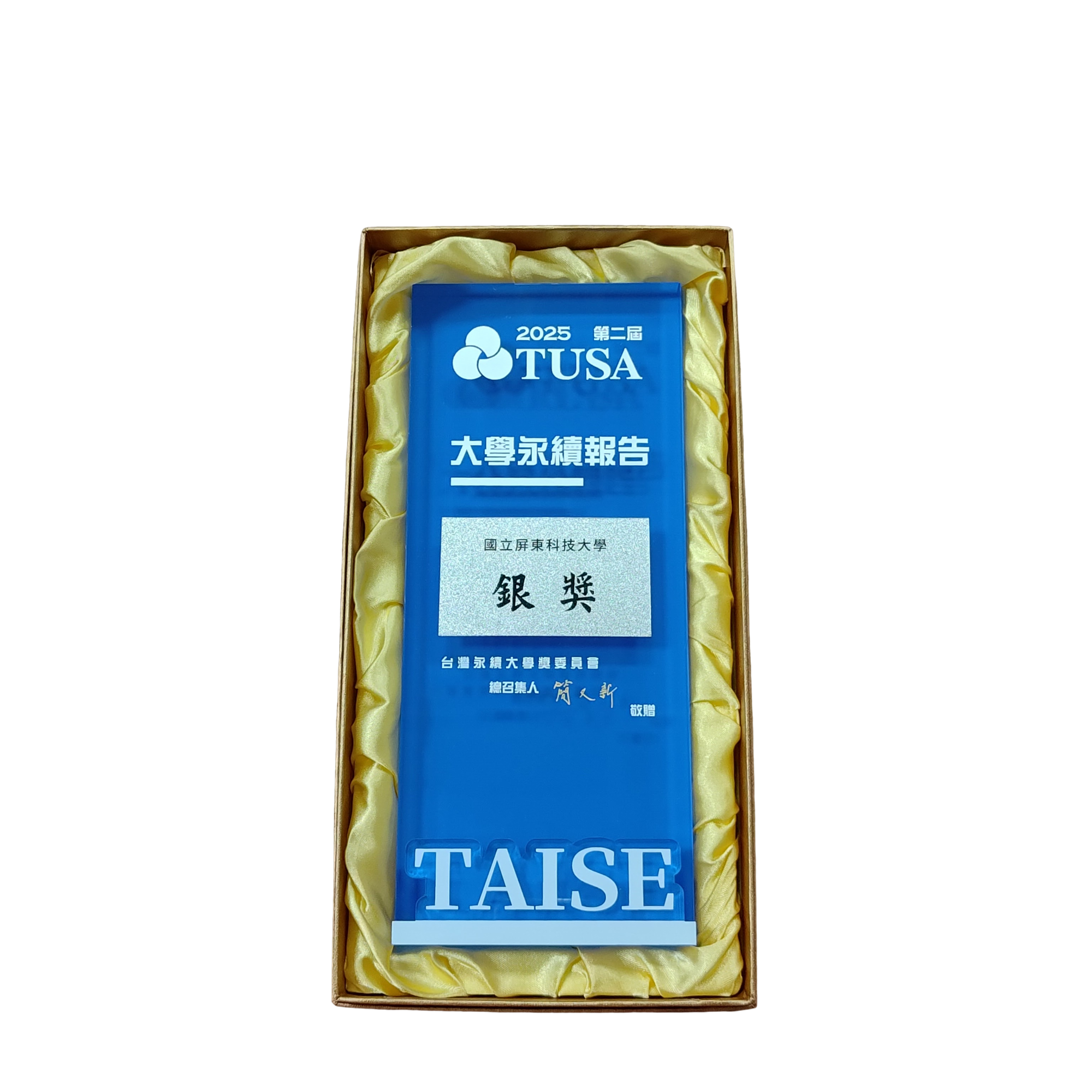
The 2024 Sustainable Report, published this year (2025), received high commendation from the judging panel at the 2025 Taiwan University Sustainability Awards, hosted by the Taiwan Institute for Sustainable Energy (TAISE). Following the evaluation, NPUST was honored to win the Silver Award in the Sustainability Report category for its outstanding performance in university operations, environmental governance, implementation of social responsibility, and forward-looking sustainable planning and development. Now in its second year, the Taiwan University Sustainability Awards was established by TAISE in 2024 to serve as an evaluation mechanism and foster domestic visibility for sustainable practices at universities.
The educational philosophy at NPUST is founded on “Professionalization, Internationalization, and Holistic Development”, and the school has actively integrated the United Nations Sustainable Development Goals (SDGs) into its university governance model. Meanwhile, NPUST is strongly committed to environmental and ecological conservation and the implementation of social responsibility, and in recent years it has actively supported the government’s push for “Net-Zero Transition” and “Industry Upgrading” by systematically introducing R&D on related technology and innovating its educational curriculum to align with the agenda. Adding to this, NPUST is an avid practitioner of University Social Responsibility (USR) and is consistently making substantial contributions to global sustainable development.
NPUST’s 2024 Sustainability Report uses the SDGs as its main framework, while detailing the university’s performance in three areas: Governance (G), Environmental Sustainability (E), and Social Inclusion (S). One of the report’s highlights is its section on “SDG Sustainable Practices Across Seven Colleges”, which effectively communicates to stakeholders how NPUST is integrating sustainable concepts into education, research, campus governance, and local engagement. Through strategies, goals, and visions in the field of sustainable development, the report profoundly addresses sustainability-related issues of concern to stakeholders.
GOVERNANCE
In the area of campus governance, NPUST focuses on strengthening its governance structure and increasing transparency. It continues to pursue international and domestic professional certifications such as the Association to Advance Collegiate Schools of Business (AACSB) and the Institute of Engineering Education Taiwan (IEET), aiming to enhance teaching quality and deepen industry-academia connections. Furthermore, the university is upgrading its smart campus infrastructure, enhancing cybersecurity and campus safety resilience, and establishing communication channels for stakeholders, while also fully disclosing material issues and management approaches to ensure governance accountability.
ENVIRONMENTAL SUSTAINABILITY
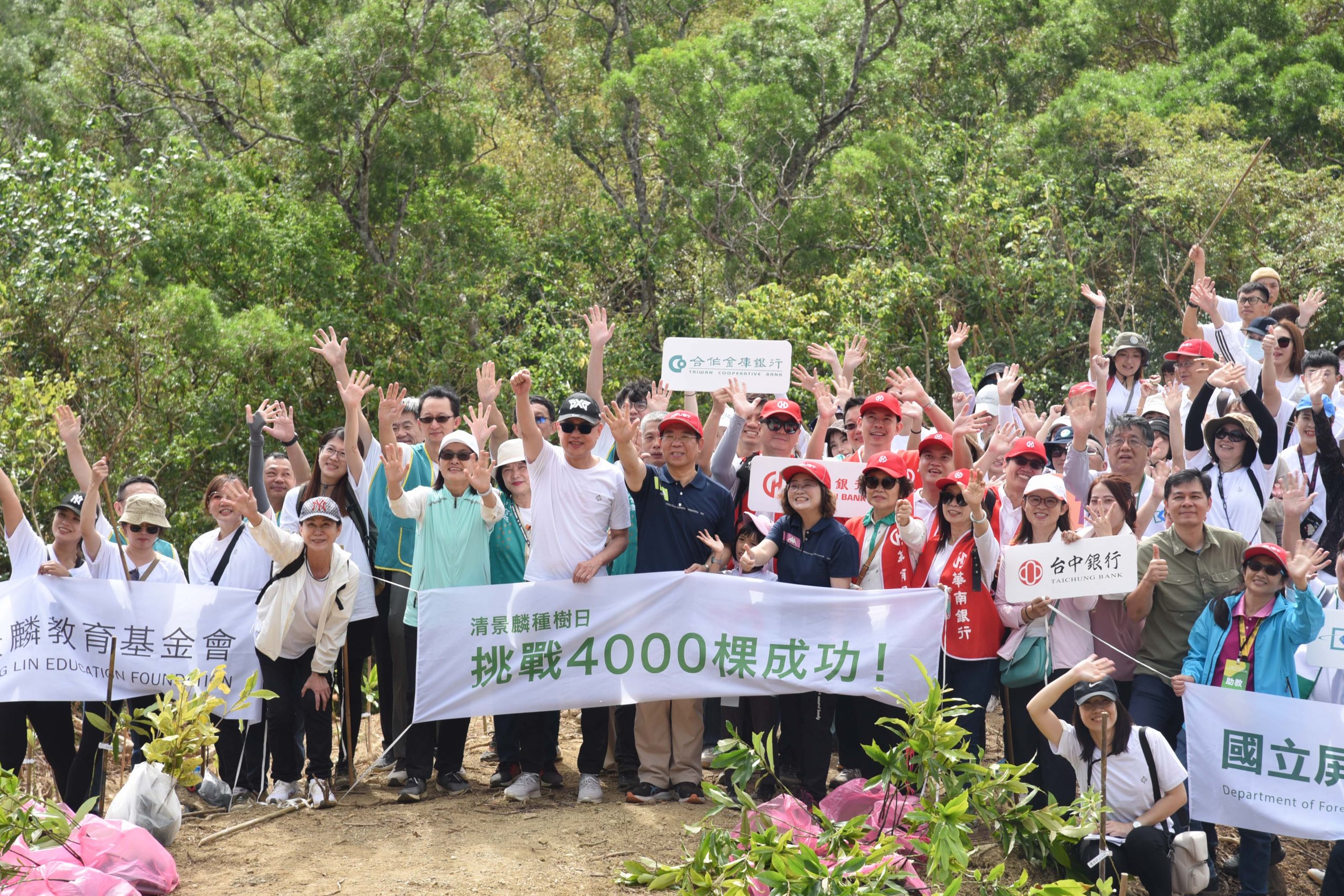
When it comes to environmental sustainability, NPUST is dedicated to creating a low-carbon, energy-efficient, and ecologically harmonious green campus. It promotes an energy management system and the use of smart air conditioning to improve efficiency, reduce carbon emissions, and keep tabs on its carbon inventory. The university has also established an effective water cycle management system so that it has been able to achieve “zero discharge” for its campus domestic wastewater and rainwater. It is also expanding solar energy facilities and has adopted permeable pavement and ecological engineering methods to maintain campus green spaces and natural ecology. For 12 consecutive years, NPUST has also maintained its position as the top school in Taiwan on “GreenMetric World University” rankings, setting an unparalleled example for the country.
SOCIAL RESPONSIBILITY
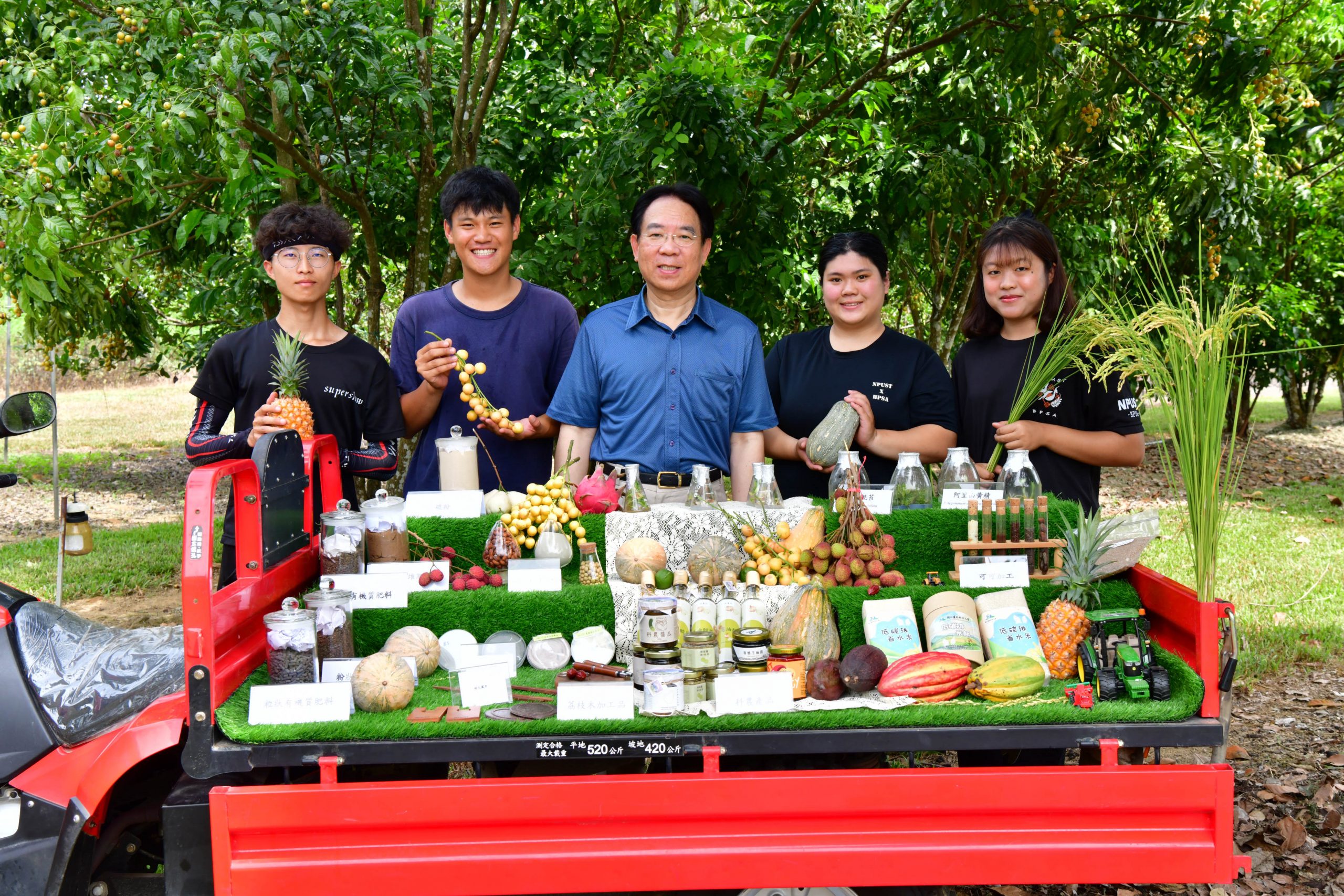
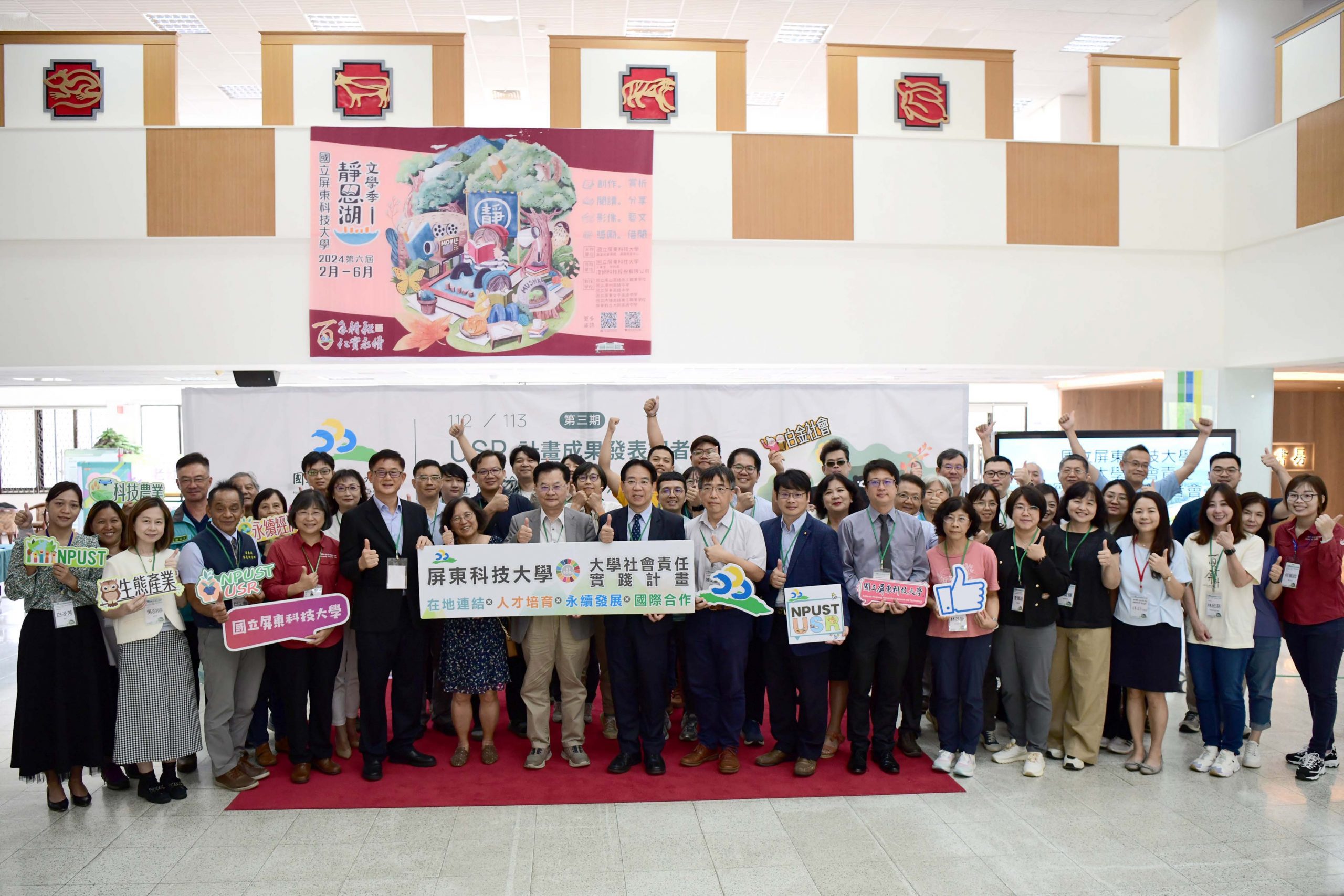
In terms of social responsibility, NPUST promotes USR centered activities on four major axes: Technologic Agriculture, Ecological Industry, Platinum Society, and Sustainable Economy. In this way, it is expanding its social influence out from Pingtung to the rest of the nation, and even beyond. The university’s various USR projects precisely address regional agricultural transformation, Taiwan’s aging society, and local revitalization. While focusing on “Local Connection” and “Talent Cultivation,” the university encourages faculty and students to apply professional knowledge to solve community problems, promote regional sustainable development, and implement the SDGs as part of its commitment to social responsibility.
NPUST will continue to publish its Sustainability Report every two years as it works to promote sustainable governance and SDG action. In this way, the university aims to become an international first-class comprehensive university of agricultural science and technology with “sustainability” as its core value.