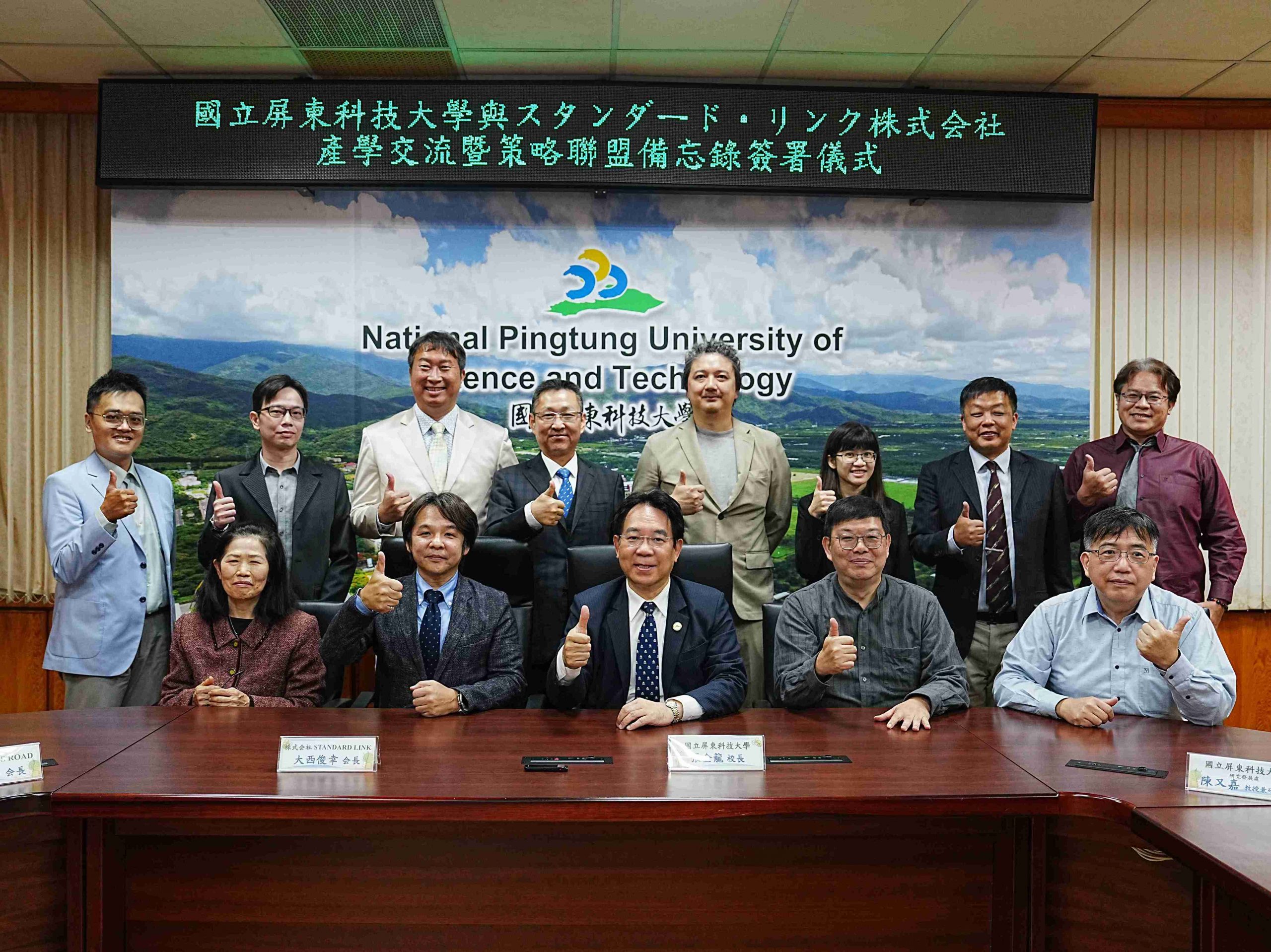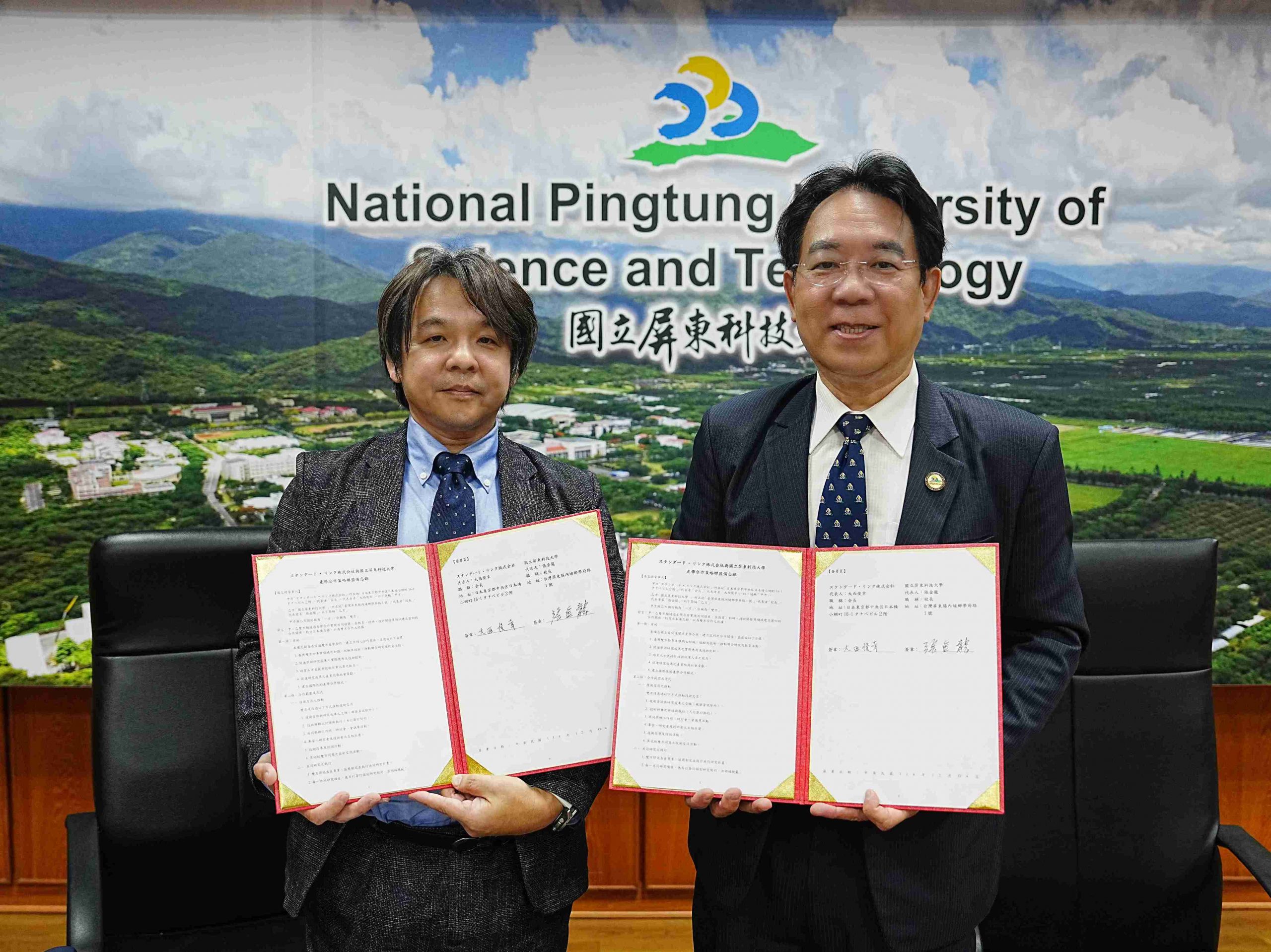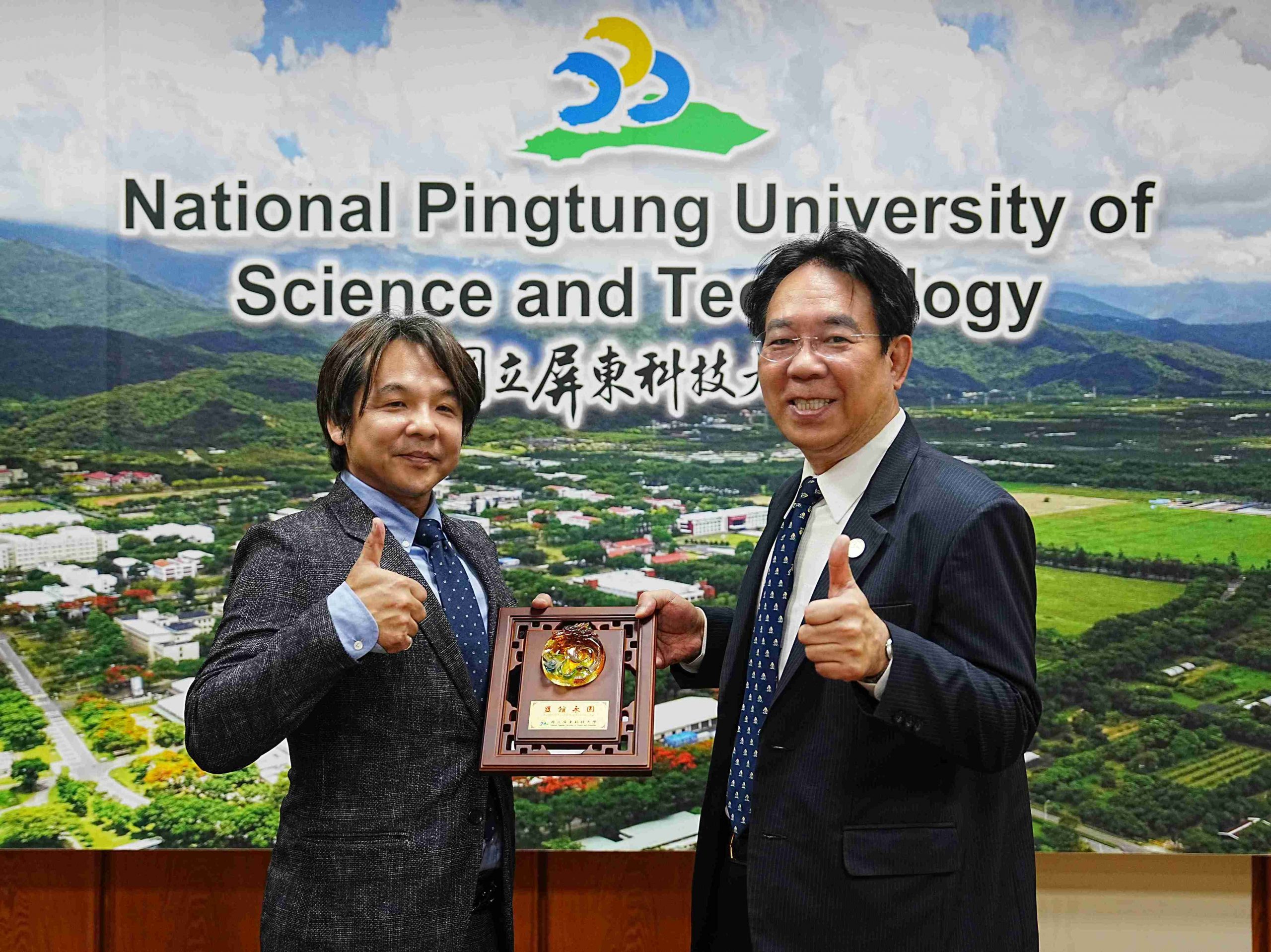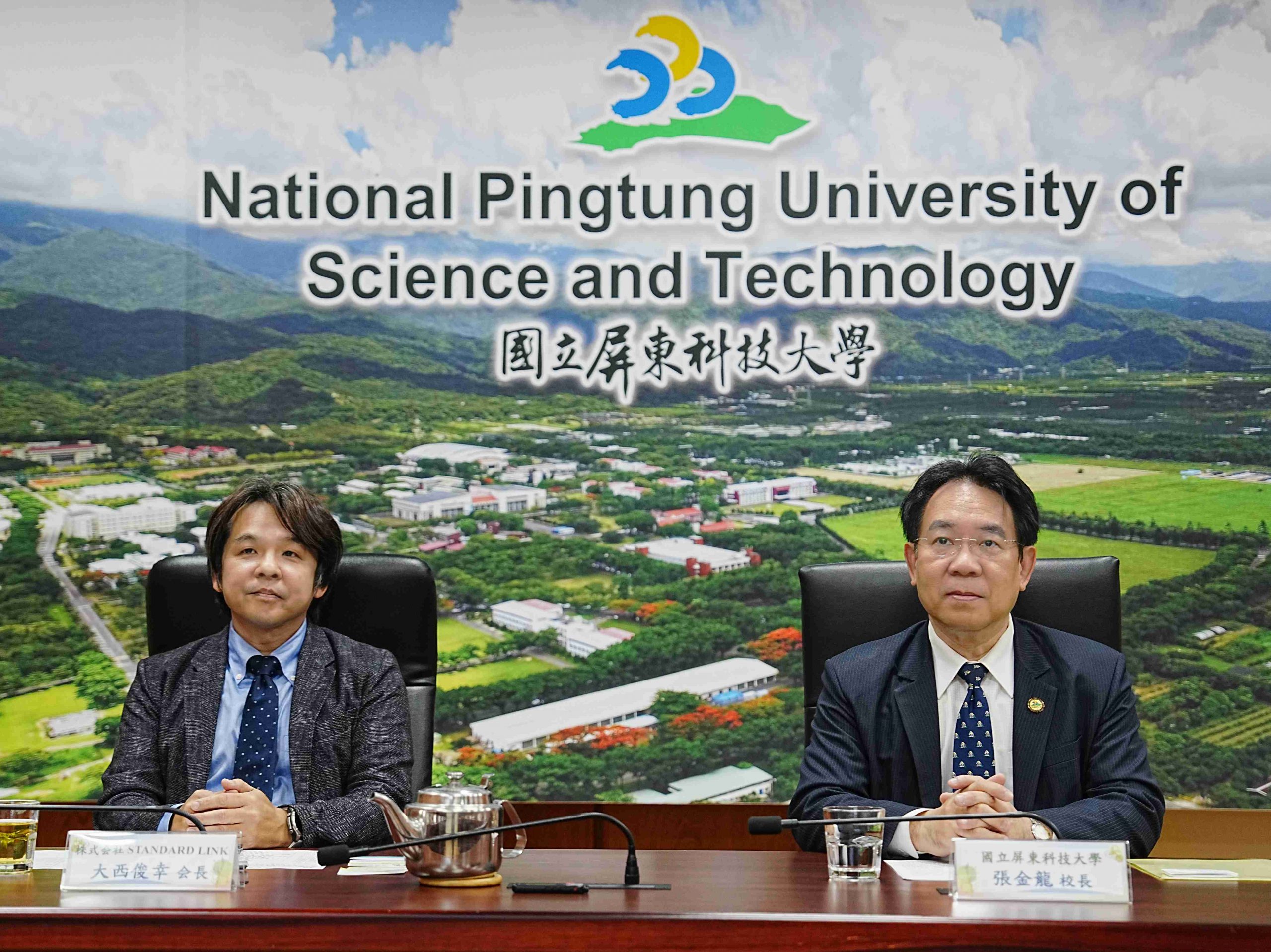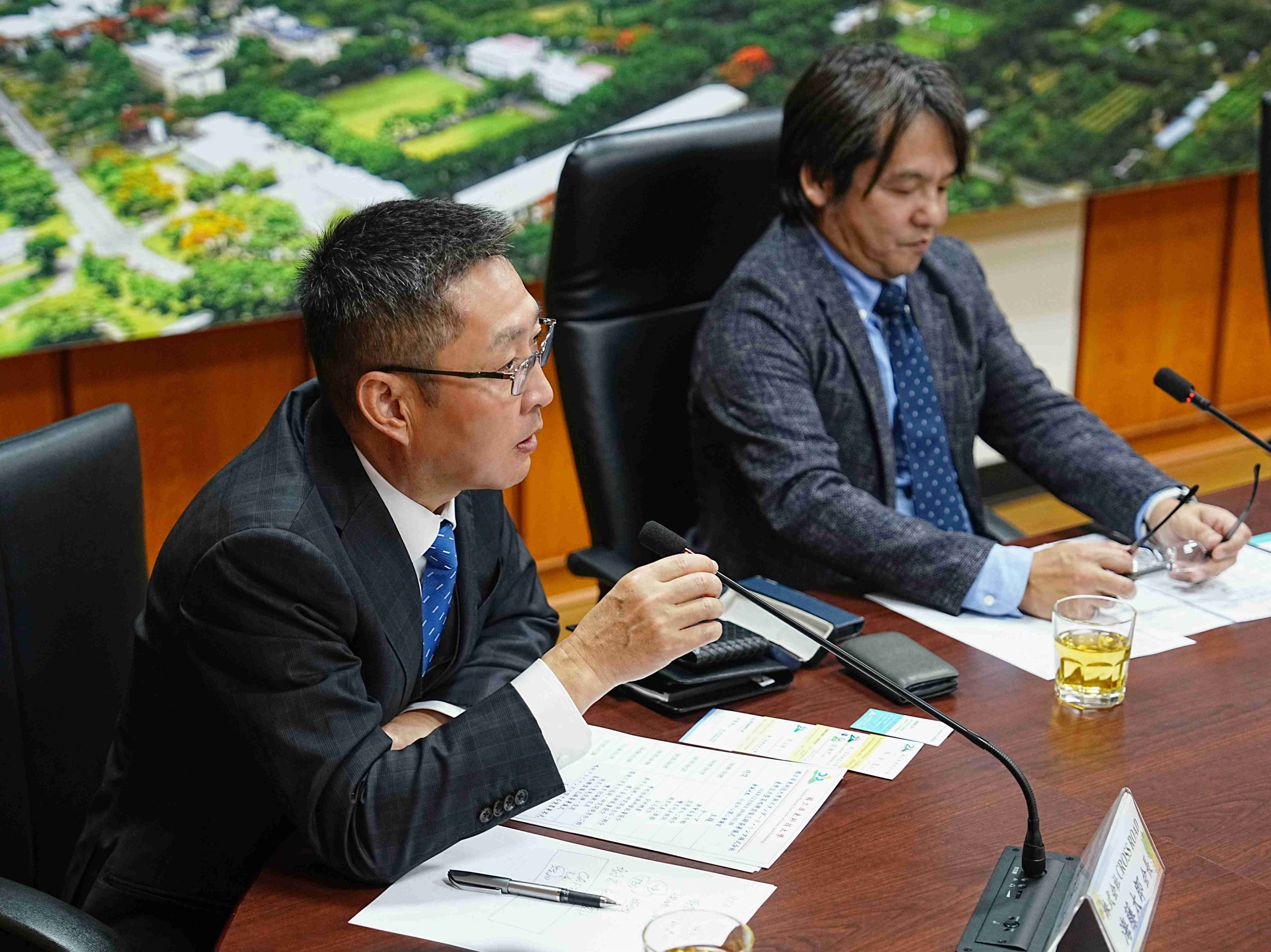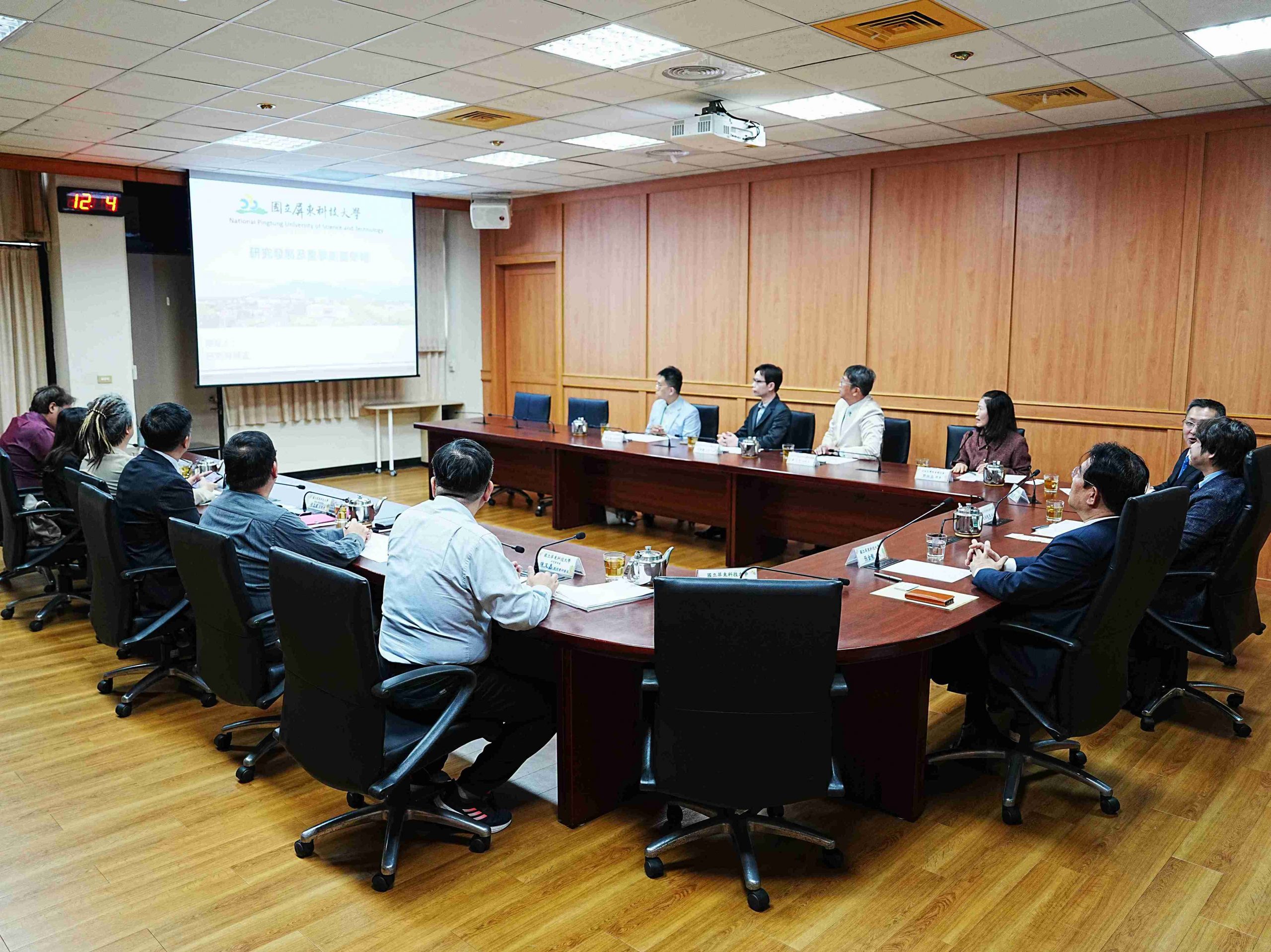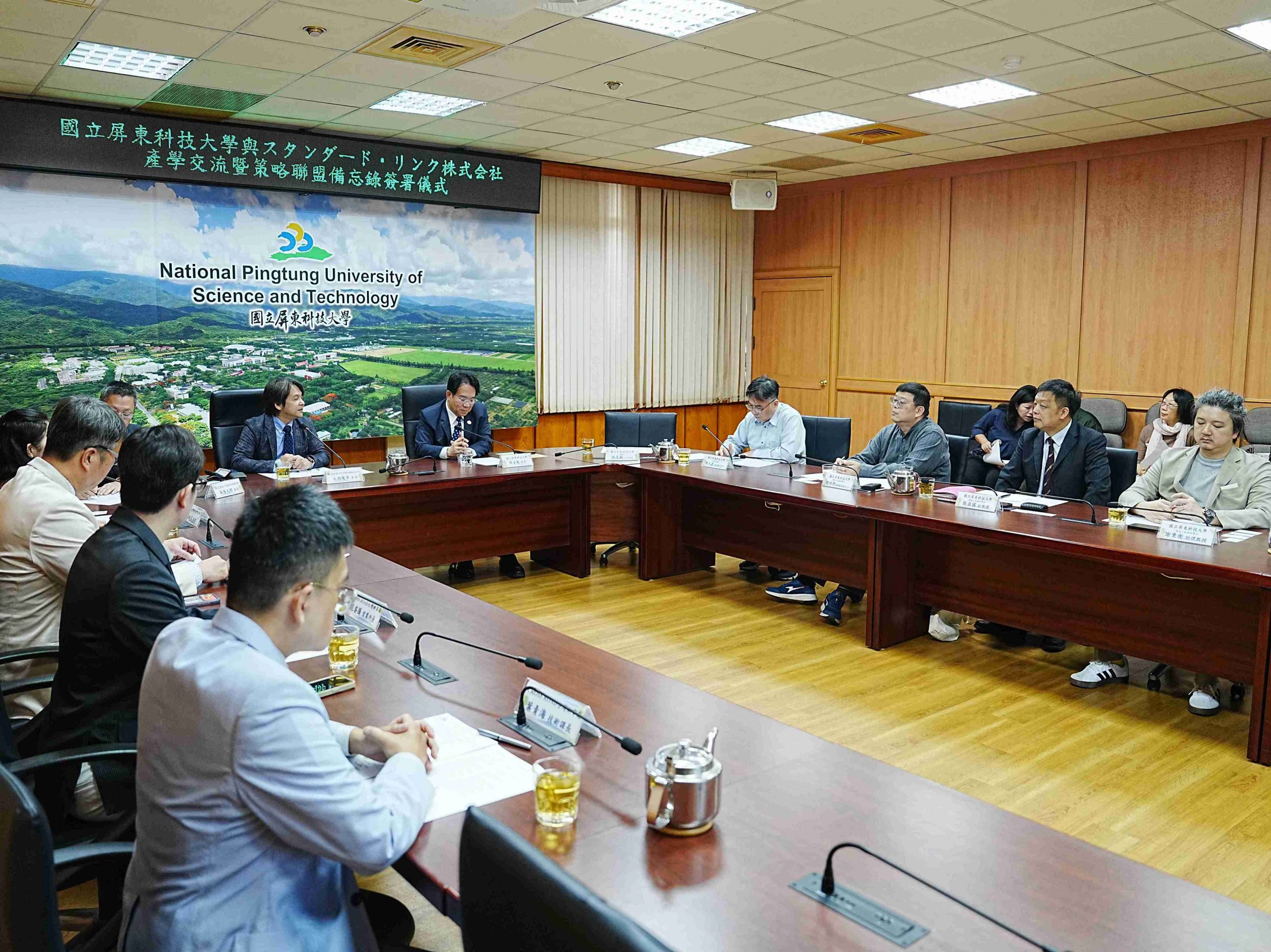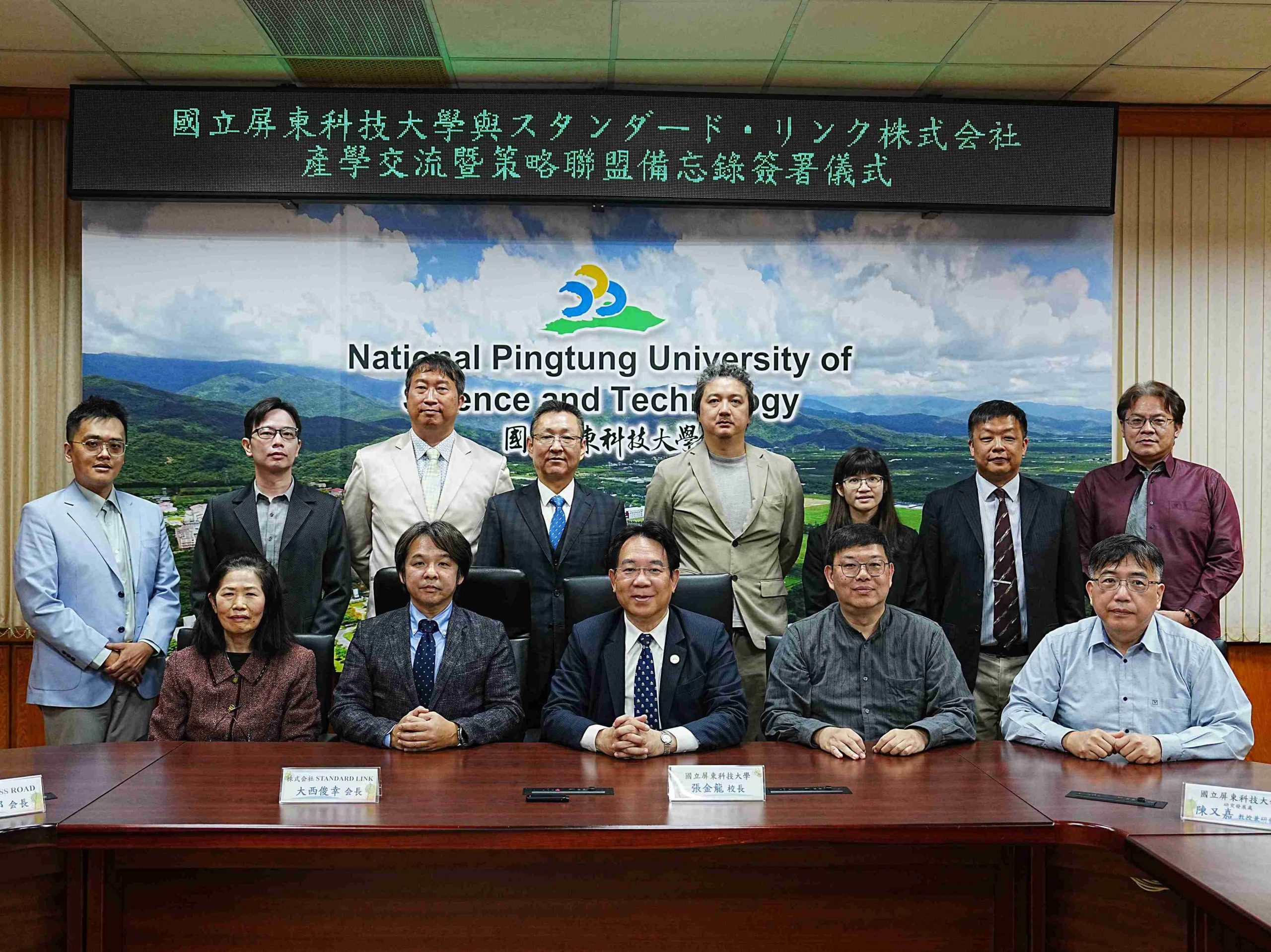
National Pingtung University of Science and Technology (NPUST) and Japan’s Standard-link Group signed an MOU to deepen international industry-academia cooperation, focusing on water purification, environmental sustainability, and talent cultivation. The collaboration aims to merge NPUST’s century-long foundation in research with Standard-link’s expertise in microbial technology and environmental engineering in order to address environmental challenges and advance the SDGs.
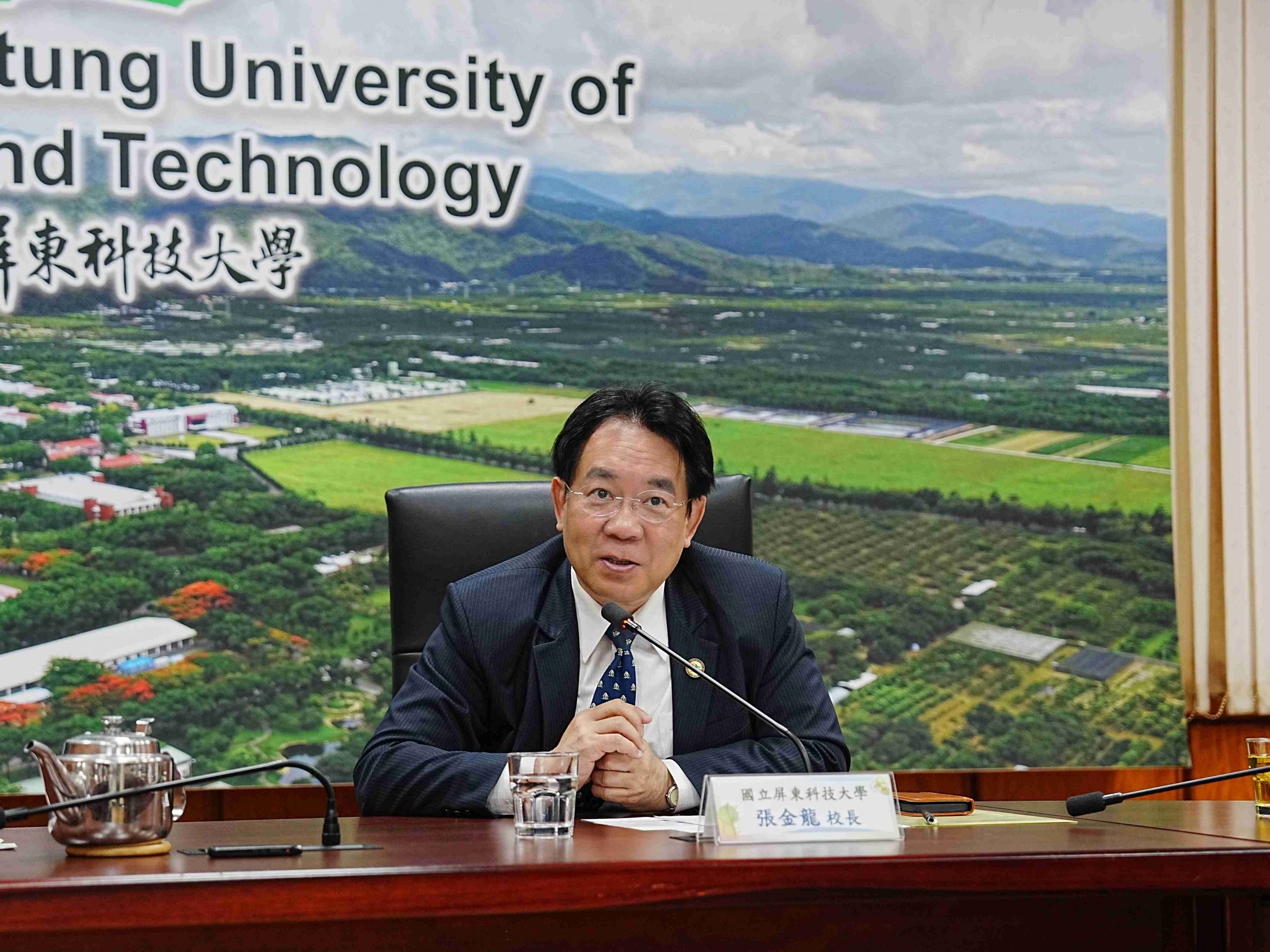
NPUST President Chin-Lung Chang emphasized the congruency of NPUST’s core values—technological R&D, sustainable development, and innovative teaching—and Standard-link’s mission to solve environmental problems using technologies like AI analysis, drone systems, and microbial applications. Initial efforts will focus on water purification and water quality through the conducting of surveys and microbial trials. Work will also be done to establish validation fields to benefit environmental health and agricultural safety.
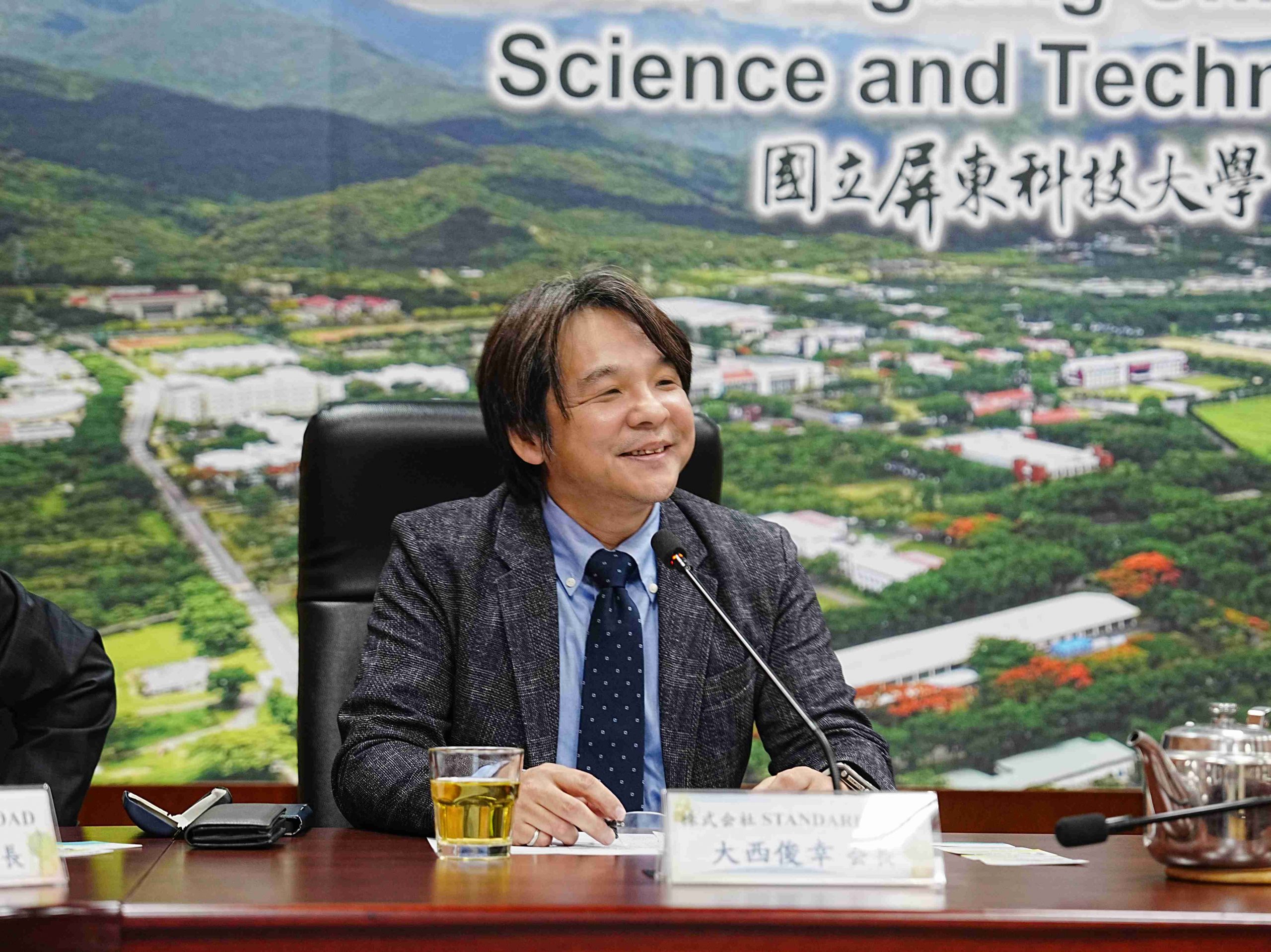
Chairman Toshiyuki Onishi pointed out that Standard-link’s philosophy is founded on standardization, human connection and global technology exchange. The group, with core technologies applied in 51 countries, is a leader in microbial technology and a partner with “filter-less” equipment manufacturers. During the meeting, Chairman Toshiyuki Onishi also commented on Dr. Baba of AES Lab, a subsidiary of the group. He explained that Dr. Baba has successfully developed an innovative technology to convert waste glass into porous material, which possesses high water retention and microbial affinity. This material has been applied to tomato cultivation in water-scarce regions of Africa—allowing for resource circulation and soil improvement. Simultaneously, they exploring ways to safely processes waste solar panels and repurpose them as building materials or water quality improvement materials.
Director Hao-Ran Chao of the NPUST Department of Environmental Science and Engineering outlined three key areas of cooperation: Joint Research (biologics, microbial treatment, resource cycling), Talent Exchange (international internships at Japanese companies), and Cross-Border Technology Promotion (using NPUST as a base to integrate resources for outreaches in Southeast Asia). NPUST’s Environmental Engineering research, led by Associate Professor Yi-Kuo Chang and Assistant Professor Ping-Heng Hsieh, will drive the research and the NPUST Net-Zero Carbon Emission Inventory Center and Emerging Contaminants Center will provide essential scientific data and assist enterprises with carbon analysis and reduction strategies.