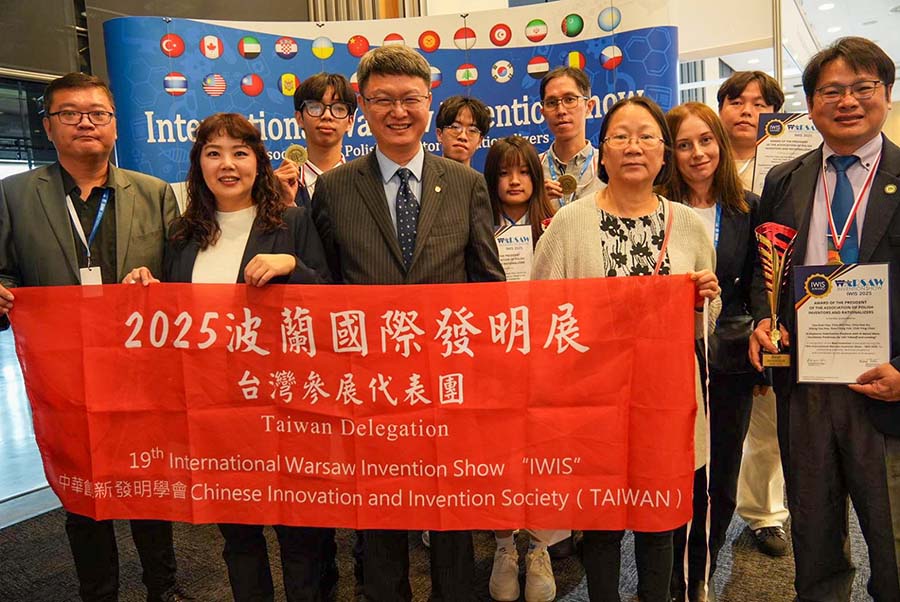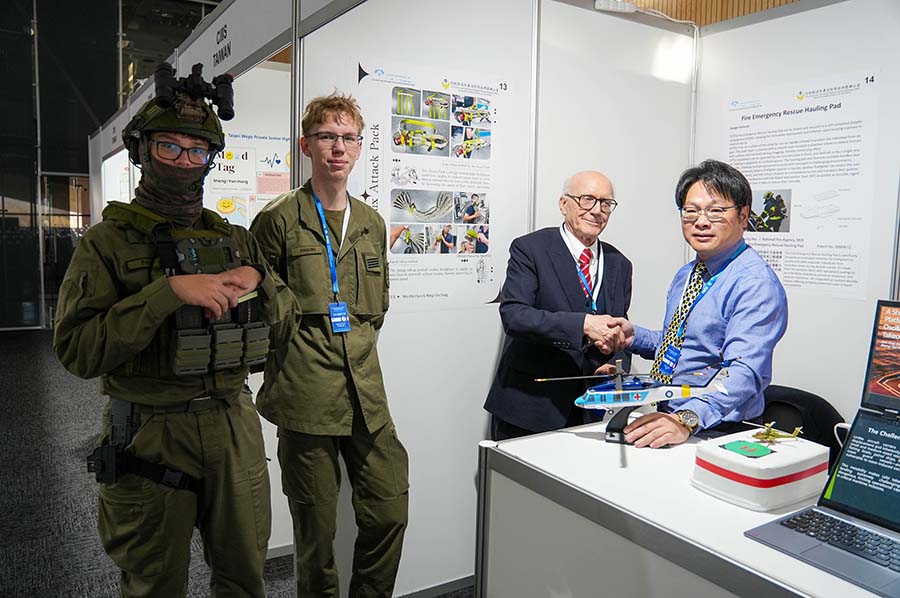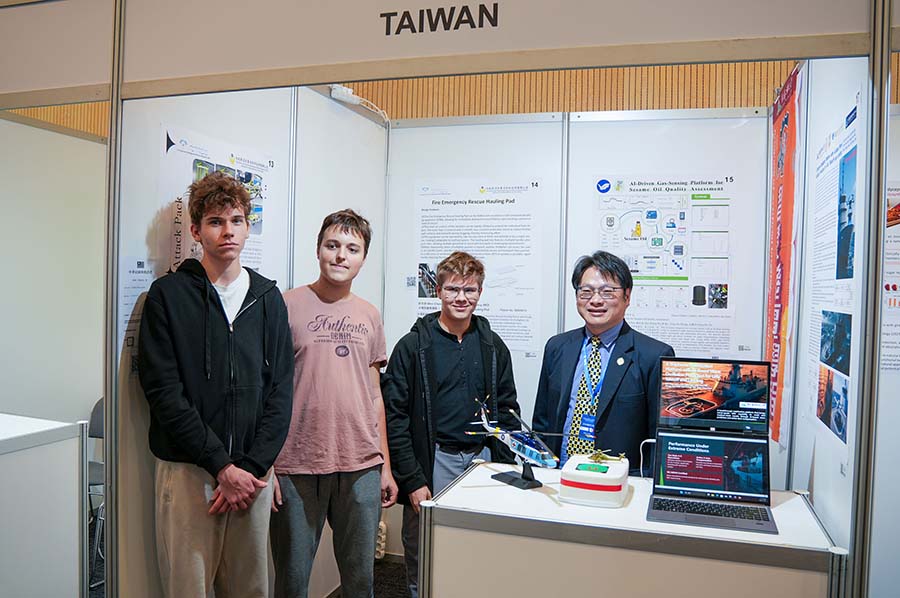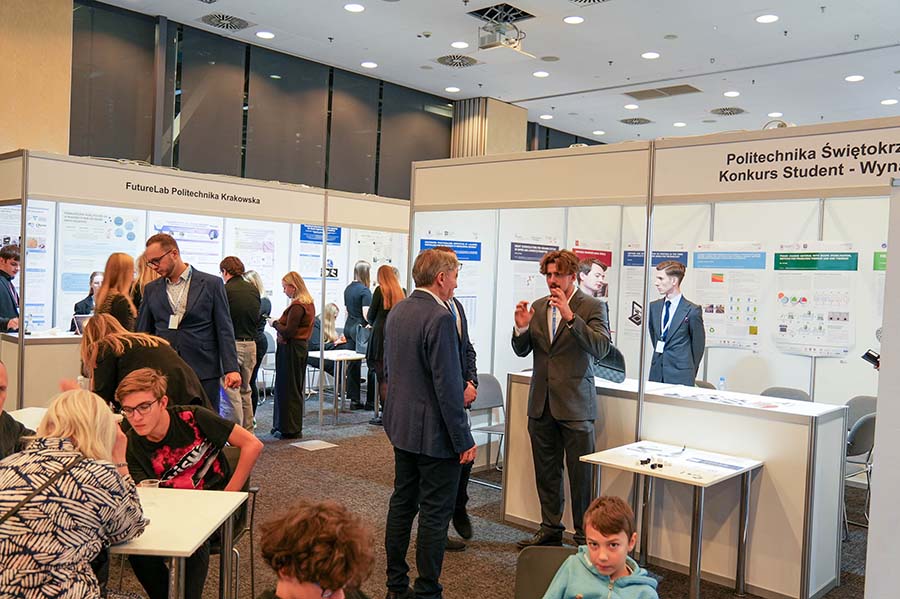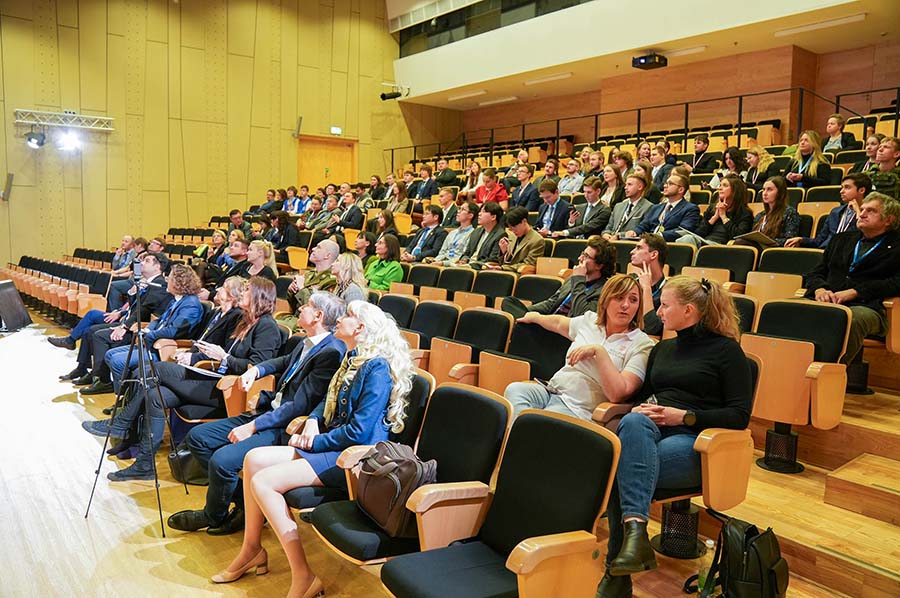
The International Invention and Innovation Show (INTARG) in Poland is the second-largest international invention exhibition in the European Union. This year’s (2025) event featured 346 entries from 26 countries. Among these, Taiwan’s representative teams presented 22 inventions.
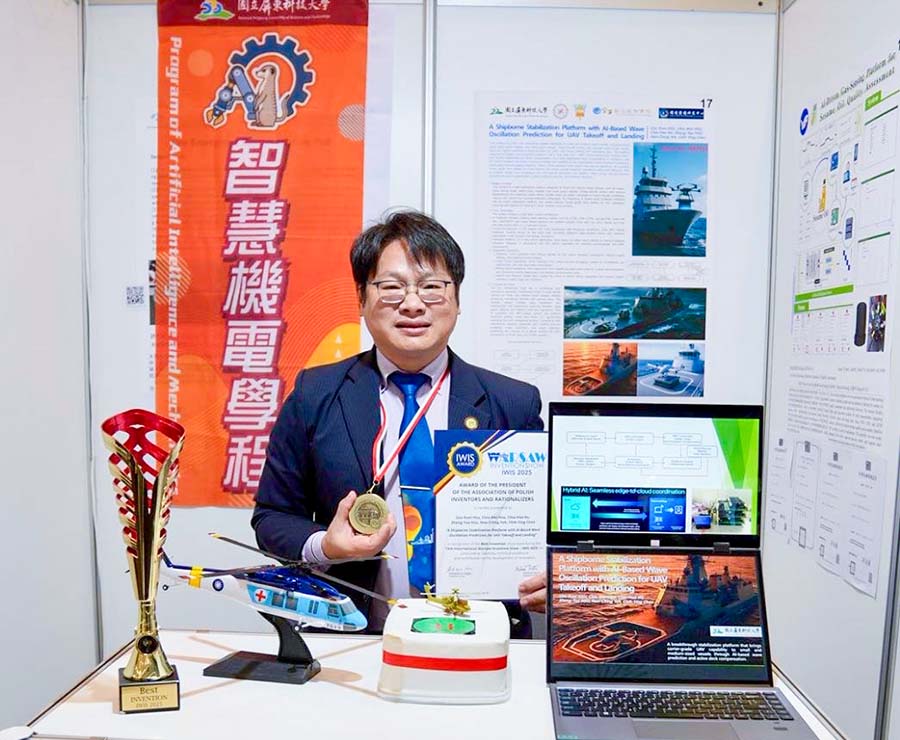
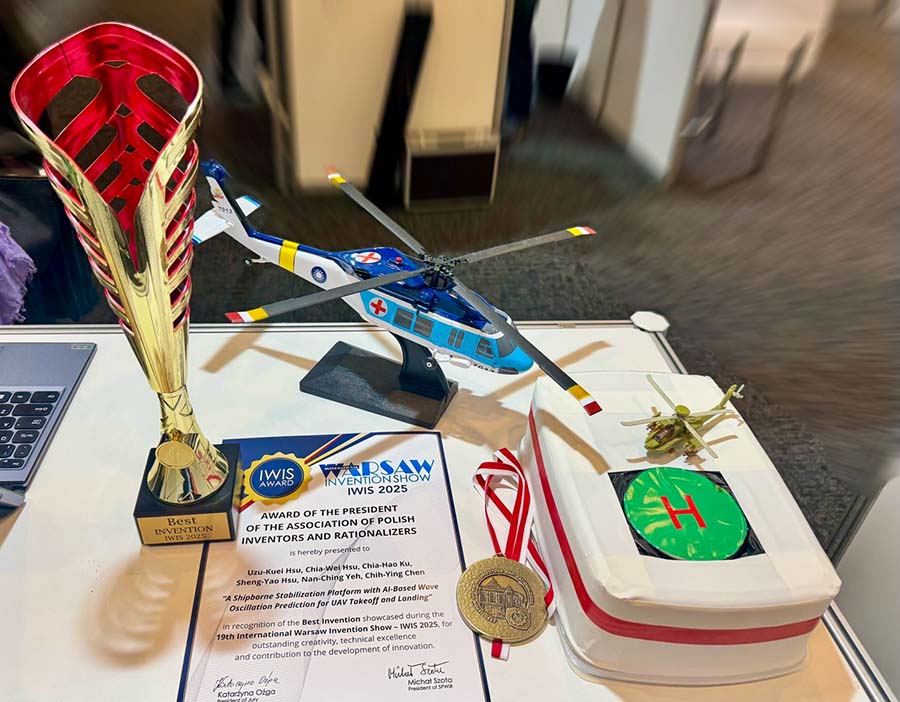
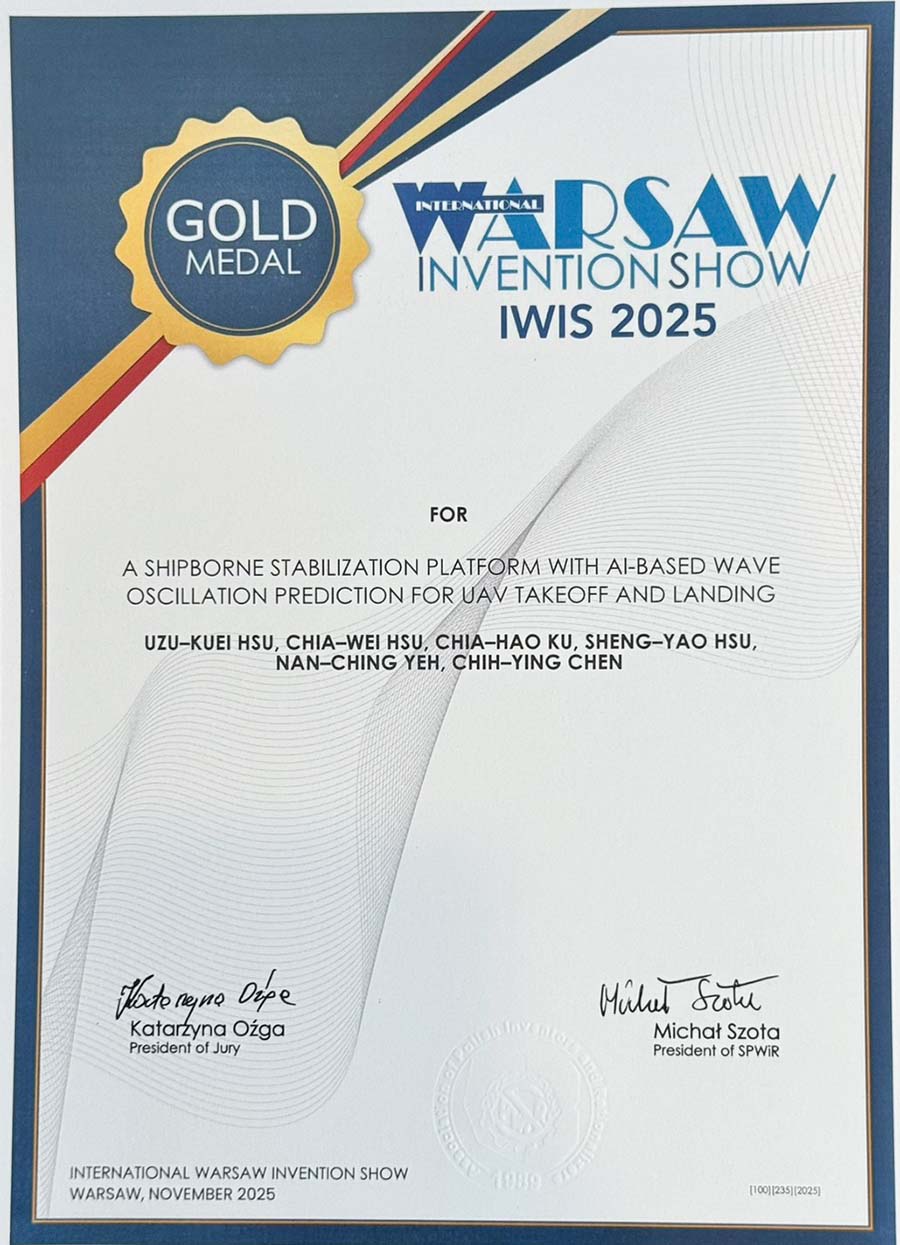
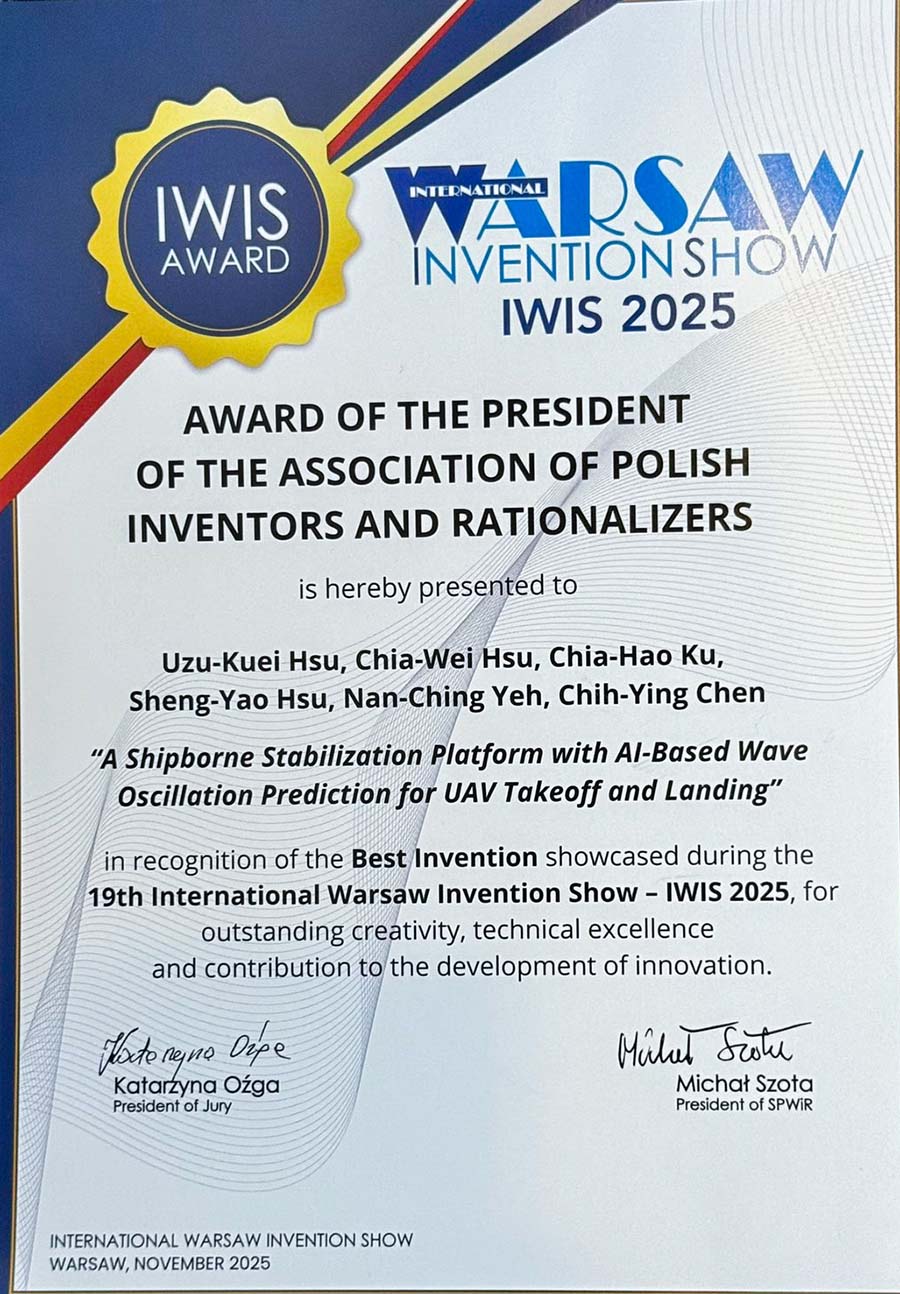
Among Taiwan’s participants, a collaborative group headed up by National Pingtung University of Science and Technology (NPUST) performed exceptionally well for their invention which was entitled “Shipborne Stabilization Platform with Al-Based Wave Oscillation Prediction for UAV Takeoff and Landing”. Their sophisticated contribution secured them the Gold Medal and the Best Invention Award for outstanding creativity and technical excellence by the organizing committee. The invention, which was developed by a team led by Professor Hudson Hsu of the NPUST Smart Mechatronics Bachelor Degree Program, in cooperation with the Navy, Air Force, and Academia Sinica, successfully addresses dangers associated with drone take-off and landing on small and medium-sized ships in rough seas.
BREAKTHROUGH TECHNOLOGY FOR SHIPBORNE DRONE OPERATIONS
Professor Hsu explained that large aircraft carriers utilize very stable platforms for helicopter take-off and landing. However, for medium or small vessels, such as ocean-going fishing boats, patrol ships, and customs cutters, the rocking and swaying caused by wind and waves poses a significant risk to the safe operation of helicopters and drones.
Wave-induced ship movements involve a complex mixture of pitching, yawing, and vertical displacement. Since traditional PID controllers (Proportional–Integral–Derivative controllers) have a response time of approximately 0.5 seconds, they can be too slow for safe take-offs and landings when faced with large, sudden waves and unstable ocean conditions.
DUAL-LOOP CONTROL AND AI WAVE PREDICTION
The team’s invention features a dual-loop compensatory feedback control mechanism where the inner loop maintains the traditional PID control model and the outer loop incorporates an AI model for wave height prediction. The technology was previously developed in collaboration with the Naval Meteorology and Oceanography Office to predict real-time and six-day wave heights. It uses a hydrodynamic model and maritime wind speed data to predict potential wave heights based on AI calculations. The predictions are then converted into feedback signals and transmitted to the PID predictive module.
This innovative approach shortens the system response time significantly, bringing it down to 10 milliseconds. Furthermore, the control module utilizes a low-cost single-board computer, giving it incredible market potential. The significant technical breakthrough and low implementation costs were the key factors that impressed the judges.
CROSS-DISCIPLINARY COLLABORATION AND FUTURE APPLICATIONS
The team responsible for the award-winning invention was made up of a number of significant collaborators including Associate Professor Chia-Wei Hsu from Chinese Culture University, Professor Nan-Ching Yeh from the Taiwan Air Force Academy, Dr. Chih-Ying Chen from Academia Sinica and personnel from both the Taiwan Navy and Air Force.
NPUST is committed to continually advancing smart technology and fostering collaborative links with the defense industry. By cultivating innovative talent and translating research achievements into global competitiveness, the university aims to enhance Taiwan’s presence on the international stage.